By Gail Barlow, HVAC Guides Editor · Updated September 2026
A New Orleans house feels damp with the AC on when the system cools the air faster than it removes moisture. Common causes are an oversized AC that short cycles, the fan set to on instead of auto, a dirty coil, a low refrigerant charge, or mild weather when the AC barely runs. A ducted dehumidifier fixes what settings cannot.
Cooling and drying are two different jobs
An air conditioner removes moisture only as a side effect of cooling. Warm, humid air passes over a cold coil, water condenses on the coil and drips into the drain pan, and the air comes out cooler and drier. That only happens while the compressor runs and the coil is cold.
In a city that averages around 60 inches of rain a year and stays humid for most of it, the moisture load is heavy. When the system does not run long enough, the air gets cool without getting dry, and that is the clammy feeling.
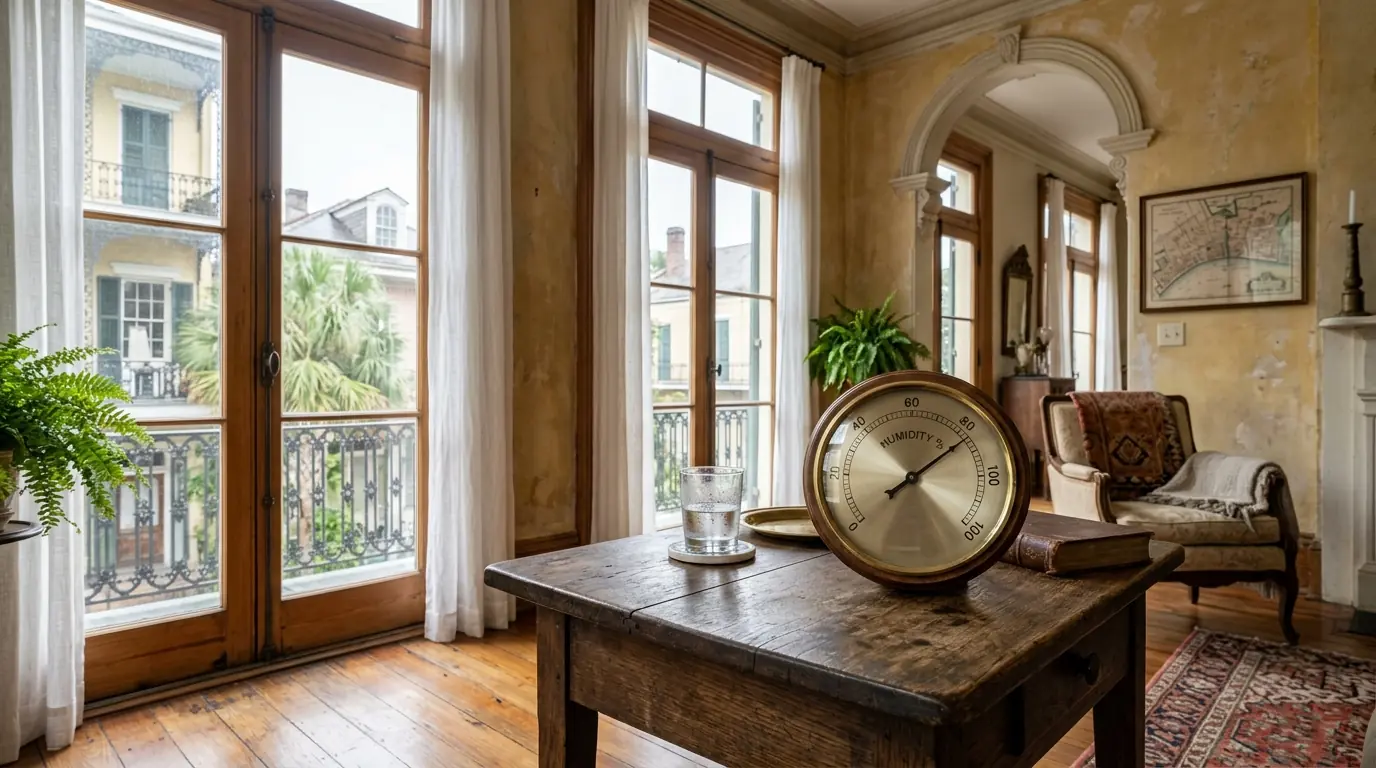
Cause one: the system is too big
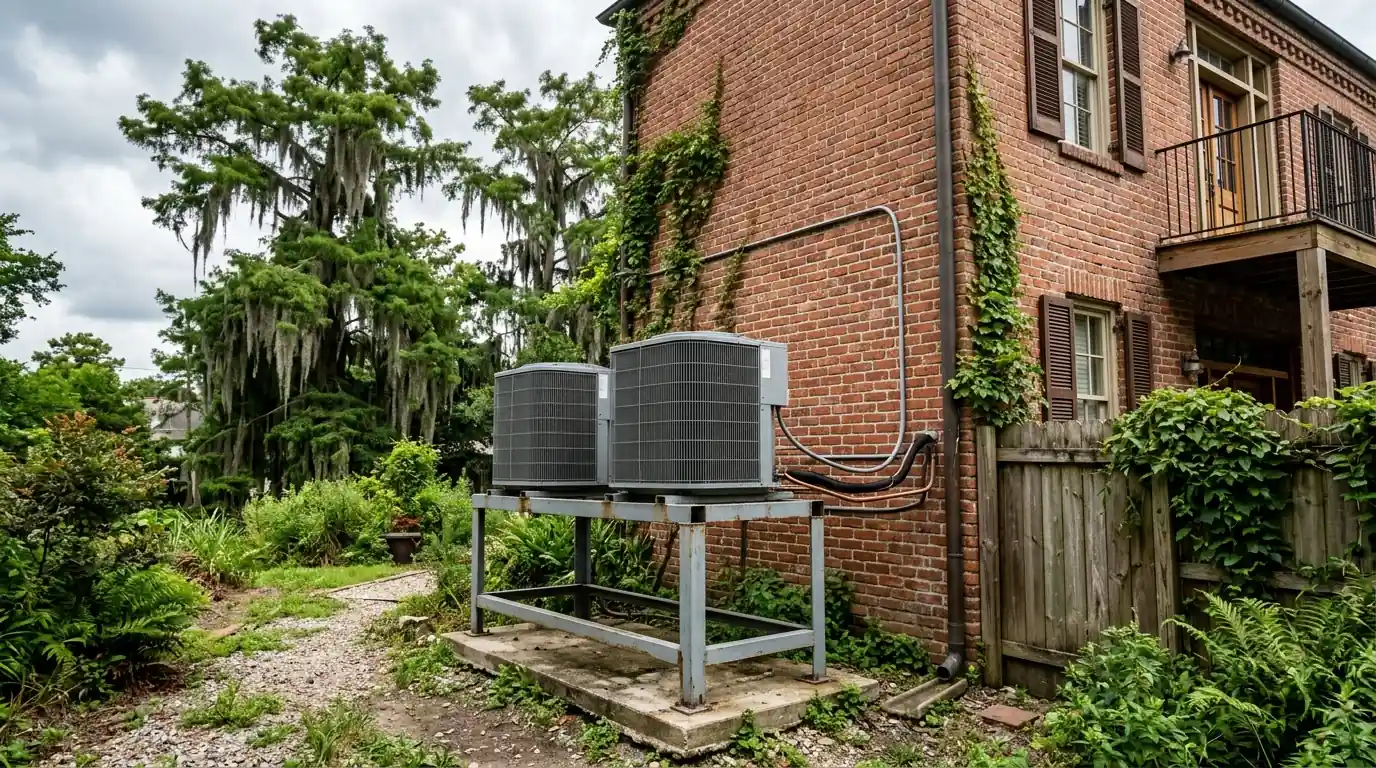
An oversized air conditioner reaches the thermostat setting quickly and shuts off. Each short run cools the air but barely gets the coil cold enough, for long enough, to pull much water out. The house hits 72 degrees and still sits at high humidity.
This is common in older installs that were sized by square footage rules of thumb rather than a load calculation. Replacing the system is the complete fix, but it is rarely the first one we recommend.
Cause two: the fan is set to on
With the thermostat fan set to on, the blower runs continuously. When the compressor stops, the fan keeps blowing across a wet coil and puts much of that moisture back into the house. Switching the fan to auto is free and often makes a noticeable difference within a day.
Cause three: a dirty coil or low charge
A coil coated in dust does not transfer heat well, and a system that is low on refrigerant runs a coil that is either too warm to dry the air or cold enough to freeze. Both reduce moisture removal. Both are found with a proper diagnosis, and a low charge always means a leak that needs repair, not just a top-off.
Cause four: mild weather
In spring and fall the AC barely runs because the temperature is comfortable, but the humidity outside is still high. The system simply has no reason to turn on long enough to dry the house. This is the case where no setting can help, and where a dedicated dehumidifier earns its place.
Older homes feel this more. Houses built before air conditioning, with tall ceilings and big windows, were designed to breathe, and humid outdoor air keeps finding its way in.
House still sticky with the AC on? We can measure it.
(504) 520-4214The fixes, in the order we try them
- Set the thermostat fan to auto.
- Replace the filter and have the coil cleaned if it is dirty.
- Have the refrigerant charge checked and any leak repaired.
- Enable dehumidify-on-cool if your thermostat supports it; it slows the blower so the coil pulls more water.
- Add a ducted whole-home dehumidifier if the house is still damp.
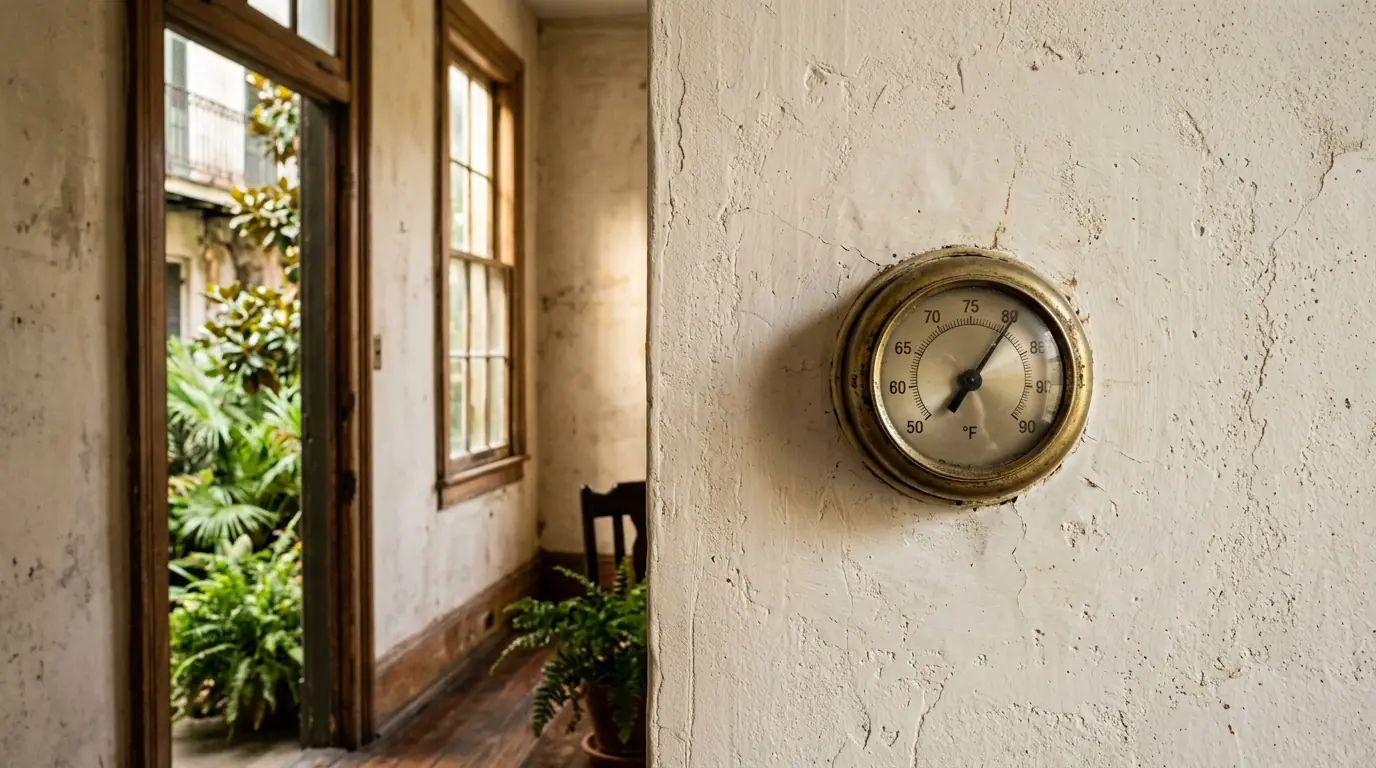
A comfortable target is around 45 to 50 percent indoor humidity. An inexpensive hygrometer tells you where you are, and it is worth having before anyone sells you equipment.
Signs moisture is becoming a problem
Humidity is more than a comfort issue. Left alone for a season, it shows up as a musty smell when the AC starts, condensation on windows and supply vents, soft or peeling paint near baseboards, and dark spots around ceiling registers. Closets and bathrooms tend to show it first.
If you see those signs, measure before you buy anything. A hygrometer costs little and tells you whether the house is actually running high, and by how much. Readings that stay above 60 percent for days at a time are worth acting on; readings in the low 50s may only need the fan setting changed.
Also look for sources other than the air. A leaking duct pulling humid attic air into the return, an unvented bathroom fan, or a crawl space with standing water can all add more moisture than the AC can take out. Fixing the source is always cheaper than drying the air it keeps supplying.
When a dehumidifier is the right answer
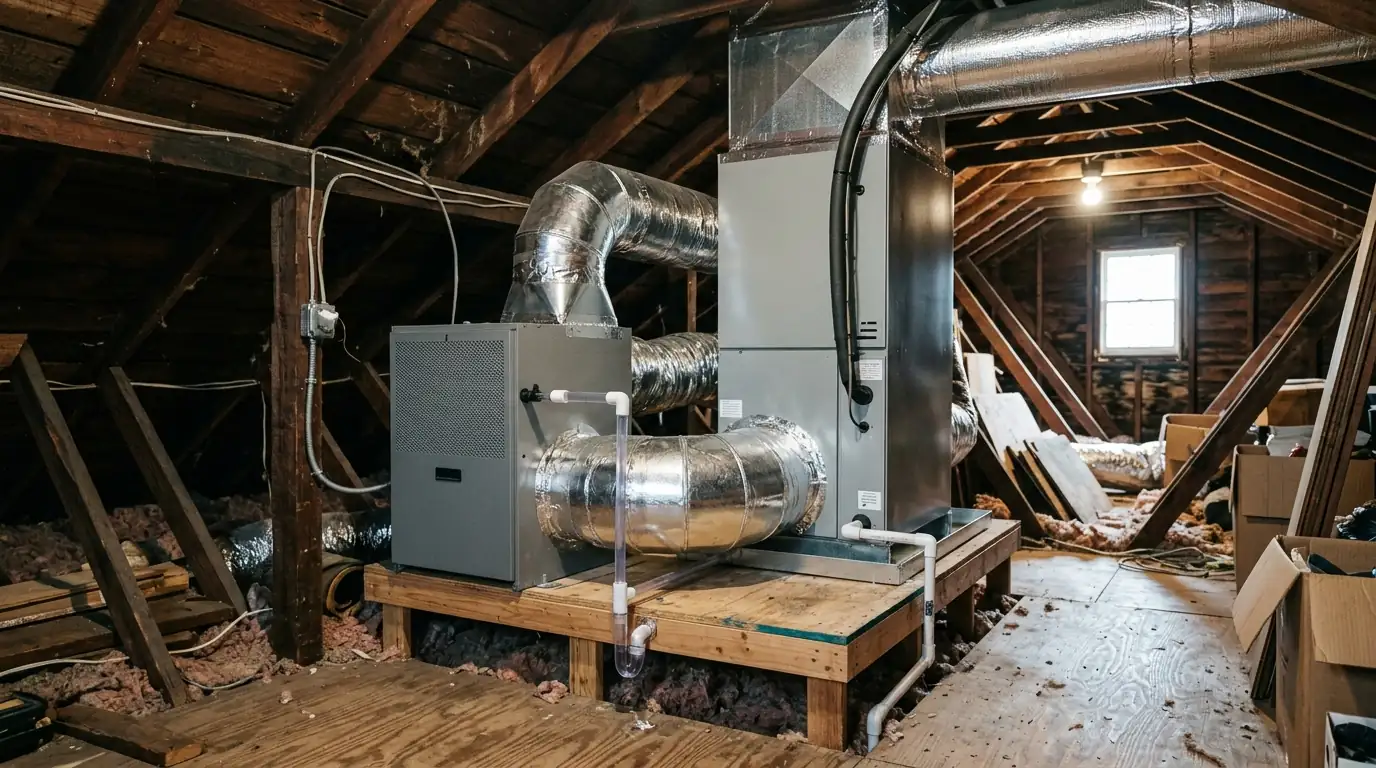
If the system is correctly charged, clean and set up, and the house still sits above 55 percent humidity, a ducted dehumidifier is usually the most practical fix. It ties into the existing ducts, runs on its own humidistat regardless of whether the AC is cooling, and drains into the condensate line. For an oversized system you are not ready to replace, it is often the best money you can spend.
Questions readers ask about this
Around 45 to 50 percent is comfortable and discourages mold.
Auto. Running it continuously blows moisture off the coil back into the house.
No. A bigger system usually makes it worse by short cycling.
For one room, yes. For a whole house, a ducted unit is far more effective.
Somewhat, but it often lets you set the thermostat a few degrees higher and stay comfortable.
Related guides and services
How long AC units last here
Heat, humidity and salt air shorten AC life in New Orleans. What a system gives here, what wears it out first.
How long AC units last hereHurricane season HVAC prep
What to do to your AC before a storm, during an outage and after the water drops, so a restart does not.
Read: Hurricane season HVAC prepR-22 systems: repair or replace
An older AC that runs on R-22 gets costly to fix once it leaks. How to tell if yours uses R-22 and when a.
R-22 AC in New Orleans: Repair or Replace?Whole-Home Dehumidifier Installation
Ducted dehumidifier, crawl space dehumidifier and more.
Our Whole-Home Dehumidifier Installation serviceThermostat & Smart Thermostat Installation
Smart thermostat setup, thermostat not responding and more.
Thermostat & Smart Thermostat Installation from our team