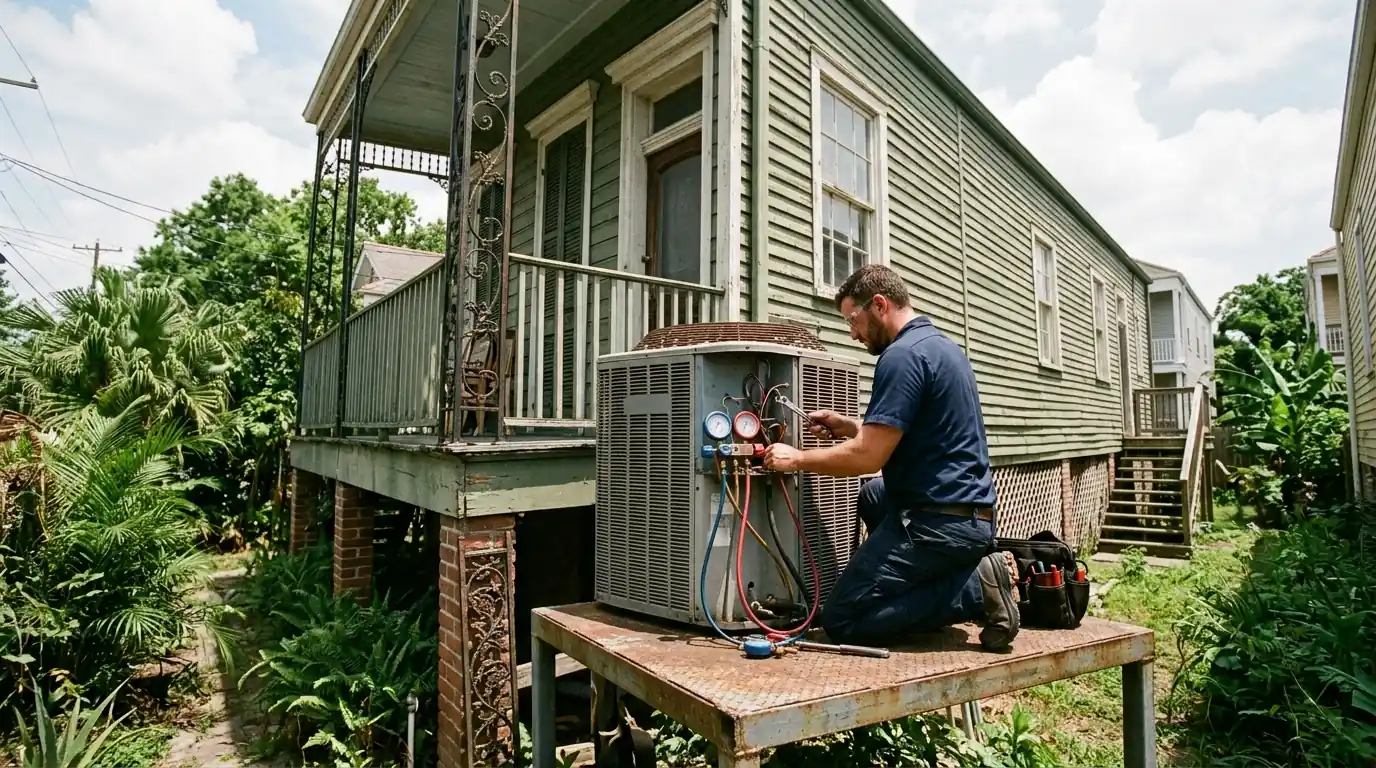
Raising AC condensers above flood level in New Orleans
In a city that floods, the outdoor unit is the most exposed part of your cooling system. Raising it onto a stand or bracket is one of the simplest ways to protect it.
Answered 24/7Mid-City service officeSlidell head officeEvery major brand
An raised condenser stand in New Orleans raises the outdoor AC unit above likely flood levels on a galvanized or aluminum platform, or on a wall bracket where space is tight. Replacing a ground-level unit after a flood often triggers an elevation requirement, and in historic districts the location goes through preservation review, so the stand is planned with the permit.
Why elevation matters here
Updated September 2026
A condenser sitting in even a few inches of floodwater can short its controls and seize its compressor. Raising it above the level water is likely to reach turns a flooded yard from a replacement into an inconvenience.
Elevation also comes up whenever a flooded ground-level unit is replaced, because the replacement may have to meet elevation requirements before the permit is approved.
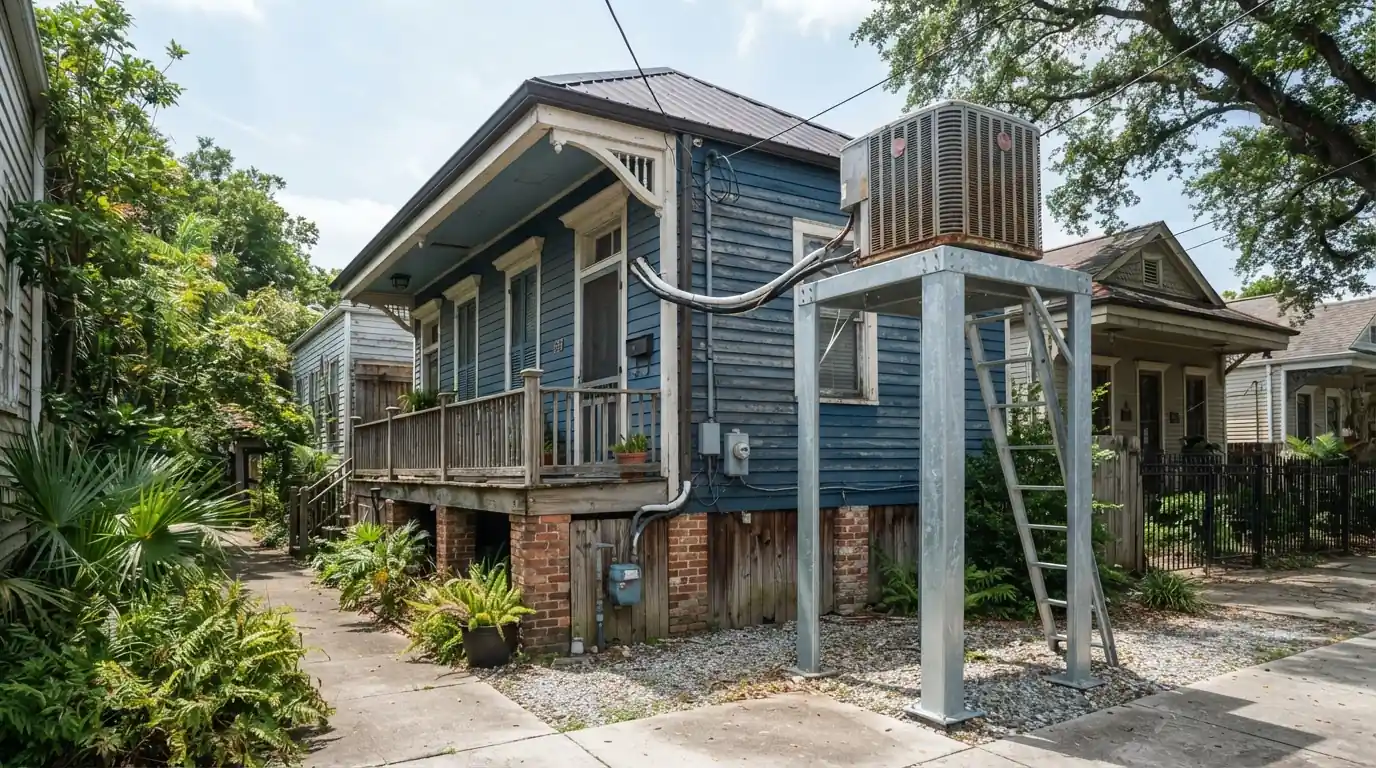
What affects the cost of an raised stand
Stands are priced on the unit, the height and the site.
Height
Taller platforms need more material and bracing.
Stand type
Platforms and wall brackets differ in cost.
Unit size
Heavier units need heavier supports.
Line extensions
Longer refrigerant lines, drain and wiring.
Relocation
Moving the unit adds refrigerant work.
Permits and review
Permits and any historic review required.
Platform or wall bracket
| Ground platform | Wall bracket | |
|---|---|---|
| Best for | Larger units, open yards | Smaller units, narrow lots |
| Yard space | Uses ground space | Keeps the yard clear |
| Vibration | Isolated from the house | Needs isolation pads |
| Height range | Flexible | Limited by the wall |
Flood Zone Elevation
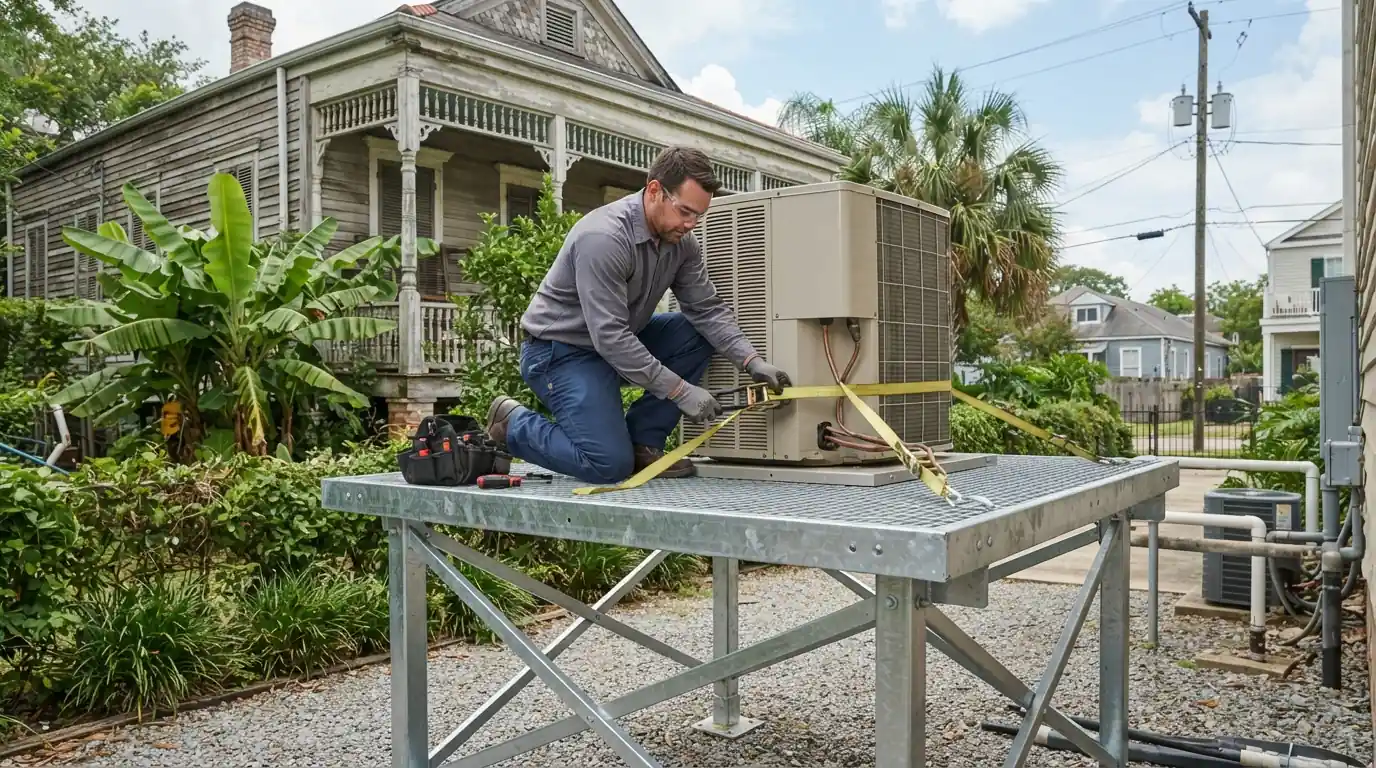
We set the height based on your property's flood risk and any requirement that applies to your address, then install a stand rated for the unit's weight and wind exposure. The line set, drain and electrical disconnect are extended to match, and the unit is secured to the platform so it cannot shift in a storm. Where a replacement is happening anyway, doing the elevation at the same time costs far less than raising the unit later. We also check that the new height leaves room for service access.
Platform vs Wall Bracket
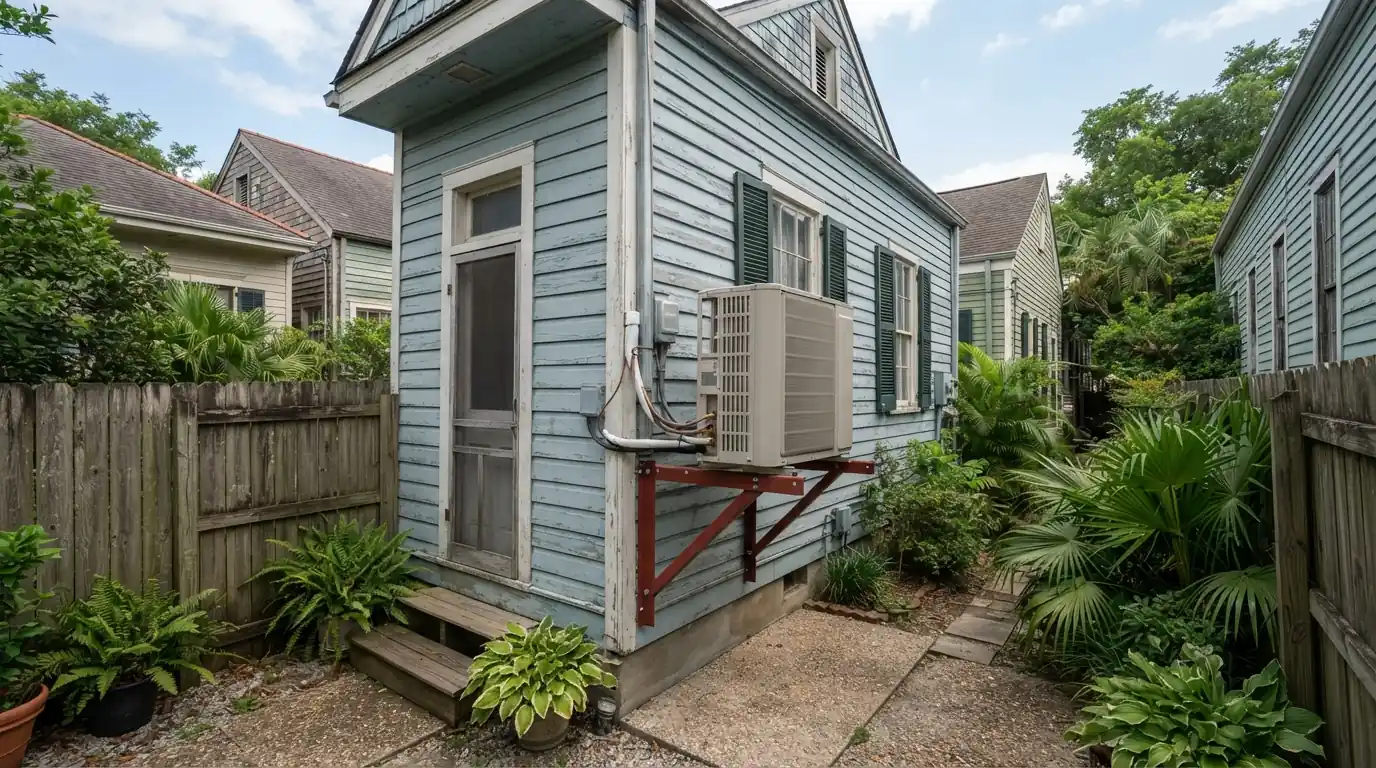
Platforms stand on their own footings in the yard and suit larger units and properties with space. Wall brackets mount the unit to the house, keeping the yard clear, and suit smaller condensers and narrow lots. Brackets transmit some vibration into the wall, so we use isolation pads and check the wall structure first. Either way, the unit needs clearance around it for airflow and service access. In historic districts, placement at the rear of the house is usually the easiest to approve, and we plan for that from the start.
Relocating a Ground-Level Unit
Sometimes the best fix is moving the unit, not just raising it: out of a low corner that collects water, away from a dryer vent, or to the rear of a historic house where it is less visible. Relocation means extending or replacing the refrigerant lines and wiring, pulling a vacuum and recharging. We quote it alongside a simple elevation so you can compare the two. Relocation often solves a noise or airflow problem at the same time, and the new line set is a chance to replace old, undersized copper.
Flood history and approvals
Gentilly flooded badly in 2005 when the London Avenue Canal floodwalls failed, and replacing a ground-level condenser after a flood can trigger elevation requirements before the permit is approved. On historic properties in the French Quarter, new equipment locations also go through the Vieux Carre Commission. We plan the height and location with those rules in mind, so the permit is not what holds the job up.
How long the job takes
Most elevations are finished in a single day, including recovering and recharging refrigerant. If a permit or historic review is needed, we file it first and schedule the work once it is approved.
How an elevation job runs
- 1
Site and flood risk
Height and location agreed based on the property.
- 2
Permit
Filed, including any historic review.
- 3
Recover and disconnect
Unit safely disconnected, refrigerant handled.
- 4
Build and set
Stand or bracket installed and the unit secured.
- 5
Reconnect
Lines, drain and electrical extended and reconnected.
- 6
Test
System evacuated, charged and run.
Questions about Raised Condenser Stand Installation in New Orleans
It depends on your property's flood risk and any requirement for your address; we set it accordingly.
Usually, yes. We handle it.
Yes, on a sound wall with isolation pads, for smaller units.
Yes, if it is in good condition. If it is old, raising it during a replacement may be better value.
Not meaningfully, as long as the lines are properly sized and insulated.
Replacements often must meet elevation rules; we check before quoting.
Usually a single day.
Yes, with review. Rear placement is usually easiest to approve.
More installation we handle in New Orleans
Zoning System Installation
Two-zone dampers, upstairs too hot fix and more.
Our zoning system installation serviceAC Installation & Replacement
Condenser-only replacement, matched system replacement and more.
AC Installation & Replacement in New OrleansAir Handler & Evaporator Coil Replacement
Attic air handler swap, coil-only replacement and more.
Attic air handler swapCondenser sitting too low?
Call and we will plan the height, the stand and the permit.
Browse every service