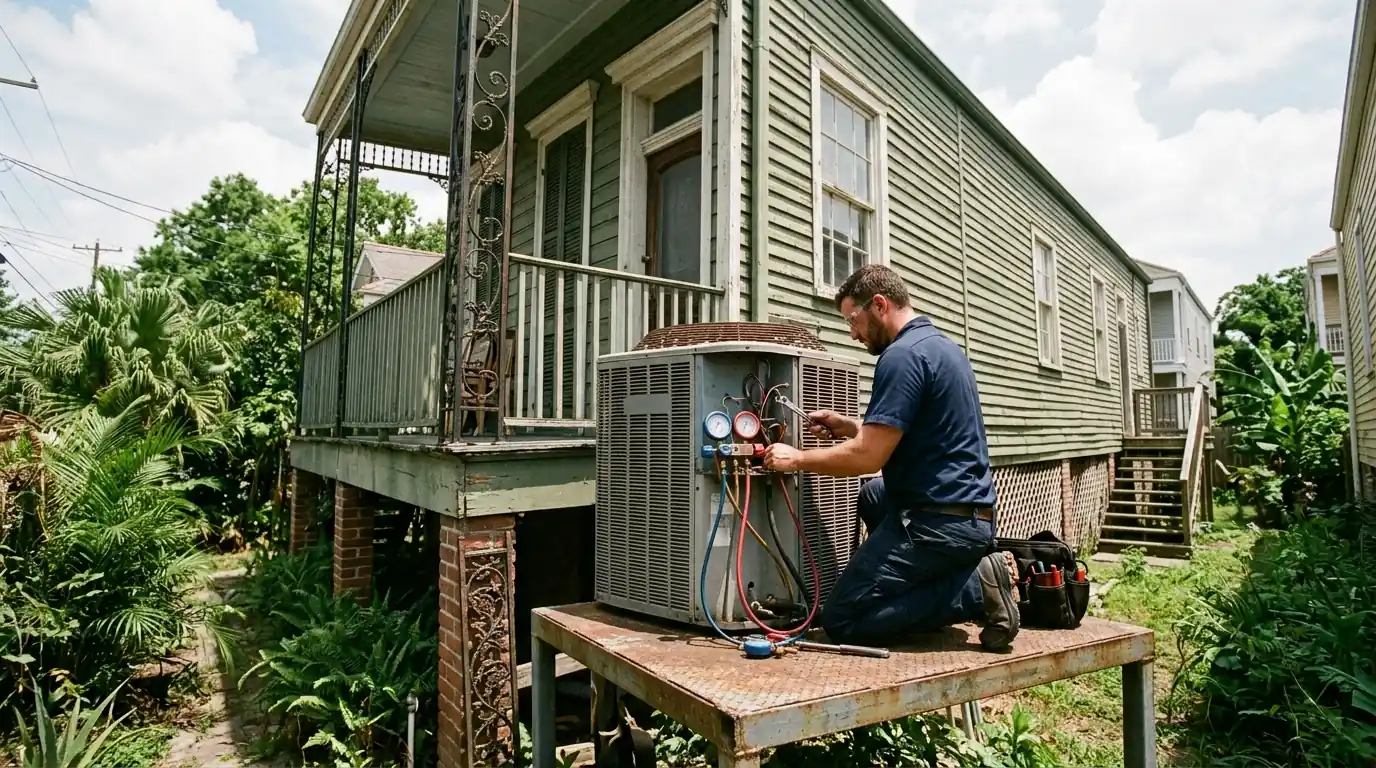
Small-duct high-velocity cooling for historic New Orleans homes
In a historic house, conventional ducts mean soffits, chases and damaged plaster. High-velocity systems use small flexible tubes that fit where conventional ducts cannot.
Answered 24/7Mid-City service officeSlidell head officeEvery major brand
High-velocity HVAC in New Orleans uses flexible supply tubes about two inches across, fed by a compact air handler, to cool historic homes without large ducts. The tubes run through wall cavities and between joists with small openings, and outlets are small round vents. The system costs more than conventional central air but preserves plaster, trim and ceilings.
Why small-duct systems suit old houses
Updated September 2026
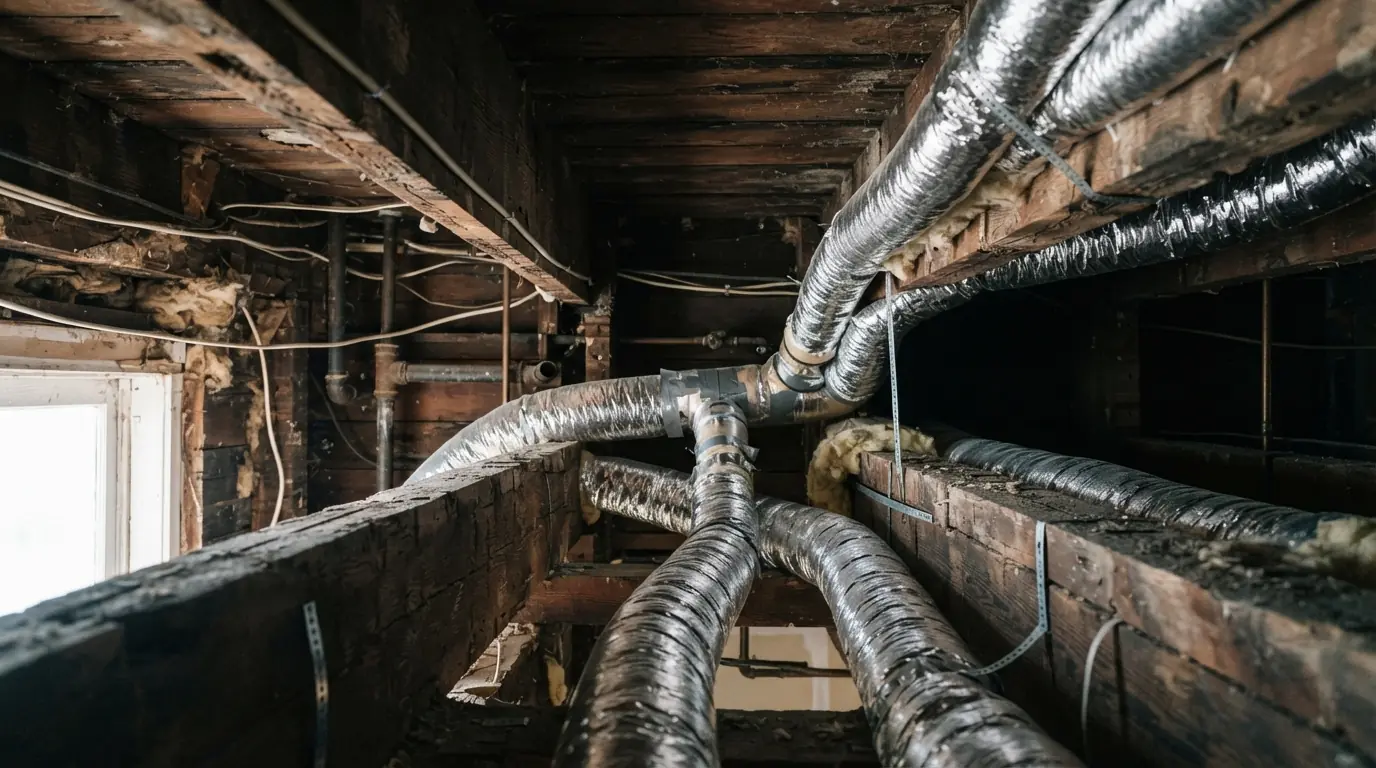
Conventional ducts need space that older houses do not have, and cutting chases through plaster changes the character of the rooms. High-velocity systems move air at higher speed through much smaller tubes, so the ductwork can snake through existing cavities.
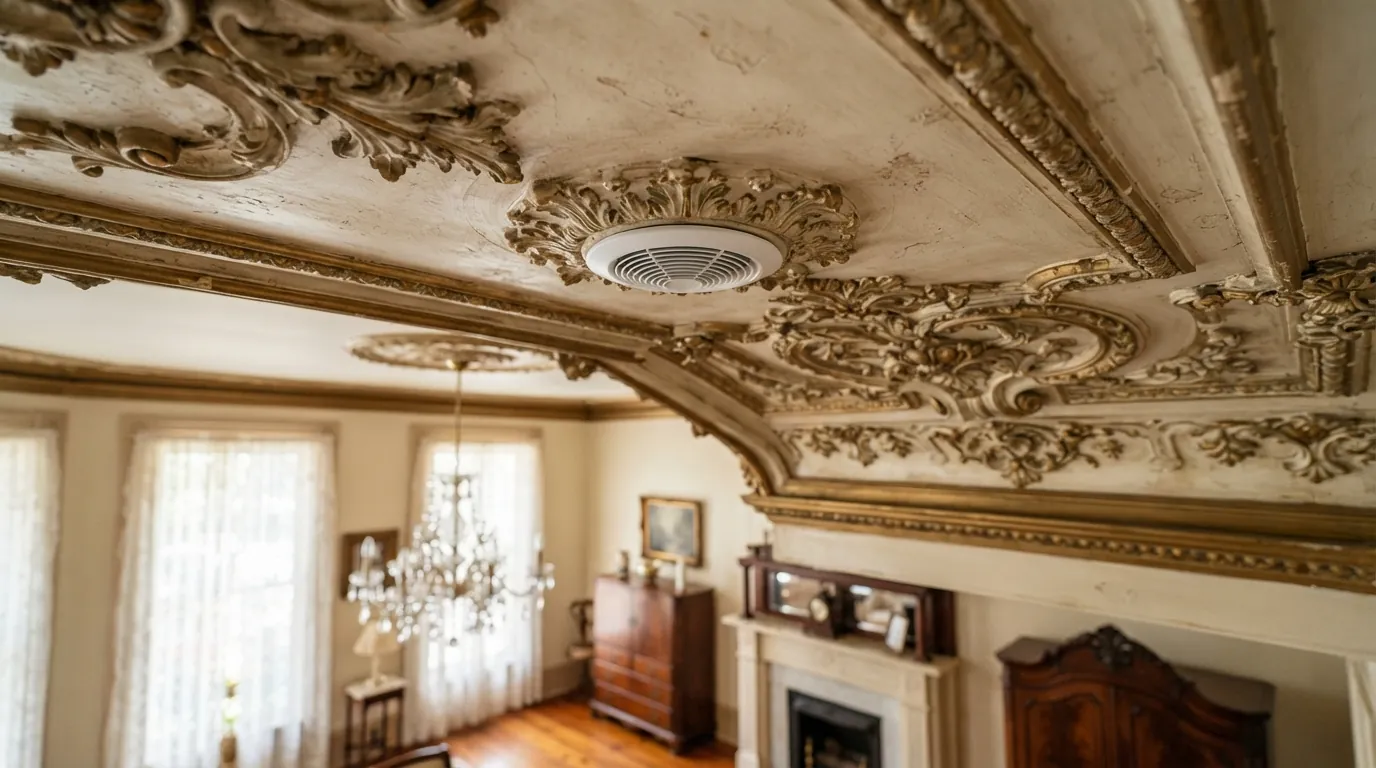
The small round outlets blend into ceilings and floors far better than large registers, and the air mixing they create keeps tall rooms evenly cool.
What affects the cost of a high-velocity system
High-velocity systems are priced after a detailed site visit.
Number of outlets
More rooms and outlets mean more tubing and labor.
Routing difficulty
Access through walls and floors varies by house.
Equipment size
Air handler and outdoor unit capacity.
Lead-safe practices
Containment and cleanup in older homes.
Electrical
Circuits for the equipment.
Historic review
Planning and permits for exterior equipment.
What a high-velocity install includes
- Room-by-room load calculation
- Tube routes planned through existing cavities
- Compact air handler installed
- Insulated supply tubes and round outlets
- Lead-safe practices on painted surfaces
- Outdoor unit placed for historic review
- Airflow balanced at every outlet
High-velocity, mini-split or conventional ducts
| High-velocity | Mini-split | Conventional ducts | |
|---|---|---|---|
| Ductwork | Small flexible tubes | None | Large ducts and chases |
| Visible indoor parts | Small round outlets | Wall heads | Registers |
| Plaster disruption | Minimal | Minimal | Significant |
| Whole-house control | One system | Per head | One system |
Small-Duct Systems
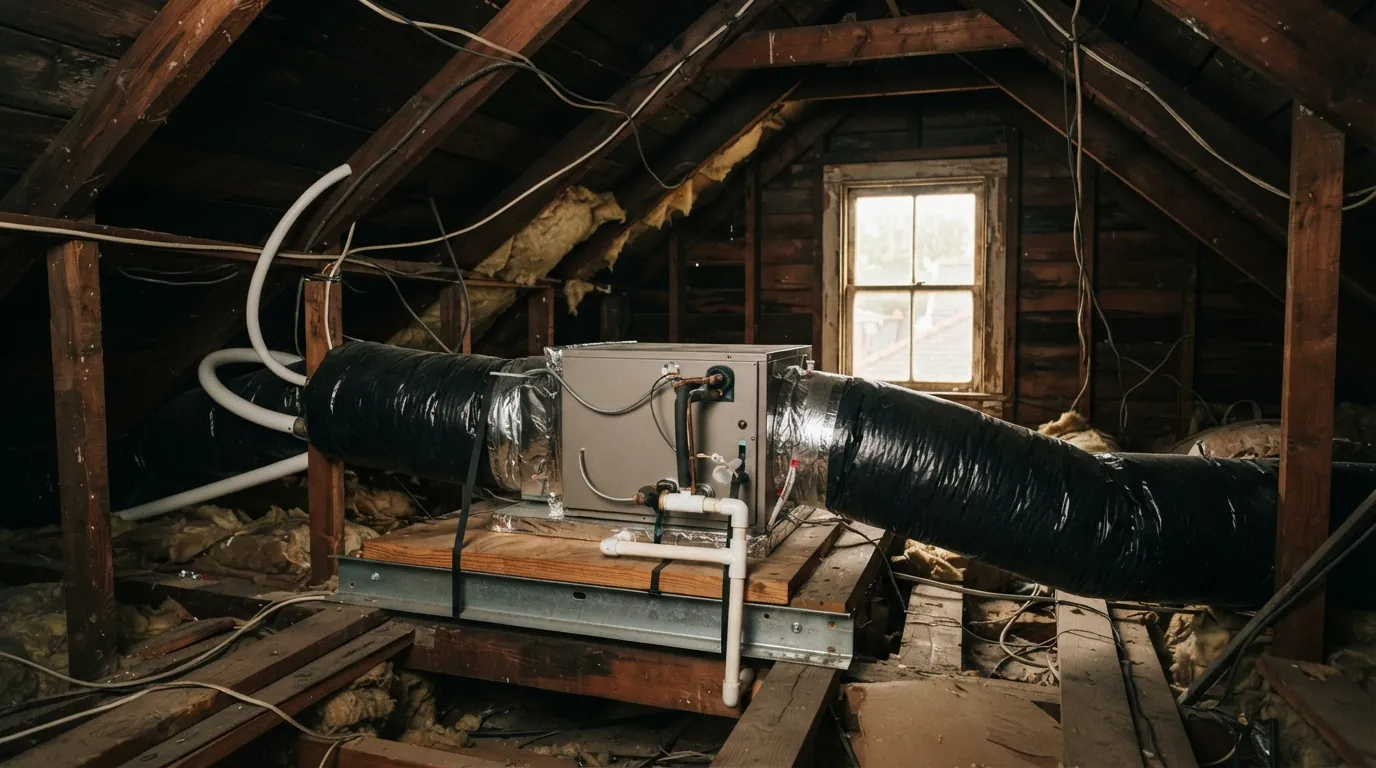
A high-velocity system uses a compact air handler, typically in the attic or a closet, with an insulated trunk that feeds flexible supply tubes to each room. Each tube ends in a small round outlet. Because air leaves the outlets at higher velocity, it mixes the room air well, which helps with the stratification common in rooms with tall ceilings. These systems also tend to remove moisture well, which matters in a humid climate. A heat pump outdoor unit gives the same system heating in winter.
Plaster Wall Penetrations
Running the tubes means small openings, not wide chases. We plan routes through existing wall cavities, floor joists and closets, make openings as small as the outlets require, and protect plaster and trim throughout the work. In older homes, disturbing painted surfaces calls for lead-safe work practices, which we follow as a matter of course rather than as an extra. Where a route would damage decorative plaster or trim, we find another one, even if it means a longer tube run, because the finishes are what make these houses worth preserving. Every opening is sealed and finished neatly around its outlet.
Historic District Equipment Placement
The outdoor unit still has to go somewhere. In the historic districts, visible exterior equipment and conduit are reviewed, so we plan the condenser at the rear of the property where possible and route refrigerant lines through the interior or out of sight. Planning that placement before the permit application avoids the delays that come from exterior equipment that review will not approve. We prepare the equipment location, line routing and photos the review needs, so the application is complete the first time it is submitted.
Historic houses and small ducts
Roughly a third of homes in the city predate 1940, many of them raised pier-and-beam houses in neighborhoods like the Marigny and Esplanade Ridge. Those houses have plaster walls, tall ceilings and little room for conventional ducts, and nearly all of them were painted before the 1978 lead ban. That combination is where a small-duct system, installed with lead-safe practices, makes the most sense.
How a high-velocity installation runs
- 1
Site visit
Room loads, wall cavities and access points mapped.
- 2
Design
Air handler location, trunk and tube routes planned.
- 3
Permit and review
Mechanical permit and any historic review.
- 4
Tube installation
Flexible tubes routed with minimal openings.
- 5
Equipment
Air handler and outdoor unit installed.
- 6
Balance and test
Airflow set at each outlet.
Questions about High-Velocity HVAC for Historic Homes in New Orleans
A central system that uses small flexible tubes and round outlets instead of large ducts.
The outlets make a soft sound; proper design keeps it low.
Yes, but it avoids chases and plaster damage.
Yes, with a heat pump or heating coil.
Small round vents a few inches across.
Yes, whenever painted surfaces are disturbed.
Yes. Mini-splits need no ducts but place visible heads on walls.
High-velocity systems generally remove moisture well.
More installation we handle in New Orleans
New Central Air Installation
First-time central air, window units to central and more.
Our new central air installation serviceRaised Condenser Stand Installation
Flood zone elevation, platform vs wall bracket and more.
Raised Condenser Stand Installation in New OrleansHistoric home with no room for ducts?
Call and we will map a small-duct system that respects the house.
Browse every service