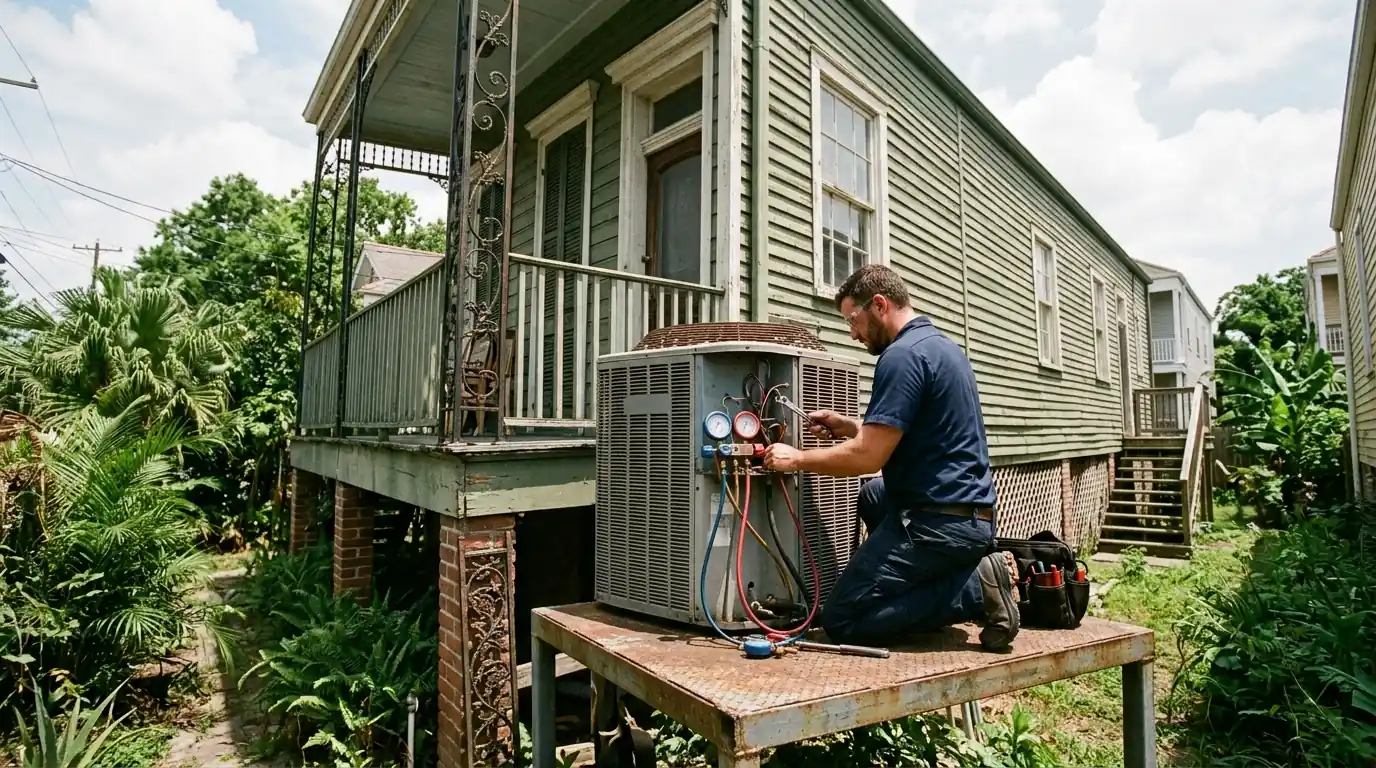
First-time central air for New Orleans homes
Adding central air to a house that never had it is a design job before it is an installation. The ducts, the equipment location and the house itself all have to be worked out first.
Answered 24/7Mid-City service officeSlidell head officeEvery major brand
Installing central air for the first time in a New Orleans home involves a load calculation, designing and running a new duct system through the attic or crawl space, placing an air handler and outdoor unit, and adding electrical service for the equipment. It usually takes several days, and in older homes it works best combined with some air sealing.
What a first-time install involves
Updated September 2026
Replacing a system uses the ducts and locations that already exist. A first-time install creates them: where the air handler lives, how supply and return air reach every room, where the condenser sits, and how the electrical service feeds it all.
Done well, it transforms an older house. Done poorly, with undersized ducts or a unit sized by guesswork, it runs constantly and never feels dry.
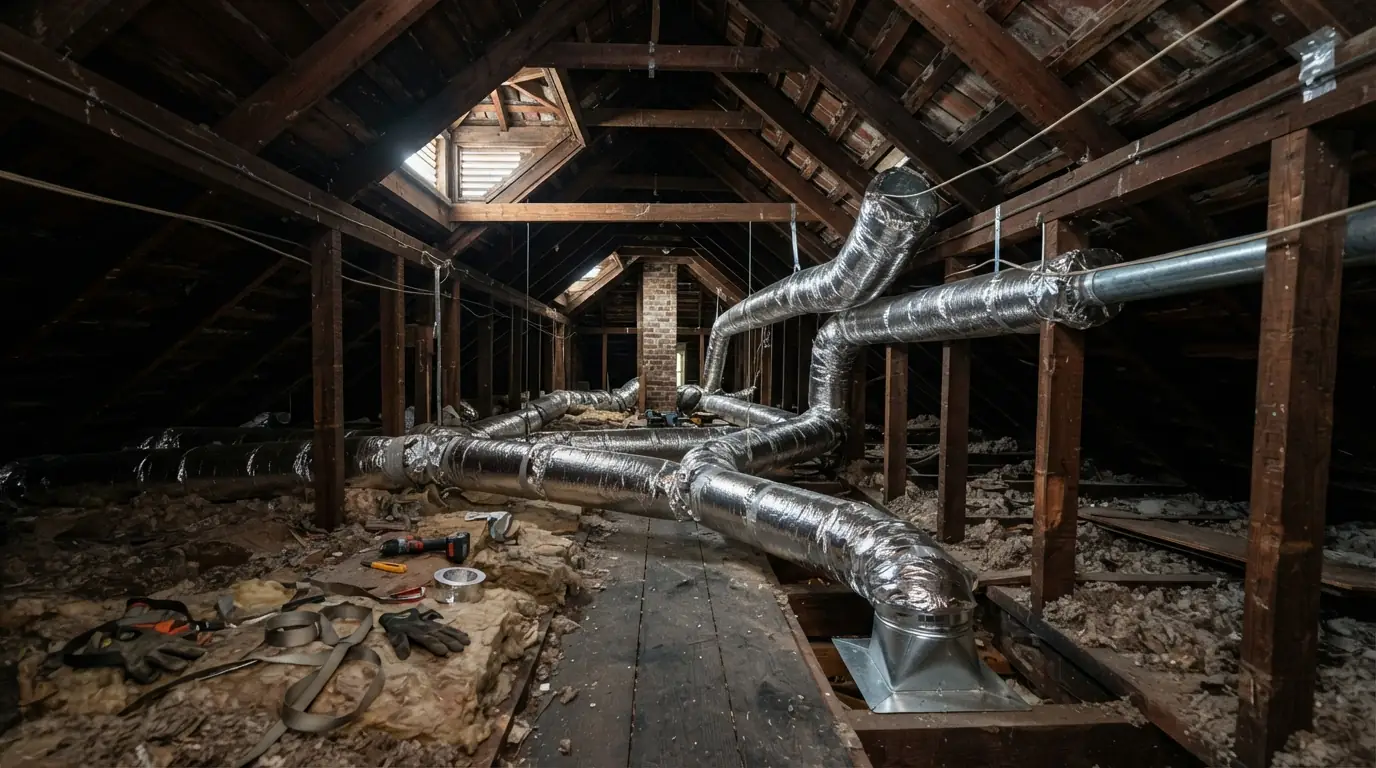
What affects the cost of a new central air installation
First-time installs are priced after a full site visit.
House size and layout
More rooms and floors mean more ductwork.
Duct routing
Attic, crawl space or chases affect labor.
Equipment
Size, efficiency and staging of the system.
Electrical service
New circuits or a panel upgrade.
Air sealing
Optional work that improves results.
Permits and review
Mechanical permit and any historic review.
What a new central air install includes
- Room-by-room load calculation
- Complete duct design and installation
- Returns sized for proper airflow
- Air handler with drain pan and float switch
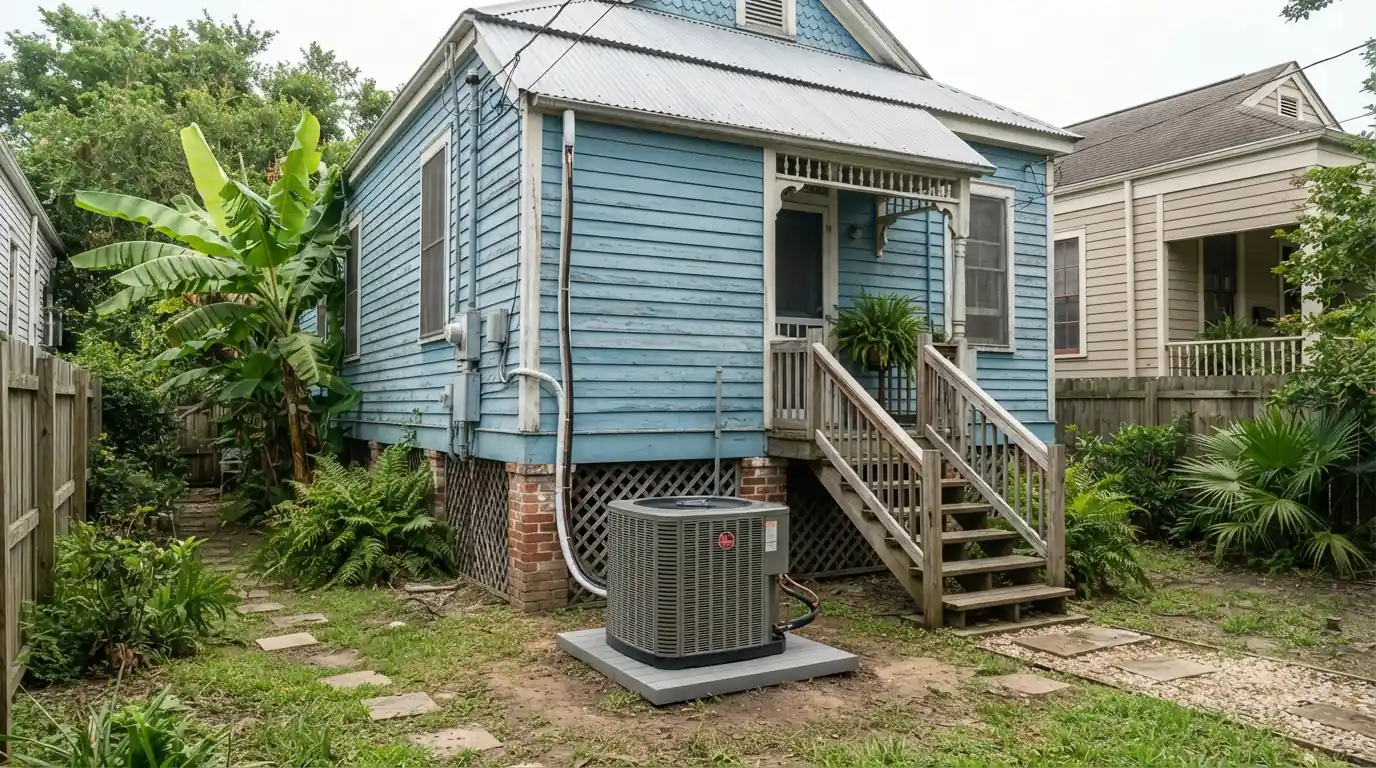
- Outdoor unit on a pad or stand
- Electrical circuits and disconnect
- Permit, start-up and room-by-room balancing
First-Time Central Air
We start with a room-by-room load calculation, then design the duct layout around the house: supply runs to each room, returns sized so air can get back to the system, and an air handler location with a proper drain path. The outdoor unit goes where it has airflow and service access and, in historic districts, where review allows. We quote the complete job, including electrical and permits, so there is no second bill for things discovered later. A house that was never built for air conditioning rewards careful design more than any other job we do.
Window Units to Central
Replacing window units with central air frees the windows, cuts noise and usually lowers the bill, since modern central systems are far more efficient than older window units. The rooms that relied on window units often have no ductwork at all, so the duct design has to reach them. Where a room cannot be reached reasonably, a single mini-split head can fill the gap instead of forcing a long, inefficient duct run. Freeing the windows also brings back light and airflow on mild days when the AC can stay off.
Duct Design for Older Homes
Older homes often have little attic space and plaster walls that make duct runs difficult. We route ducts through the attic where there is room, through crawl spaces on raised houses, and through closets or chases where needed. In some houses a high-velocity small-duct system or mini-splits are the better choice, and we compare those options openly rather than forcing a conventional system into a house that does not suit it. We also plan the return air carefully, since older houses with many closed rooms often need more than one return.
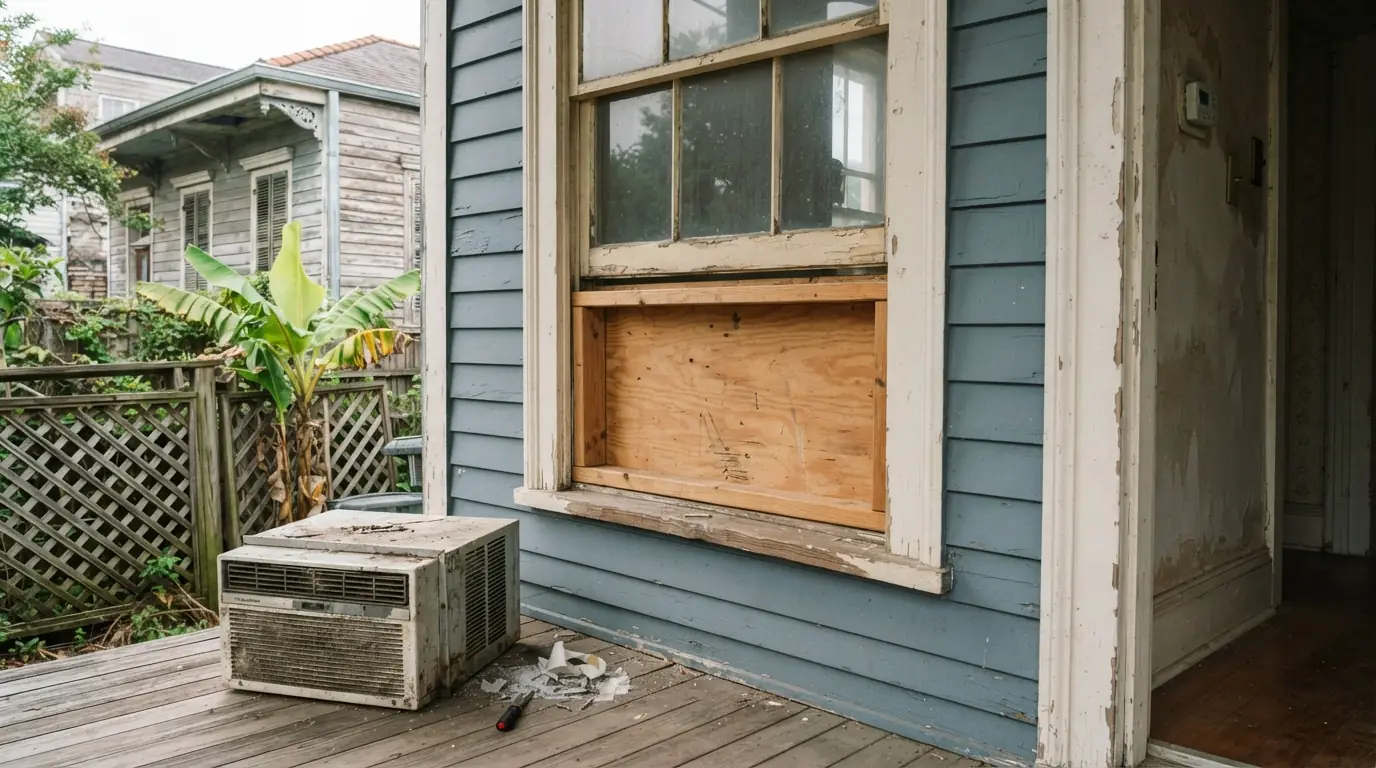
Adding AC to houses built without it
Homes in Uptown and Mid-City built before 1940 were designed to stay livable without air conditioning, with high ceilings and big windows to move air. Adding central air to houses like these means adapting the building as well as installing equipment, because they leak conditioned air and let humid air in. We size the system for the house as it is and point out the air sealing that would make it work better.
How long the project takes
A typical first-time installation takes several working days: ductwork first, then equipment and electrical, then start-up and balancing. Larger homes, difficult access or a panel upgrade can extend that. We give you a schedule with the quote and keep the house usable throughout.
Brands we service and install
We repair and install Trane, Carrier, Lennox, Goodman, Rheem, Ruud and the other major lines, plus Mitsubishi Electric ductless.
How a new installation runs
- 1
Site visit and load
Every room measured, access points checked.
- 2
Design
Duct layout, equipment locations and electrical planned.
- 3
Quote and permit
Complete price and permit filing.
- 4
Ductwork
Supply and return runs installed and sealed.
- 5
Equipment and electrical
Air handler, outdoor unit and circuits installed.
- 6
Start-up
Charged, balanced and tested room by room.
Questions about New Central Air Installation in New Orleans
Usually several days, depending on the house.
Yes, with careful duct routing. Some houses suit mini-splits or small-duct systems better.
Sometimes. We check the panel during the site visit.
Yes. We pull the mechanical permit.
Often yes here, since it provides heat and cooling in one system.
A mini-split head can fill the gap.
Trane, Carrier, Lennox, Goodman, Rheem and Daikin, among others.
When sized correctly it helps a lot; some older homes also need a dehumidifier.
More installation we handle in New Orleans
Raised Condenser Stand Installation
Flood zone elevation, platform vs wall bracket and more.
Our raised condenser stand installation serviceZoning System Installation
Two-zone dampers, upstairs too hot fix and more.
Zoning System Installation in New OrleansAC Installation & Replacement
Condenser-only replacement, matched system replacement and more.
Condenser-only replacementReady to retire the window units?
Call to book a site visit and a complete central air design.
Browse every service