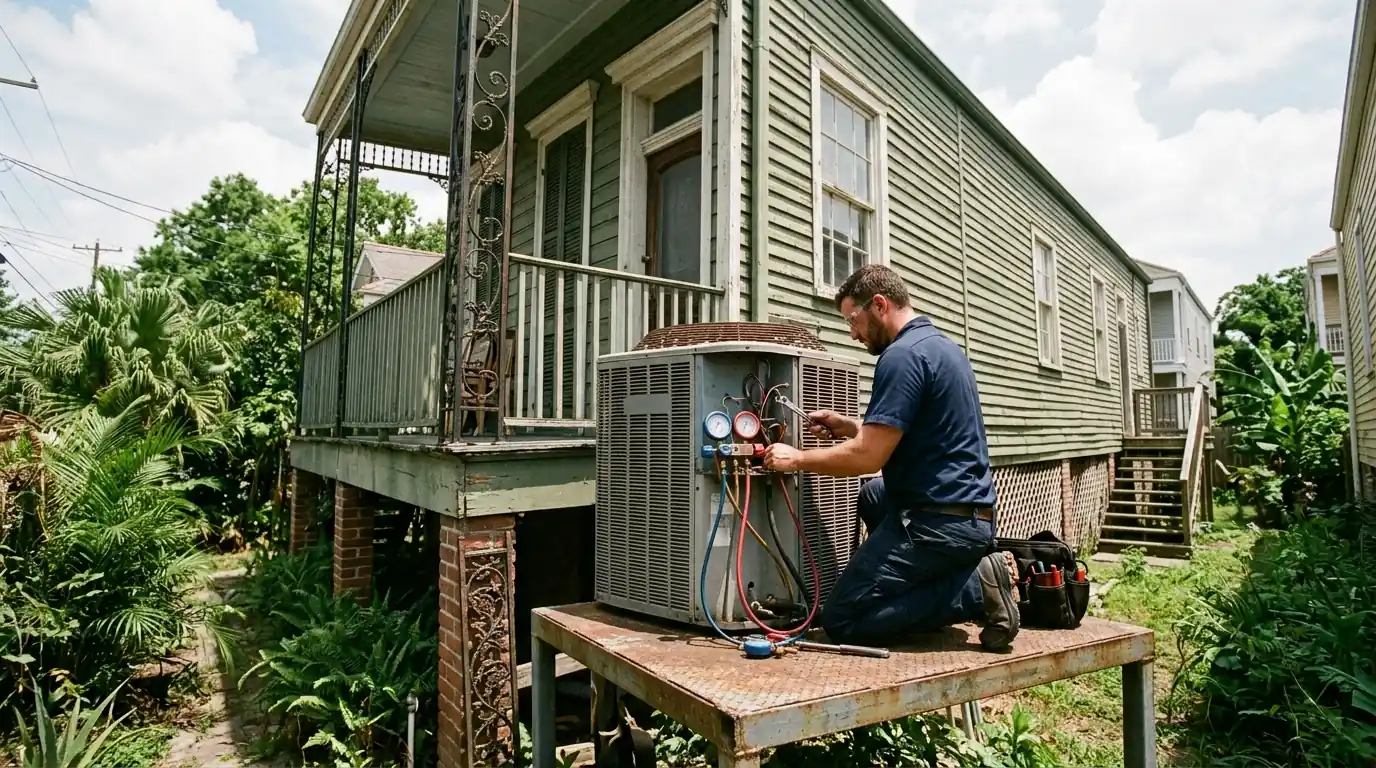
Bathroom and kitchen exhaust fans vented outside in New Orleans
Every shower and every pot on the stove adds moisture to a house that is already fighting humidity. A properly sized exhaust fan, vented outside, removes it at the source.
Answered 24/7Mid-City service officeSlidell head officeEvery major brand
Bathroom and kitchen exhaust fans in New Orleans should be sized to the room and vented all the way outside through a roof or wall cap, never into the attic. A correctly installed fan clears shower steam and cooking moisture quickly, which reduces mildew, protects paint and takes load off the AC. Many older fans here vent into the attic or are too weak to help.
Why exhaust fans matter in a humid city
Updated September 2026
A hot shower or a pot of boiling water puts a surprising amount of water into the air. In a house that is already humid, that moisture settles on cold surfaces, grows mildew on ceilings and grout, and adds to the work the AC has to do to dry the air.
An exhaust fan removes it at the source, but only if it moves enough air and sends it outside. A weak fan, or one that dumps into the attic, does little or makes things worse.
What affects the cost of an exhaust fan installation
Exhaust fan work is priced per fan and on the duct route.
Fan type
Basic, quiet or humidity-sensing models.
Duct route
Short wall runs cost less than long roof runs.
Roof or wall cap
New penetrations and flashing.
Electrical
New wiring, timers or humidity switches.
Attic access
Tight attics take longer.
Range hoods
Larger ducts and possible make-up air.
What an exhaust fan install includes
- Fan sized to the room
- Quiet fan with timer or humidity control
- Insulated duct to the outside
- Roof or wall cap with backdraft damper
- All joints sealed and supported
- Wiring and switch installed
- Airflow confirmed at the cap
Bathroom Exhaust Fans
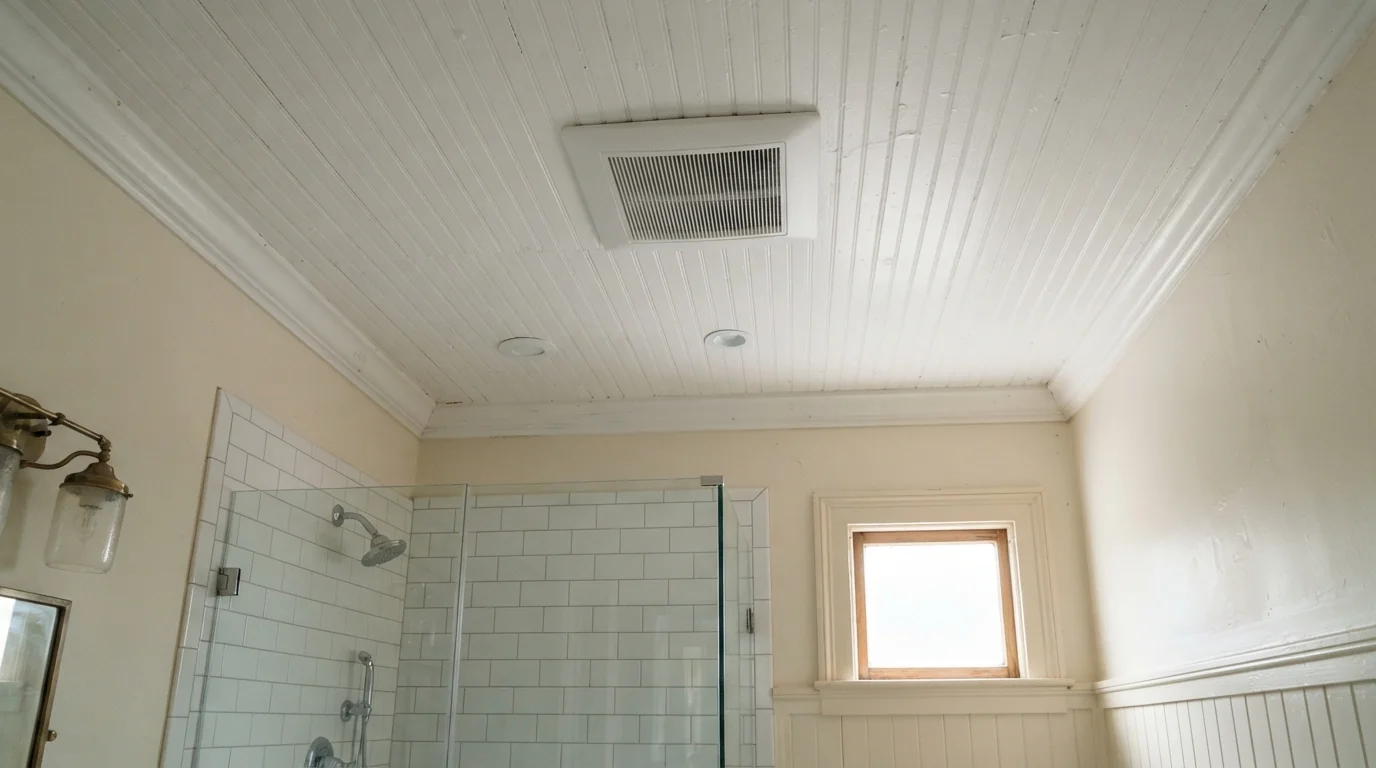
We size the fan to the bathroom, choose a quiet model so it actually gets used, and place it near the shower where the steam is. A humidity-sensing fan or a timer switch keeps it running long enough to clear the room after the shower ends, which is when most mildew-causing moisture is still in the air. We replace noisy or weak old fans and correct the ductwork so the fan delivers the airflow it is rated for, not a fraction of it. We also check that the bathroom door has a gap underneath, since the fan needs replacement air to work.
Kitchen Range Hood Venting
A range hood that recirculates air through a filter removes some grease but none of the moisture or heat. Venting the hood outside removes both. We run a correctly sized duct from the hood to a wall or roof cap, keep the run as short and straight as the kitchen allows, and seal every joint. For powerful hoods, we check whether the house needs a source of make-up air so the hood can actually move the air it is rated for. The outside cap gets a damper so outdoor air and pests stay out when the hood is off.
Venting to the Outdoors
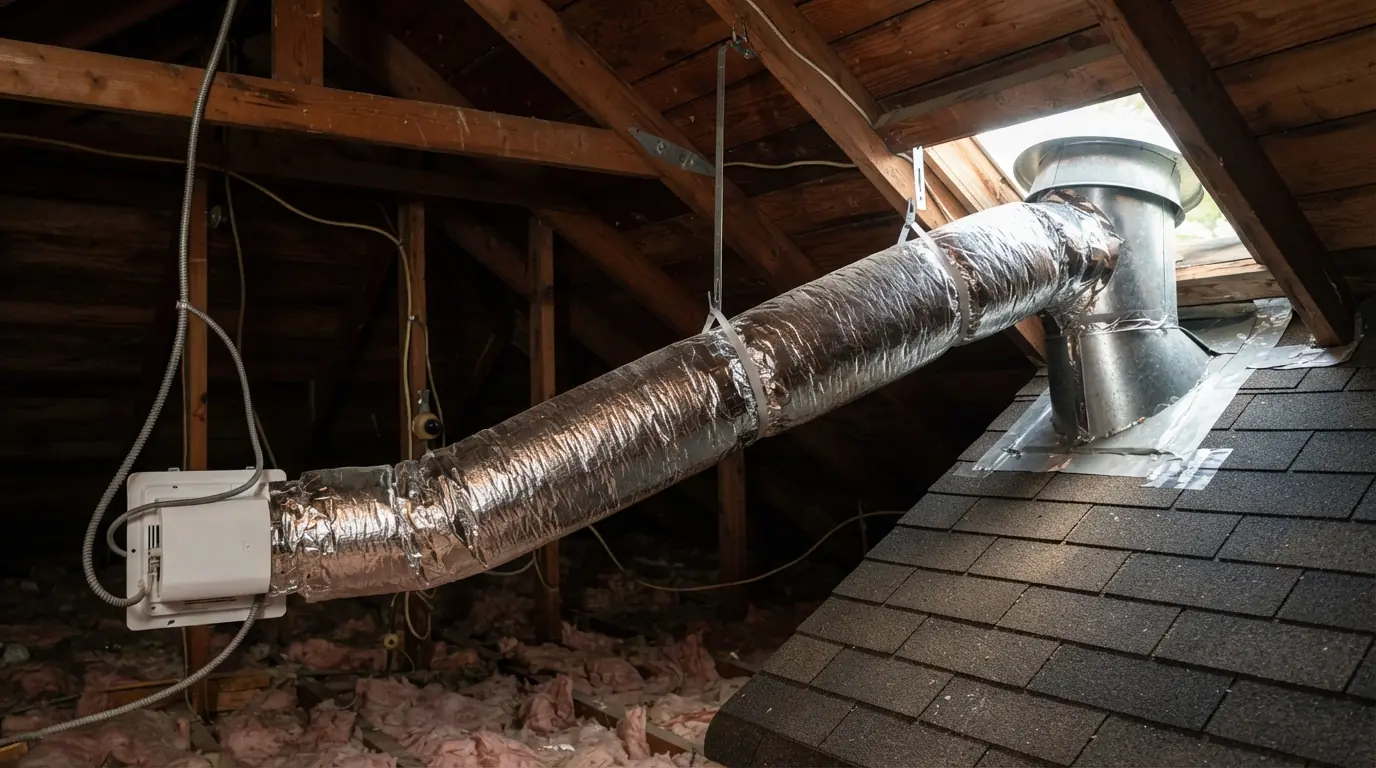
The most common problem we find is a fan that vents into the attic, or a duct that has come loose and does the same. That puts warm, wet air right against the cold ducts and the underside of the roof, where it condenses and grows mold. We run insulated duct from each fan to a proper roof or wall cap with a backdraft damper, sealed and supported so it stays connected, and confirm the air is actually leaving the house. Any attic insulation or framing damaged by years of venting indoors is pointed out so you can decide how to handle it.
Moisture a household adds indoors
In a climate where the air outside is humid for most of the year, the moisture a household adds inside has fewer places to go. A shower that would dry out in an hour in a drier city can leave a bathroom damp much longer here. That is why we treat exhaust fans as part of humidity control, not just an extra, and why we make sure every one we install is vented all the way outside.
What you can do yourself
| Task | Homeowner | Technician |
|---|---|---|
| Run the fan during and after showers | Yes | |
| Clean the fan grille | Yes | |
| Check the outside cap opens | Yes | |
| Reroute a duct venting into the attic | No | Yes |
| Install a new fan and wiring | No | Yes |
How an exhaust fan install runs
- 1
Assess
Room size, existing fan and where it vents.
- 2
Choose the fan
Sized and selected for noise and controls.
- 3
Route the duct
Shortest practical path to the outside.
- 4
Install
Fan mounted, duct connected and sealed.
- 5
Cap and damper
Roof or wall cap with backdraft damper.
- 6
Test
Airflow confirmed at the outside cap.
Questions about Bath & Kitchen Exhaust Fan Installation in New Orleans
No. It should always vent outside.
It depends on the room size; we size it when we assess.
Older fans and undersized ducts are noisy. Quieter models help.
Yes. A timer or humidity switch keeps it running long enough.
To remove moisture and heat, yes. Recirculating hoods only filter grease.
Yes, by removing moisture the AC would otherwise have to.
Yes, and it is a common find in attics here.
Usually a few hours per fan.
More air quality & humidity we handle in New Orleans
Evaporator Coil Cleaning
Mold and mildew on the coil, musty ac smell and more.
Our evaporator coil cleaning serviceFresh Air Ventilation & ERV Installation
ERV vs HRV, tight home ventilation and more.
Fresh Air Ventilation & ERV Installation in New OrleansIndoor Air Quality Testing
Humidity and Temperature Logging, particle and co2 readings and more.
Humidity and Temperature LoggingBathroom always steamy?
Call and we will install a fan that actually clears it, vented outside.
Browse every service