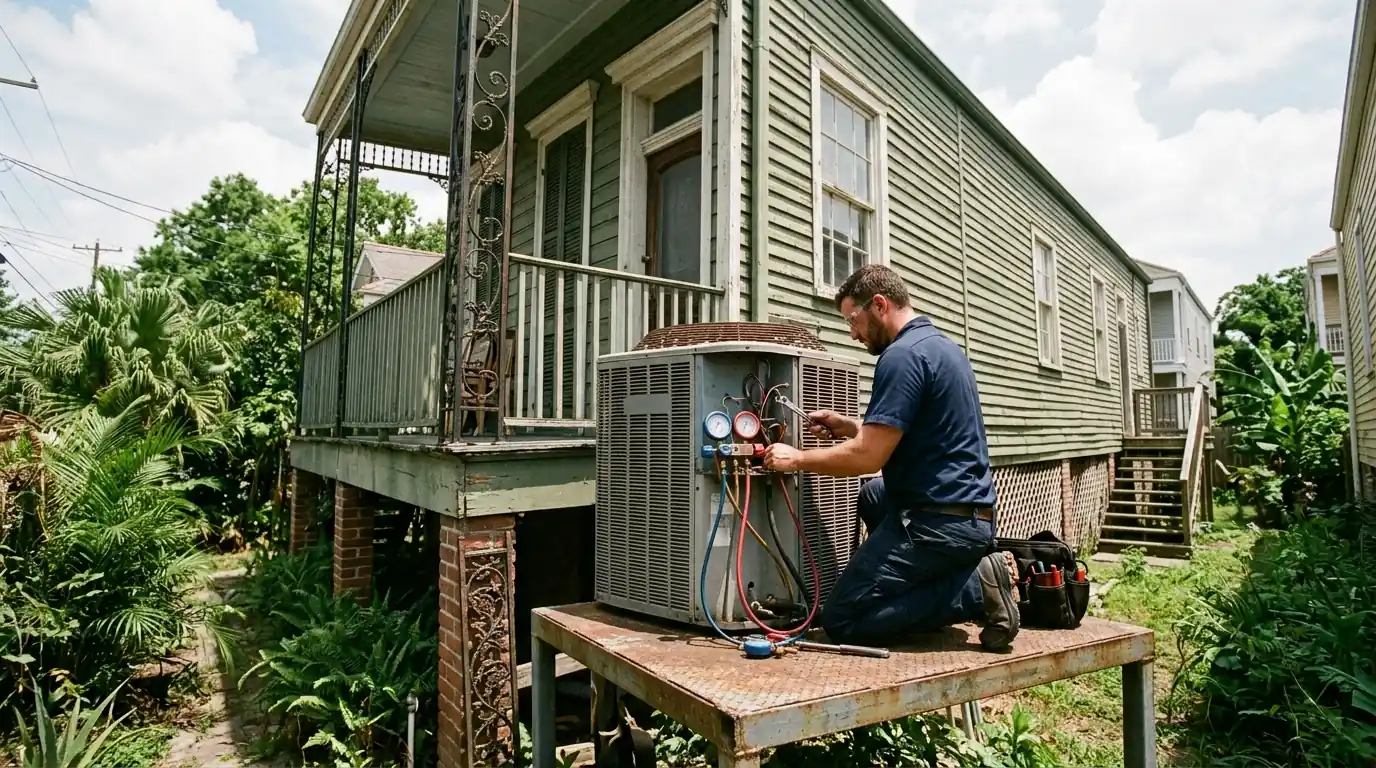
Spring AC tune-ups before the New Orleans heat sets in
Most summer breakdowns start as small problems in spring: a weak capacitor, a slimy drain, a dirty coil. A tune-up finds them while they are cheap and before the system has to run every day.
Answered 24/7Mid-City service officeSlidell head officeEvery major brand
An AC tune-up in New Orleans is best scheduled in spring, before the system starts running daily. It covers the condensate drain, the indoor and outdoor coils, refrigerant charge, capacitor and contactor, electrical connections, airflow and thermostat. Catching a weak capacitor or clogging drain in April prevents most July emergency calls.
What a tune-up is actually for
Updated September 2026
A tune-up is not a sales visit. Its job is to catch the parts that are about to fail and to clean what humidity and pollen have clogged, so the system runs efficiently and does not quit on the hottest week.
In this climate the drain and coils matter most. Algae grows in condensate pans, pollen coats outdoor coils, and a coil that cannot shed heat makes the whole system work harder.
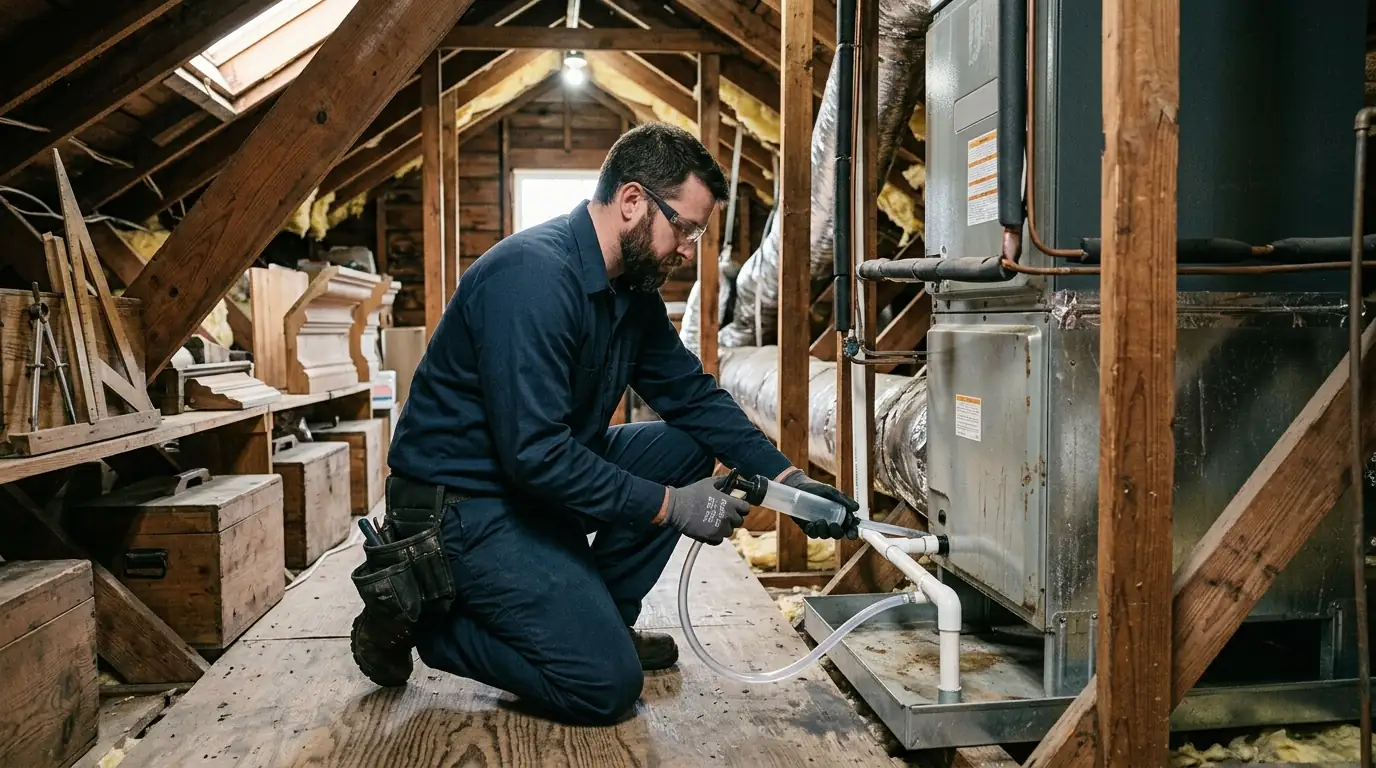
What every tune-up covers
- Outdoor coil cleaned
- Condensate drain flushed and pan treated
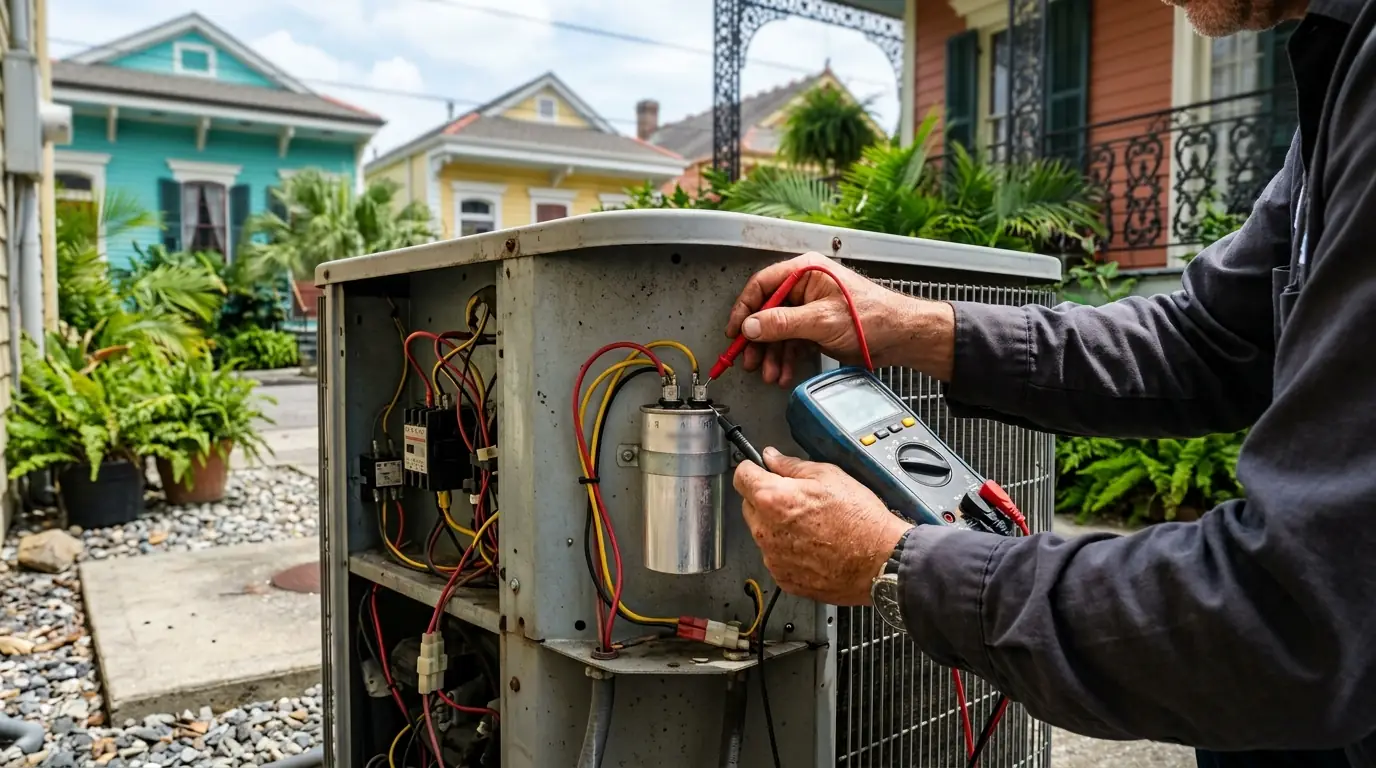
- Capacitor and contactor tested
- Electrical connections tightened
- Refrigerant charge checked by superheat or subcooling
- Airflow and temperature drop measured
- Thermostat and filter checked
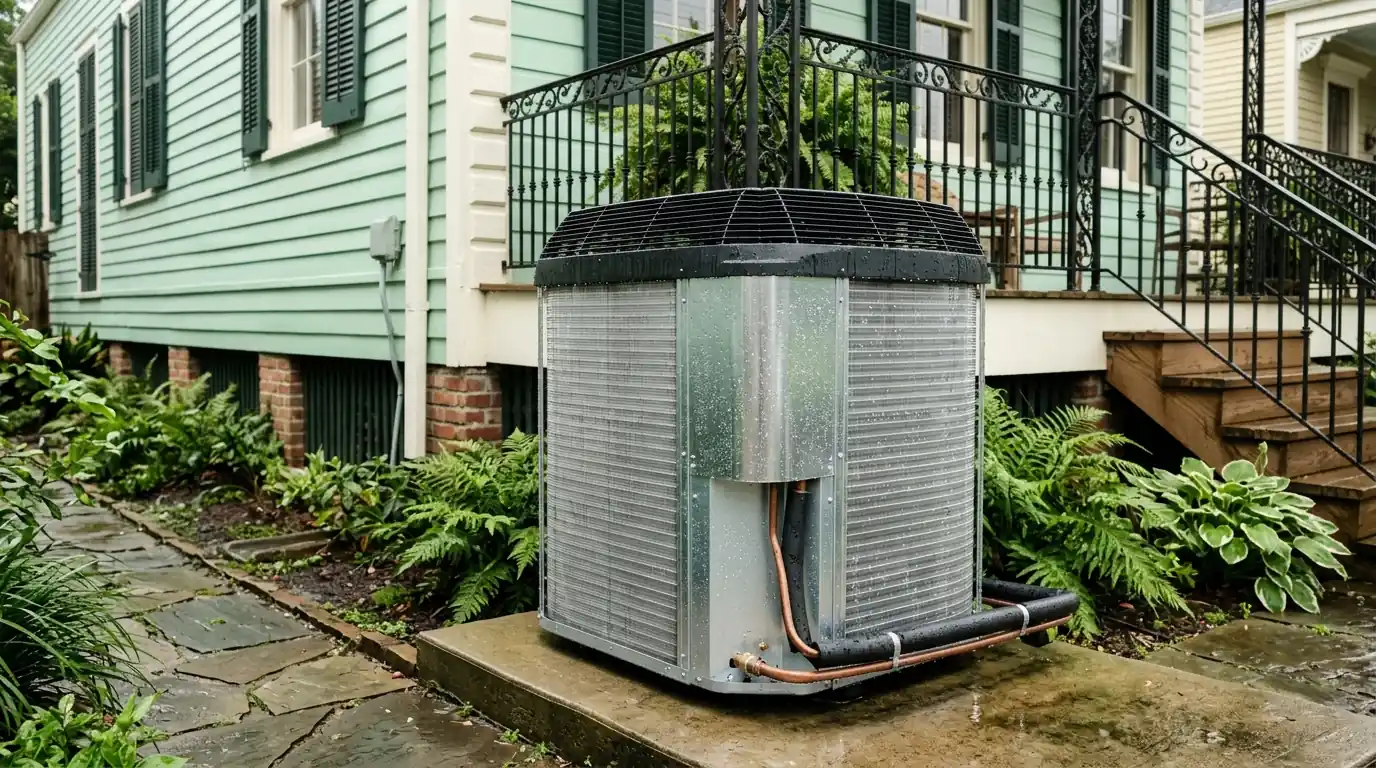
Why drains and coils come first here
With a long humid season and frequent summer rain, condensate drains here grow algae fast, and a clogged drain is one of the most common summer calls we get. Evaporator coils also freeze more readily when airflow drops. That is why a drain flush, a pan treatment and an airflow measurement are part of every tune-up we do, not an add-on.
Spring Tune-Up
The spring visit prepares the system for months of heavy use. We clean the outdoor coil, flush the condensate drain and treat the pan, test the capacitor and contactor under load, tighten electrical connections, check the refrigerant charge, measure airflow and temperature drop, replace or check the filter, and confirm the thermostat is set up correctly. You get a written note of anything that is wearing out and how urgent it is, with no pressure to fix it that day.
Pre-Hurricane Season Check
Before storm season we add a few items: confirm the outdoor unit is secure on its pad or stand, check the disconnect and surge protection, and make sure the condensate path drains away from the house. If you run a generator in outages, we check whether the system can start on it and whether a soft-start kit would help. A few minutes of prep makes a post-storm restart simpler and safer, and it costs almost nothing when done alongside the regular tune-up.
Refrigerant Charge Check
A correct refrigerant charge is the difference between a system that cools efficiently and one that runs long and ices up. We check the charge with superheat or subcooling against the manufacturer's targets, not just the gauge pressures. If it is low, that means a leak, and we tell you so rather than quietly topping it off; a recurring top-off is paying for a problem that should be fixed. A correct charge also protects the compressor, the most expensive part in the system.
What you can do between visits
| Task | Homeowner | Technician |
|---|---|---|
| Change the filter | Every 1 to 3 months | |
| Keep 2 feet clear around the outdoor unit | Yes | |
| Pour vinegar in the drain access | If it has a cleanout | Full flush |
| Rinse the outdoor coil | Gently, power off | Chemical cleaning |
| Check refrigerant or capacitors | No | Yes |
What affects the price of a tune-up
A standard tune-up is a set visit; these are the things that change it.
Number of systems
Each additional system adds time.
Coil condition
A heavily fouled coil may need a deeper cleaning.
Access
Tight attics and rooftop units take longer.
Drain condition
A fully clogged drain may need clearing beyond a flush.
Refrigerant
A low charge becomes a leak repair, quoted separately.
Parts found worn
Capacitors and contactors are quoted if replacement is needed.
How a tune-up visit runs
- 1
Check in
We ask about any noises, smells or rooms that have been uncomfortable.
- 2
Outdoor unit
Coil cleaned, fan, capacitor, contactor and connections checked.
- 3
Indoor unit
Coil, blower, drain pan and float switch inspected.
- 4
Drain
Condensate line flushed and pan treated.
- 5
Performance
Charge, airflow and temperature drop measured.
- 6
Report
What we found, written down, with urgency noted.
Questions about AC Tune-Up in New Orleans
In spring, before the system runs daily. A fall heating check is the second visit if you want one.
About an hour for a typical single system.
No. We tell you what is wearing out and let you decide.
Yes. New systems still need drains cleared and coils kept clean, and some warranties expect annual maintenance.
Gently rinsing it with a hose, power off, is fine. Chemical cleaning and fin straightening are better left to us.
You get a written quote. Small parts like a capacitor can often be replaced the same visit if you want.
A clean coil and correct charge help the system run efficiently, which usually shows up in the bill.
Yes, our maintenance plan schedules spring and fall visits for you.
More maintenance & commercial we handle in New Orleans
Commercial Chiller Service
Scheduled Chiller Maintenance, chiller repair and more.
Our commercial chiller service serviceCommercial HVAC Installation
Rooftop package units, split systems for light commercial and more.
Commercial HVAC Installation in New OrleansReady for summer?
Call to schedule a spring tune-up before the first hot week.
Browse every service