Fixing sweating ducts and dripping AC vents in New Orleans
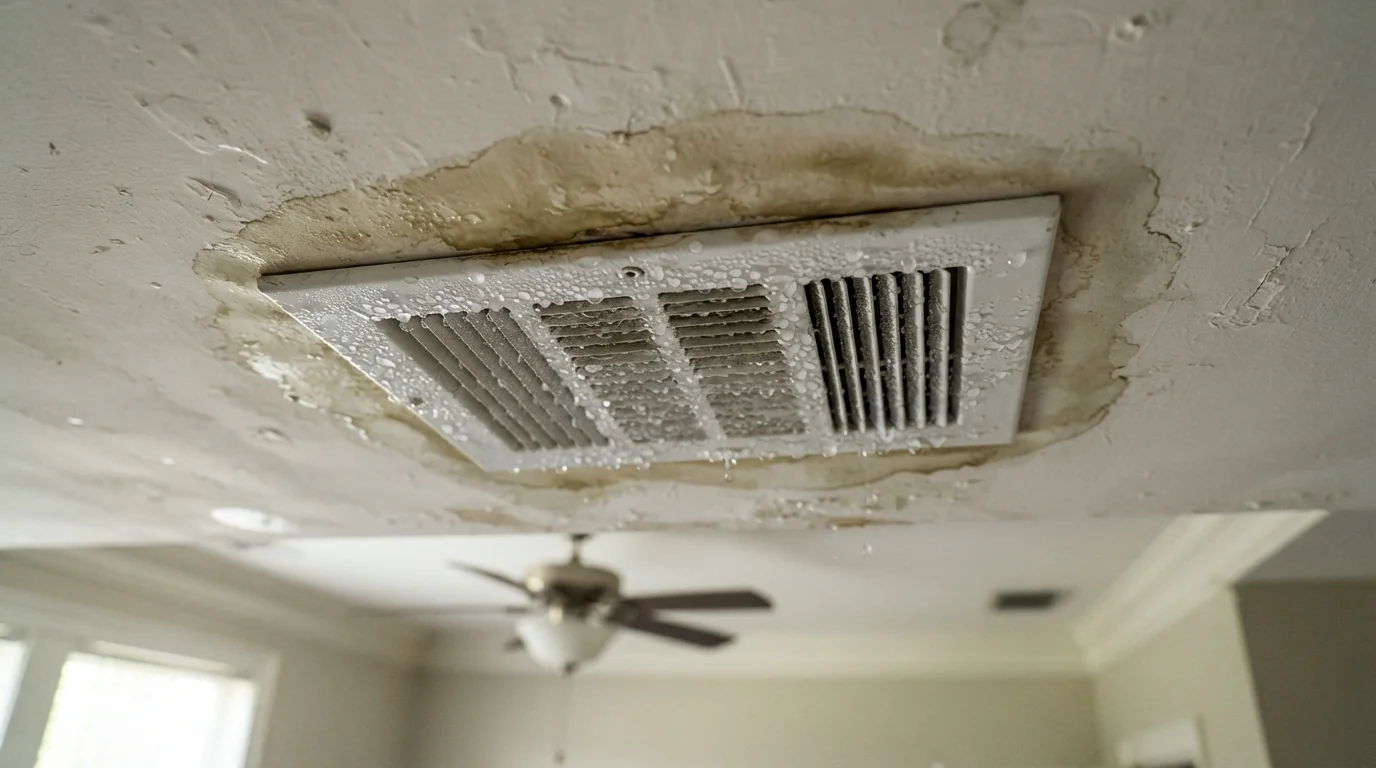
In humid weather, cold ducts and vents can sweat like a glass of iced tea. When that water drips onto ceilings or soaks insulation, it needs fixing at the cause, not just wiping up.
Answered 24/7Mid-City service officeSlidell head officeEvery major brand
Sweating ducts and dripping vents in New Orleans happen when cold supply air meets warm, humid air at a duct or register that is poorly insulated, leaking, or running too cold. Fixes include repairing or replacing duct insulation, sealing leaks, correcting airflow, and reducing humidity in the attic or house. Left alone, condensation stains ceilings and grows mold.
Signs of duct condensation
- Water dripping from supply vents
- Brown stains around ceiling registers
- Wet or sagging insulation in the attic
- Beads of water on vent grilles
- Musty smell near registers
- Water on the ground under crawl-space ducts
- Mold spots on ceilings near vents
Why ducts sweat here
Updated September 2026
Condensation forms whenever a surface is colder than the dew point of the air around it. In a humid attic or crawl space, a supply duct carrying cold air will sweat unless its insulation is intact and sealed. At the register, the same thing happens if humid room air meets a cold grille, especially when airflow is low and the air leaving the vent is very cold.
The water that forms runs along the duct, soaks insulation, and drips onto the ceiling. The fix depends on where the water comes from, which is why we diagnose before patching anything.
How a condensation repair runs
- 1
Find the water
Wet ducts, boots and registers located.
- 2
Measure
Airflow, supply temperature and humidity checked.
- 3
Explain the cause
Insulation, leaks, airflow or humidity, in plain terms.
- 4
Repair
Insulation replaced, boots and joints sealed.
- 5
Correct airflow
Blower or restriction fixed where needed.
- 6
Recheck
Surfaces confirmed dry under normal operation.
Condensation on Ducts
Sweating on the outside of ducts usually means the insulation is torn, compressed, missing at joints, or has lost its vapor barrier, letting humid air reach the cold duct surface. We find every wet section, check that the duct itself is not leaking cold air into the insulation, repair or replace the insulation with the vapor barrier sealed at every seam, and dry what we can. Soaked insulation that cannot dry is replaced, since wet insulation insulates poorly and grows mold. We also look for stored boxes pressing on ducts, which crushes insulation and starts the problem again.
Dripping Supply Vents
Vents that drip or form beads of water on the grille usually have low airflow, very cold supply air, a gap between the duct boot and the ceiling that lets humid attic air in, or high indoor humidity. We check airflow and supply temperature, seal the boot to the ceiling and to the duct, and correct airflow if the blower or a restriction is the cause. Where indoor humidity is the underlying problem, we address that too, since vents alone cannot solve it. Registers themselves can be swapped for styles that resist sweating where the other fixes are not enough.
Duct Insulation Repair
Duct insulation is only as good as its weakest joint. We replace damaged sections with insulation rated for attic or crawl-space conditions, seal the vapor barrier with proper tape or mastic, and make sure the insulation is not crushed by stored items or other ducts resting on it. Where much of the insulation has failed, full duct replacement may be better value, and we compare both options before you decide. We photograph the problem sections before and after, so you can see what was changed.
Crawl-space ducts in raised homes
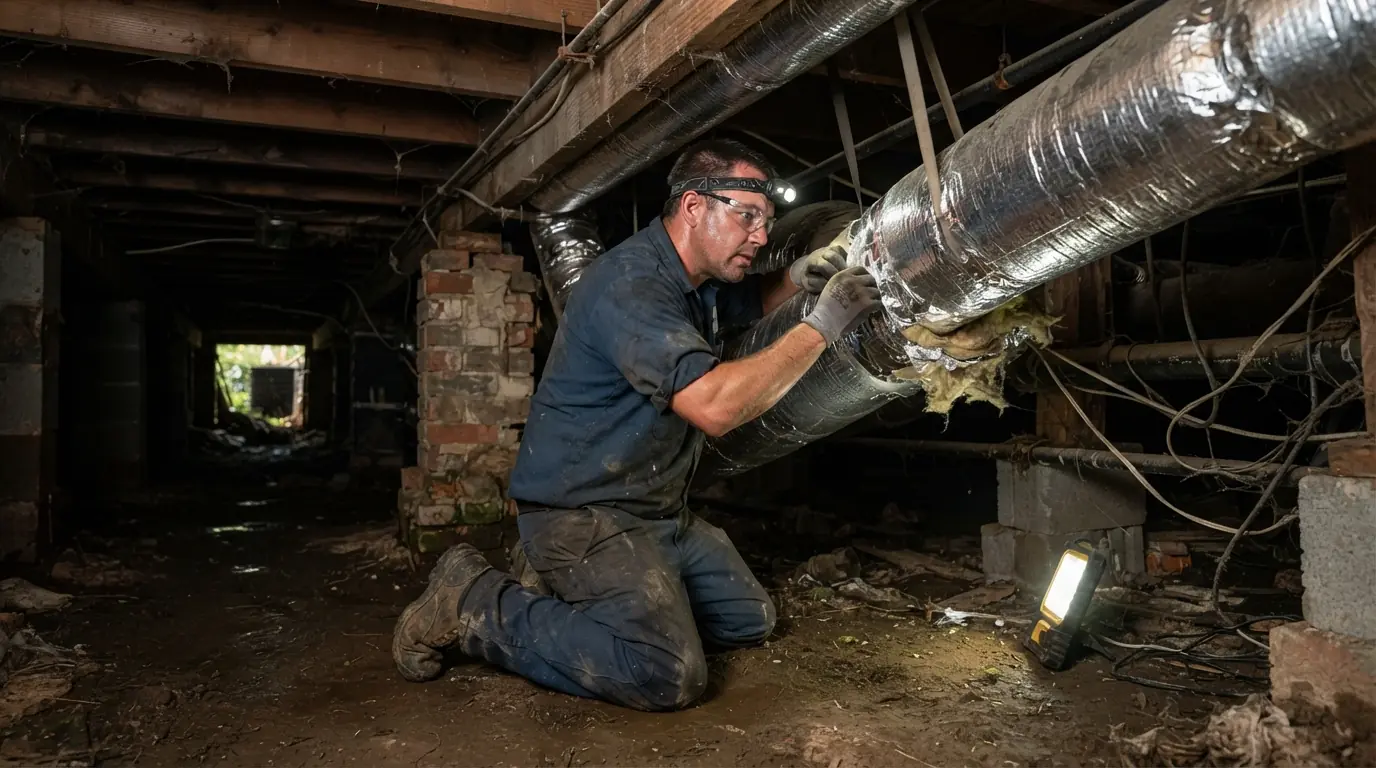
Many older raised houses, including those in the Marigny, run their ducts through a crawl space under the floor. That space stays humid for much of the year, and uninsulated or poorly wrapped ducts down there can drip steadily onto the ground or framing all summer. We check crawl-space ducts as carefully as attic runs, because condensation under the house is easy to miss until the wood shows it.
What a condensation repair includes
- Wet ducts and registers located
- Airflow and supply temperature measured
- Damaged insulation replaced
- Vapor barrier sealed at every seam
- Register boots sealed to ceiling and duct
- Airflow corrected where needed
- Surfaces checked dry after repair
What affects the cost of a condensation repair
Condensation repairs are priced on what we find and how much needs fixing.
Extent of wet insulation
A few joints versus long runs.
Access
Attics and crawl spaces take time to reach.
Boot sealing
Number of registers to seal.
Airflow correction
Blower or restriction repairs.
Humidity control
A dehumidifier where the house runs damp.
Water damage
Ceiling repair is a separate trade.
Questions about Sweating Ducts & Dripping Vents in New Orleans
Usually low airflow, very cold supply air, a leaky boot, or high humidity.
It causes water damage and mold if left alone.
That treats the symptom. The cause needs fixing.
Yes, often, because crawl spaces are humid.
When insulation is the cause, yes, with the vapor barrier sealed.
Very low settings and low airflow can make vents sweat.
Where indoor humidity is high, yes.
Usually a day, depending on how much insulation needs replacing.
More ductless & ductwork we handle in New Orleans
Air Balancing for Hot & Cold Rooms
Room-by-Room Airflow Measurement, damper and register adjustment and more.
Our air balancing for hot & cold rooms serviceVents dripping or ducts sweating?
Call and we will find the cause and fix it for good.
Browse every service