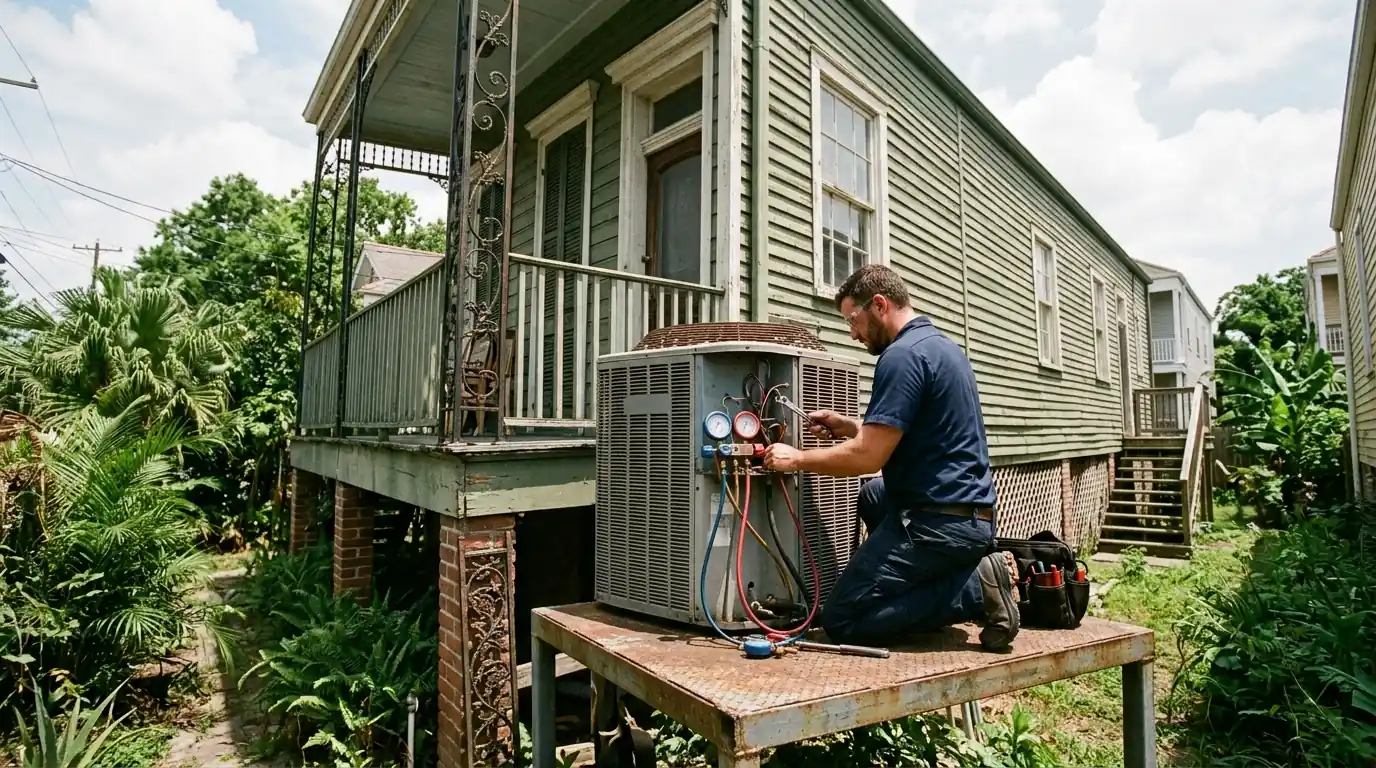
Measured duct leakage testing for New Orleans homes
You cannot see most duct leaks, and a visual inspection only finds the obvious ones. A duct leakage test puts a number on how much air the system is losing and shows where to look.
Answered 24/7Mid-City service officeSlidell head officeEvery major brand
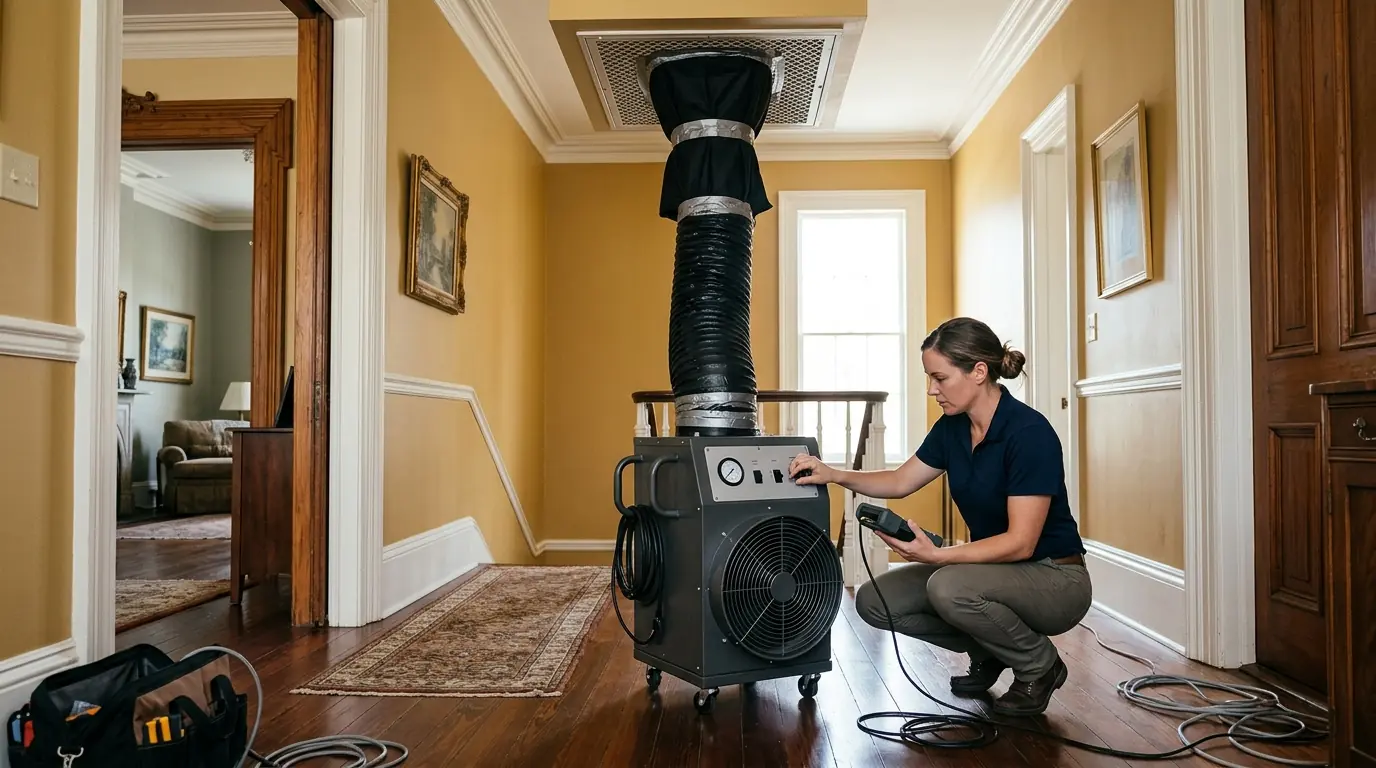
A duct leakage test in New Orleans pressurizes the duct system with a calibrated fan and measures how much air escapes, giving a real leakage figure rather than a guess. It shows whether ducts are worth sealing, confirms the result after sealing, and is useful before a system replacement so a new unit is not connected to leaky ducts.
Why measure instead of guess
Updated September 2026
Leaky ducts cool the attic instead of the house and pull hot, humid attic air into the system. But most of the ductwork in a typical home is hidden in the attic, walls or crawl space, and a visual check only catches the worst joints.
A leakage test measures the whole system at once. It tells you whether sealing is worth the money, and after sealing it proves how much was fixed.
What a leakage test includes
- Registers temporarily sealed
- Calibrated test fan connected
- Leakage measured at test pressure
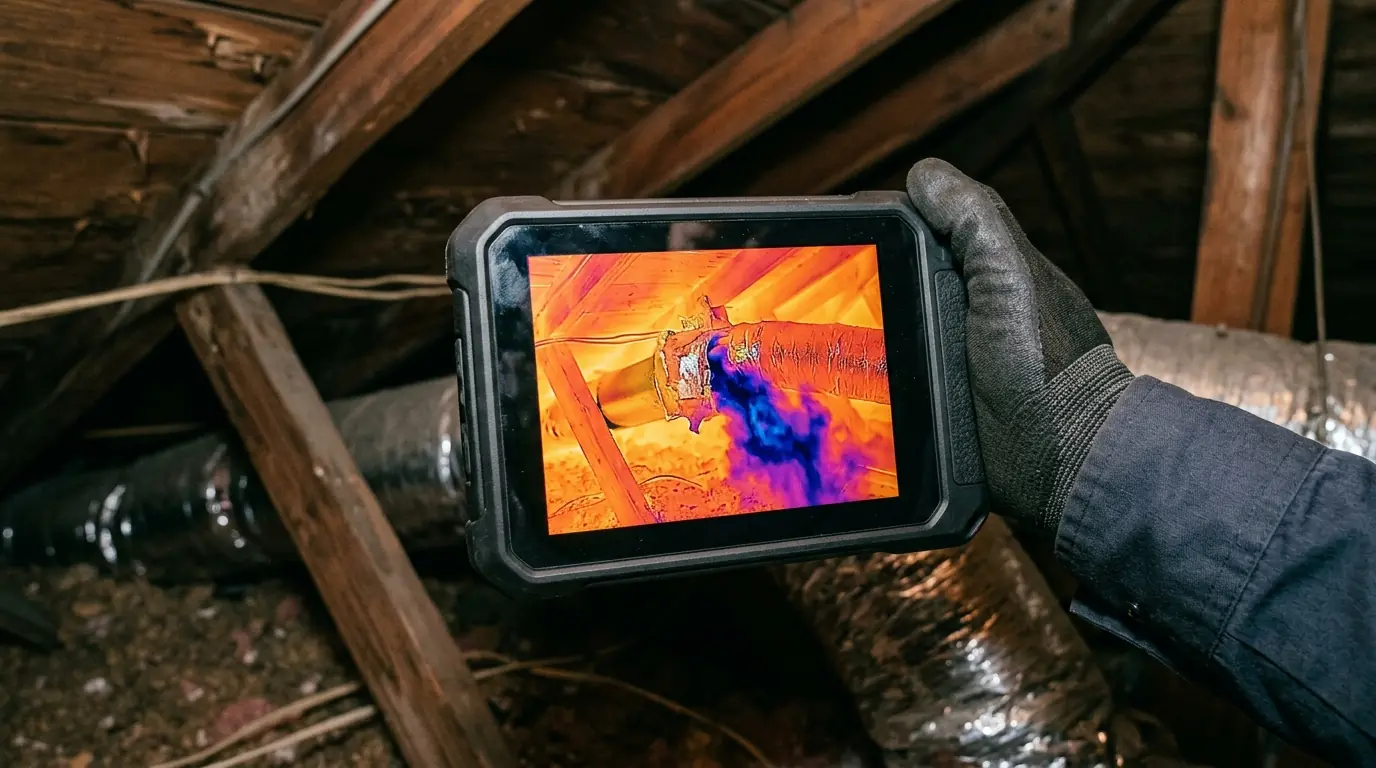
- Leaks located with smoke or thermal camera
- Air handler and return plenum checked
- Written report with photos
- Optional retest after sealing
Why leakage matters in humid attics
In a hot, humid climate, duct leakage costs more than just cooled air. Supply leaks send cold air into a hot attic, while return leaks pull humid attic air into the system, which the AC then has to cool and dry. That is why a leakage test is worth doing here before paying for a new system, and why we measure again after sealing rather than assuming the job is done.
Pressure Testing the Ducts
We seal off the supply and return registers, connect a calibrated duct testing fan to the system, and pressurize the ducts to a standard test pressure. The fan's reading shows how much air is leaking out at that pressure. The whole test usually takes an hour or two, causes no damage, and gives a figure you can compare against a target for a system of your size, so you know whether the leakage is minor or serious. If a register cannot be sealed off, we note it rather than letting it skew the number.
Finding the Leaks
Once the ducts are pressurized, leaks are easier to find. We use a smoke pencil or a thermal camera along the accessible runs, joints, boots and the air handler cabinet, and note where the air is escaping. Some of the worst leaks are at the air handler and the return plenum, which are easy to overlook. You get a list of the leak locations with photos, so any sealing work is aimed where it matters. Where ducts are hidden in walls or ceilings, the report says so plainly rather than guessing at their condition.
Before and After Sealing
Testing before and after sealing shows exactly what the work achieved. Without a test, duct sealing is judged by feel; with one, you have two numbers. We recommend the before-and-after approach whenever ducts are being sealed or a new system is being installed, since it confirms the ducts are no longer the weak link and the new equipment can perform as rated. The two figures also give you a record to keep with the house, useful when you sell or when a future contractor quotes work.
Leakage test or visual inspection
| Visual inspection | Leakage test | |
|---|---|---|
| Finds hidden leaks | No | Yes |
| Gives a number | No | Yes |
| Confirms sealing worked | No | Yes |
| Time | Short | An hour or two |
What affects the cost of a leakage test
Leakage testing is priced on the system and access.
Number of systems
Each system is tested separately.
Register count
More registers take longer to seal off.
Access
Air handler location and attic access.
Leak location
Thermal imaging or smoke tracing adds time.
Retest
A second test after sealing.
Report
Leak locations with photos included.
How a leakage test runs
- 1
Prepare
Registers sealed off and the system shut down.
- 2
Connect
Calibrated test fan attached to the duct system.
- 3
Pressurize and measure
Leakage recorded at the test pressure.
- 4
Locate leaks
Smoke or thermal camera along accessible runs.
- 5
Report
Leakage figure and leak locations with photos.
- 6
Retest after sealing
Optional second test to confirm the result.
Questions about Duct Leakage Testing in New Orleans
A pressure test that measures how much air your duct system loses.
Usually an hour or two.
No. Registers are temporarily sealed and uncovered afterward.
Yes. A new system on leaky ducts underperforms.
Yes, and retest to confirm the result.
We compare your result to a target for a system your size.
It finds obvious leaks but misses hidden ones.
Yes, on light commercial ductwork.
More ductless & ductwork we handle in New Orleans
Ductless Mini-Split Installation
Single-zone mini-split, multi-zone mini-split and more.
Our ductless mini-split installation serviceDuctwork Repair & Sealing
Leaky duct joints, crushed flex duct and more.
Ductwork Repair & Sealing in New OrleansDuctwork Replacement & New Duct Installation
Full duct replacement, adding supply runs and more.
Full duct replacementWondering how leaky your ducts are?
Call to book a duct leakage test before you spend on repairs or a new system.
Browse every service