By Gail Barlow, HVAC Guides Editor · Updated September 2026
An AC leaking water inside a New Orleans home is most often caused by a clogged condensate drain line, a cracked or rusted drain pan, a failed float switch, or a frozen evaporator coil melting. Turn the system off, catch the water to protect the ceiling or floor, and have the drain cleared and the cause diagnosed.
Where the water comes from
As warm, humid air passes over the cold indoor coil, moisture condenses on it and drips into a drain pan below. From there a PVC line carries it outside or into a plumbing drain. In New Orleans that line carries water for most of the year, which is why problems with it are so common.
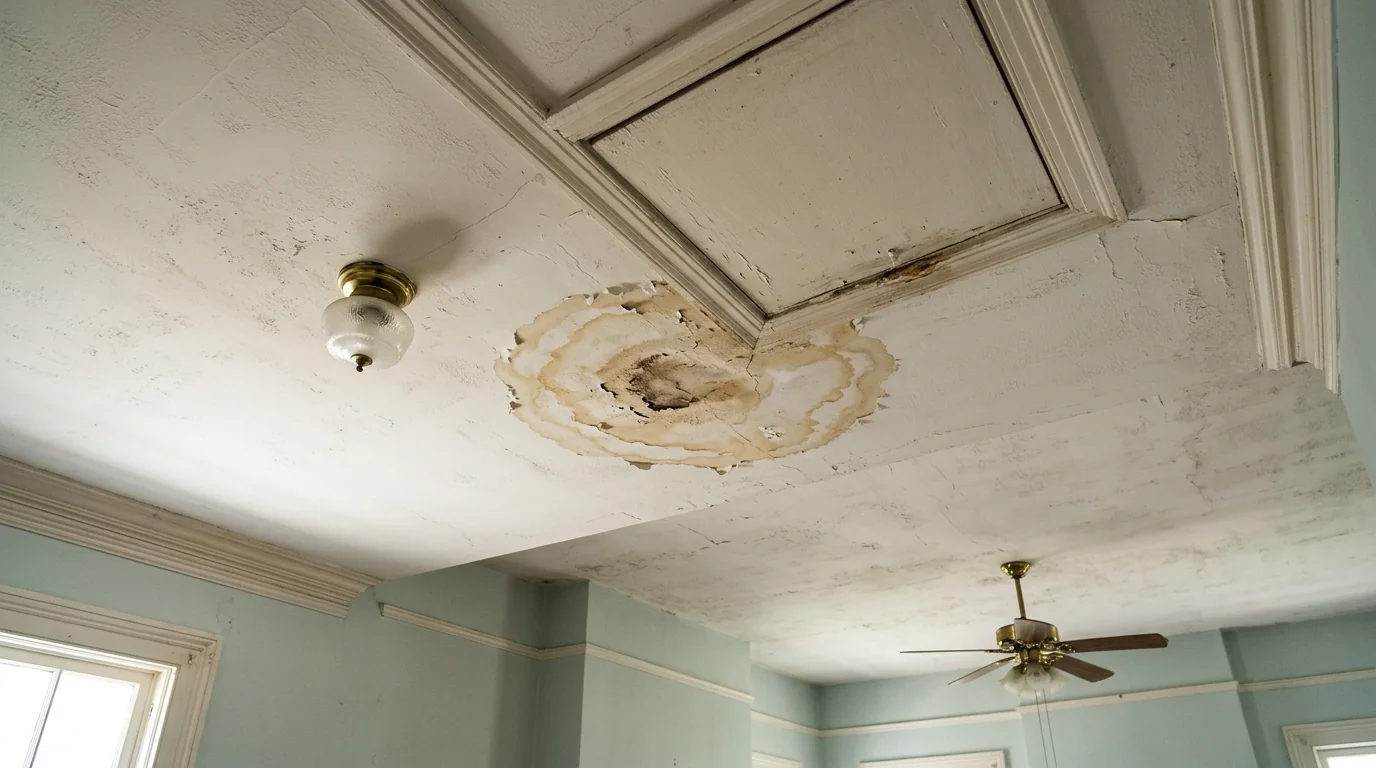
Cause one: a clogged drain line
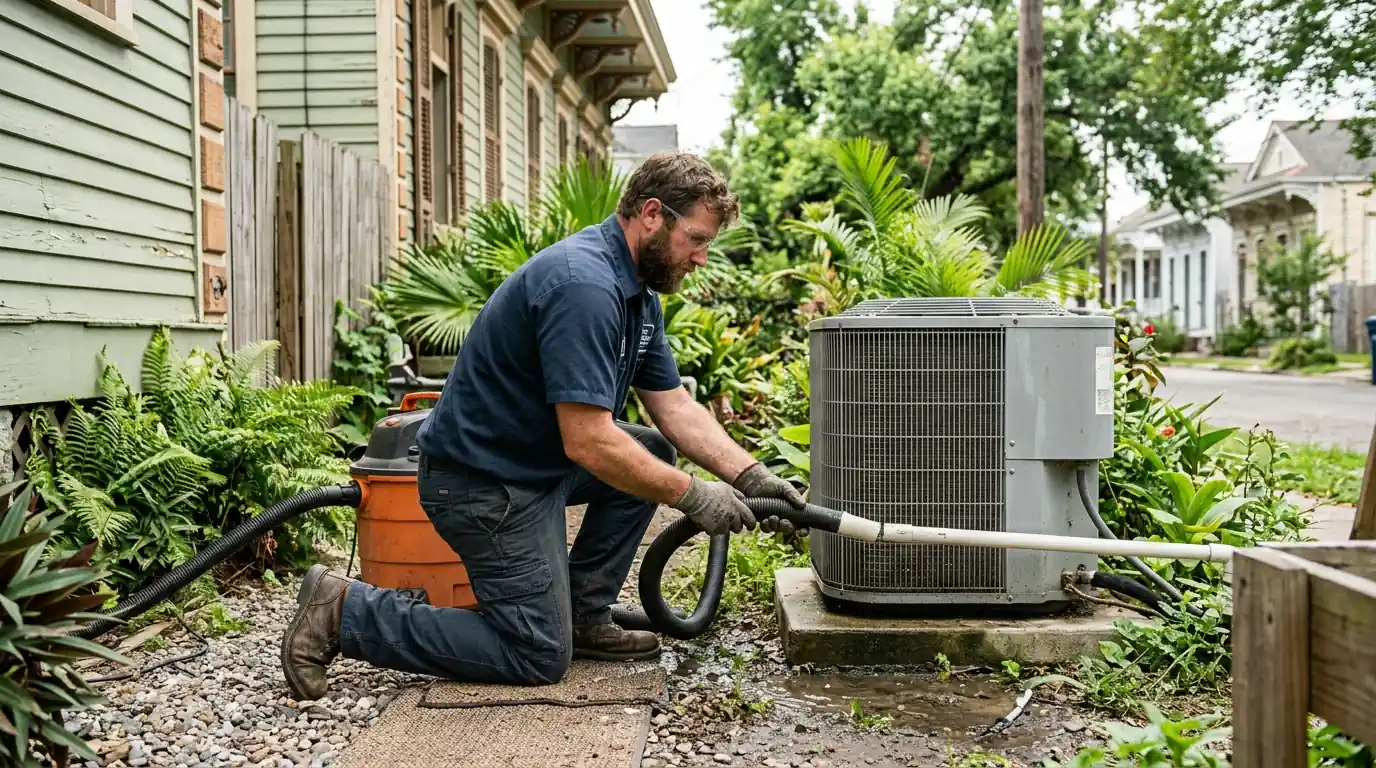
Algae and slime grow in the warm, wet drain pan and line, and eventually they block it. Water backs up into the pan and either trips a float switch, which shuts the system off, or overflows. This is the most common cause of indoor leaks we see, and clearing the line usually fixes it the same visit.
If the line has sags, no trap or too little slope, it will clog again. The fix then includes correcting the routing, not just clearing it.
Cause two: a damaged drain pan
Metal pans rust through and plastic pans crack from years of attic heat. A slow leak from a failed pan can go on for months before a stain appears on the ceiling below. The fix is replacing the pan, ideally with a float switch installed so an overflow shuts the system down instead of reaching the drywall.
Cause three: a frozen coil
When airflow drops or refrigerant runs low, the indoor coil can freeze. When the system shuts off, or when someone turns it off, the ice melts faster than the pan and drain can handle, and water spills over. The water is the symptom; the real problem is whatever made the coil freeze, usually a clogged filter, a failing blower or a refrigerant leak.
What to do right now
- Turn the system off at the thermostat.
- Catch the water with towels or a bucket, and if it is coming through a ceiling, poke a small hole at the lowest point of the bulge to let it drain into a bucket rather than spread.
- Check the filter and replace it if it is clogged.
- If your drain line has an accessible cleanout, pouring a cup of white vinegar through it can help, but a full clog usually needs to be vacuumed out.
- Call to have the drain cleared and the cause diagnosed.
Water coming from the AC? Switch it off and call.
(504) 520-4214Protecting the ceiling below an attic unit
Air handlers installed in attics sit above finished ceilings, so an overflow there does real damage. Every attic unit should have a secondary drain pan beneath it and a float switch that shuts the system off when water rises. If yours does not, adding both is inexpensive compared with replacing drywall and insulation. Older homes where the unit sits in a crawl space or closet benefit from the same protection.
Mold and air quality after a leak
Standing water in a drain pan, or wet insulation around an air handler, is an invitation for mold in a climate this humid. After a leak, look at the pan, the insulation around the unit and the ceiling or floor below. A musty smell when the system starts is often the first sign that something stayed wet too long.
Small areas of surface growth on the pan or coil are cleaned as part of the repair. Wet drywall or insulation should be dried within a day or two, or removed; waiting a week lets growth spread into the framing. If a ceiling has sagged, it usually needs to be cut out and replaced once the source is fixed.
Clearing the drain and fixing the pan stops new water. Treating the pan and keeping the drain flushed stops the slime that caused the clog from coming back.
Preventing it
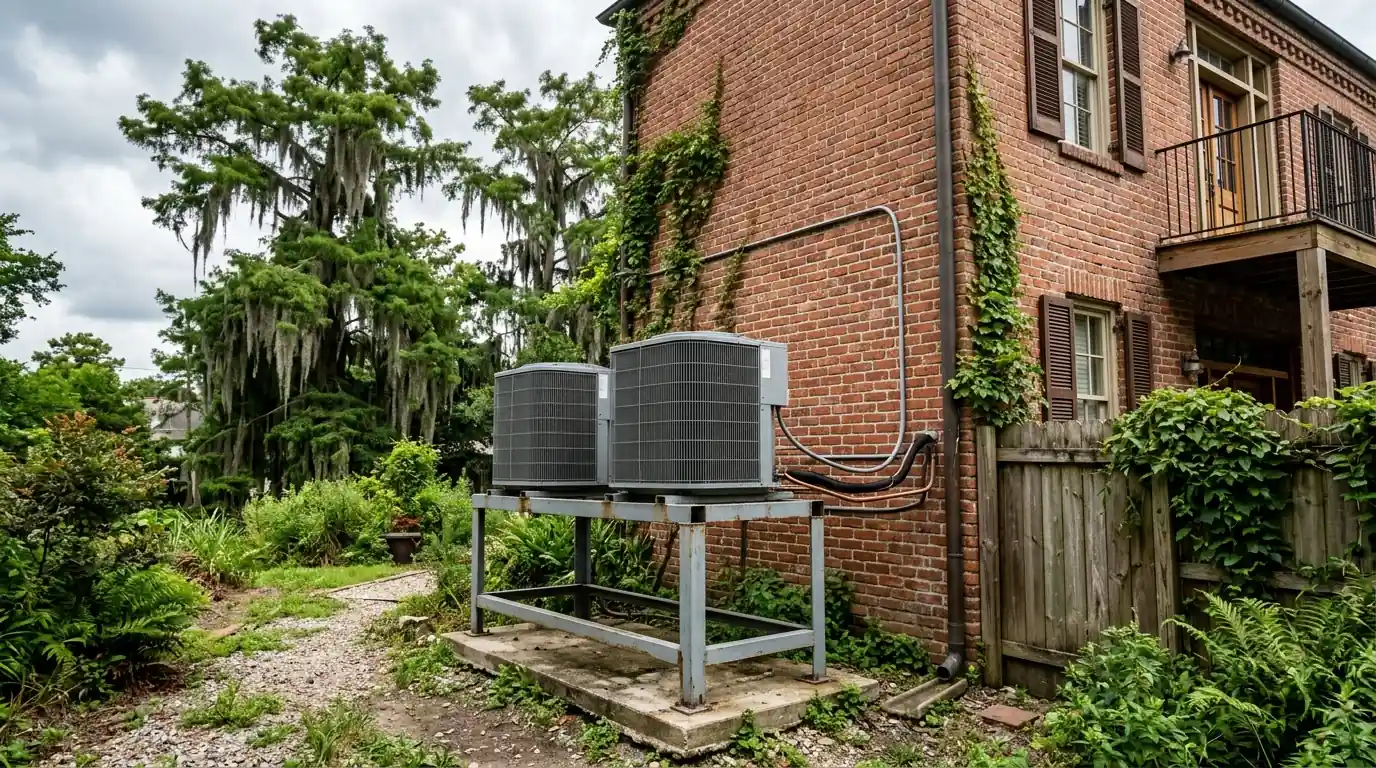
A drain flush and pan treatment each spring, a filter changed every one to three months, and a float switch on every system prevent most indoor leaks. If you have a maintenance visit scheduled, ask the technician to show you where the drain line ends outside, so you can check that it drips during hot weather. A line that stays dry in July is a line that is backing up somewhere.
Questions readers ask about this
Usually a clogged drain line, a cracked pan, a failed float switch or a frozen coil melting.
It can be, if water is reaching a ceiling or floor. Turn it off and call.
No. Turn it off to stop more water collecting.
Flush the drain each spring, use vinegar through the cleanout, and change filters regularly.
A safety switch that shuts the AC off when the drain pan fills, before it overflows.
Related guides and services
AC not cooling: what to check first
AC running warm? Five safe checks that can fix it or tell the technician what is wrong, plus what not to.
AC not cooling: what to check firstWhat AC repair costs in New Orleans
Published 2026 AC repair ranges for New Orleans, what pushes a bill up, and how to read a quote before you.
Read: What AC repair costs in New OrleansWhat AC replacement costs
Published 2026 ranges for replacing an AC or full HVAC system in New Orleans, what moves the price, and how.
What AC Replacement Costs in New Orleans, LACondensate Drain Line Cleaning & Repair
Clogged drain line, overflow float switch and more.
See Condensate Drain Line Cleaning & Repair detailsFrozen Evaporator Coil Repair
Ice on the refrigerant line, dirty coil cleaning and more.
More on Frozen Evaporator Coil Repair