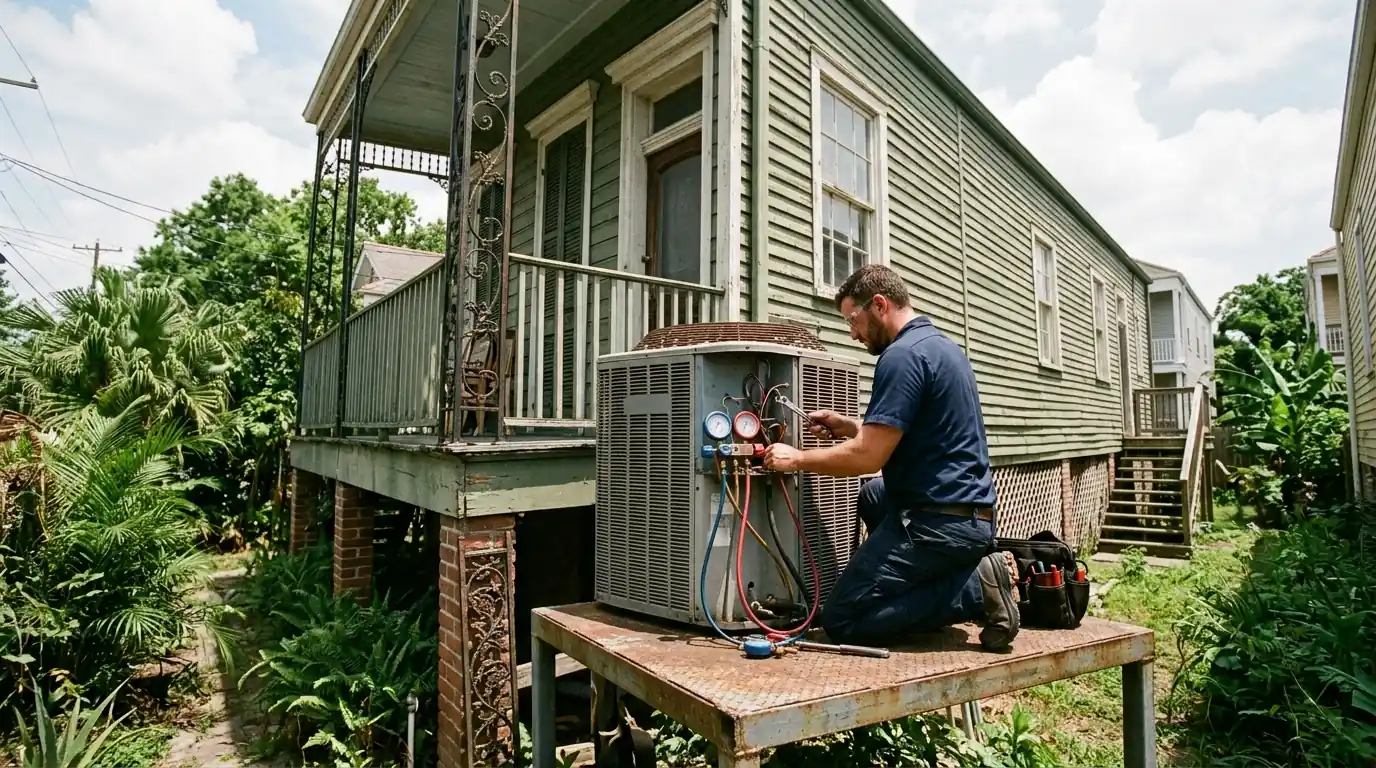
Indoor air quality testing for humid New Orleans homes
Air quality is mostly a humidity question in this climate. We measure what is actually happening in the house before anyone sells you a purifier.
Answered 24/7Mid-City service officeSlidell head officeEvery major brand
An indoor air quality test measures humidity, temperature, particles and carbon dioxide in the rooms you live in, and checks the air handler, coil and ducts for the moisture and dirt that feed musty smells. The result is a short list of causes in order of importance, so money goes to the fix that matters, not the first gadget offered.
Measure first, then fix
Updated September 2026
Musty odors, stuffy bedrooms and allergy flare-ups can come from many places: humidity that stays too high, a dirty coil or drain pan, leaky return ducts pulling in attic or crawl space air, or simply not enough fresh air. Each one has a different fix.
Testing sorts them out. We log conditions over time, look inside the equipment, and tell you plainly which problems are real and which are not worth spending on.
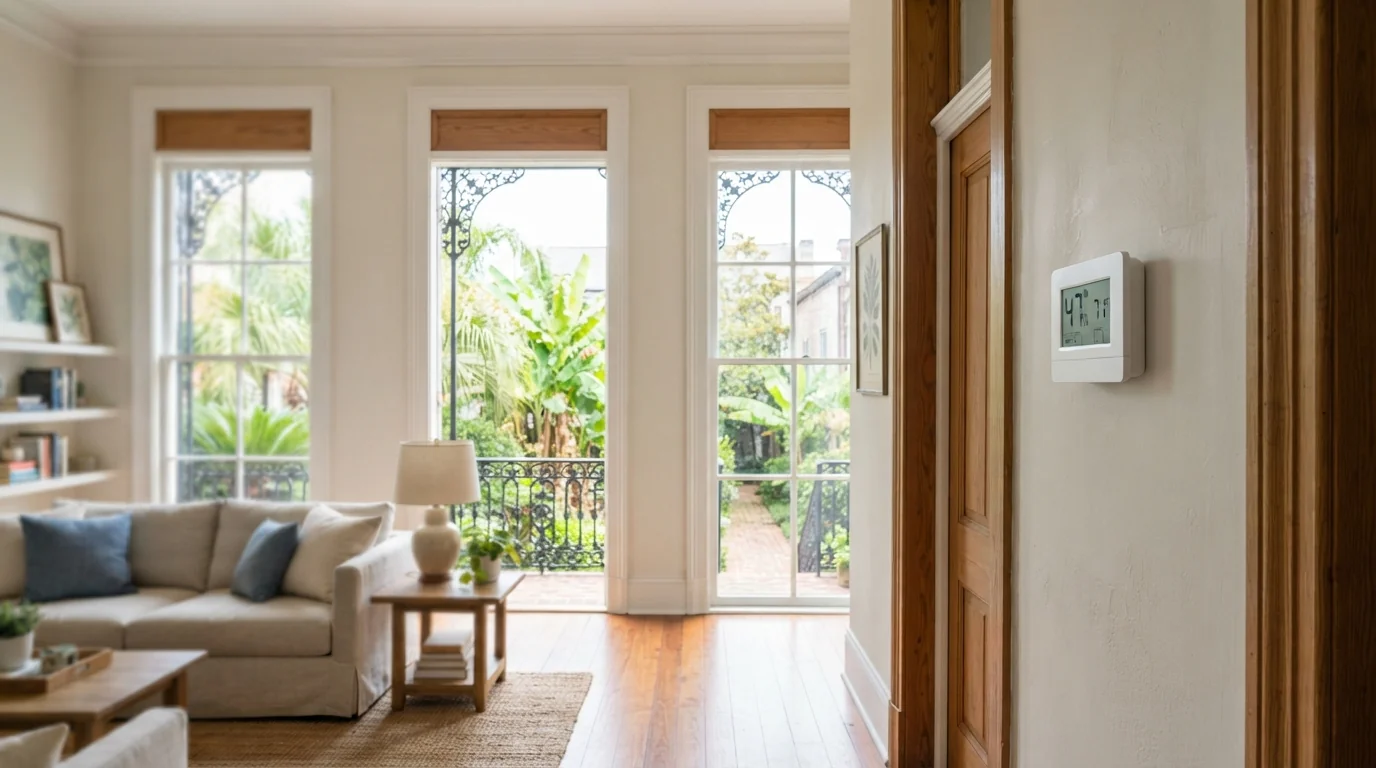
What an air quality test includes
- Humidity and temperature logging
- Particle count readings
- Carbon dioxide readings
- Evaporator coil inspection
- Drain pan and line check
- Return duct leak check
- Written report with photos
Why houses smell musty here
Musty smells are one of the most common complaints we hear, and the house is rarely to blame on its own. Long, damp summers mean coils and drain pans stay wet for months, and older homes on piers can pull damp air up from underneath. Separating those causes takes measurement, which is why we test before recommending any equipment, and why the report ranks fixes by how much they will actually change.
Humidity and Temperature Logging
Humidity drives most air quality problems here. We place small data loggers in the main rooms and leave them long enough to capture day and night cycles, then compare the readings against the range where mold and dust mites struggle. Readings that stay high tell us whether the AC is oversized, the fan setting is wrong, the coil is not removing enough moisture, or the house needs a dedicated dehumidifier. You see the actual numbers, not a guess based on how the house feels on the day we visit.
Particle and CO2 Readings
A particle counter shows how much fine dust and smoke is in the air, and whether a filter upgrade would make a real difference. Carbon dioxide readings, especially in bedrooms overnight, show whether the house is getting enough fresh air for the people living in it. Tight, newer homes and closed-up bedrooms often run high. We take readings with doors open and closed so the results reflect how you actually live, and we explain what each number means for your family.
Equipment and Duct Inspection
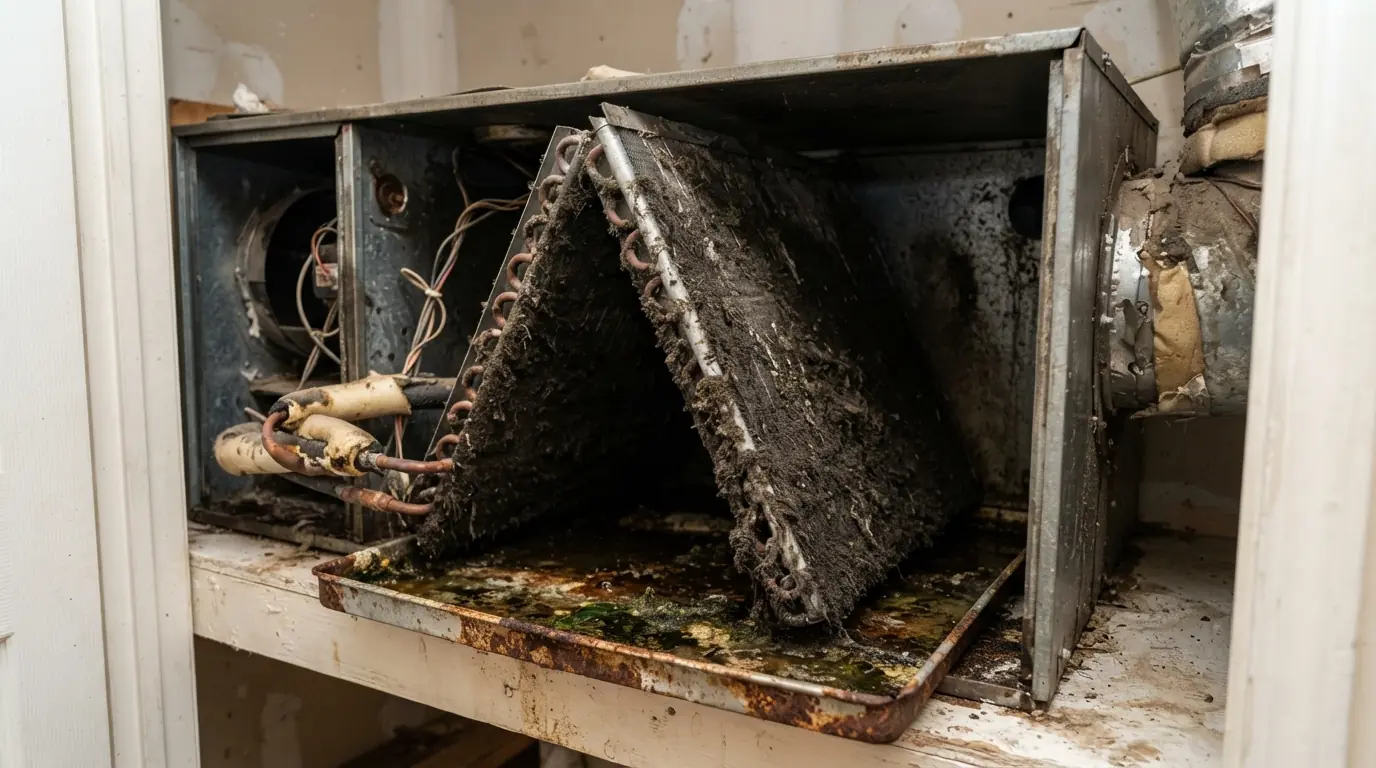
The air handler is where moisture and dirt meet. We check the evaporator coil, the drain pan and drain line, the blower wheel and the inside of the return and supply plenums for growth, standing water and dust buildup, and look for return leaks that pull in attic or crawl space air. Photos come with the report. If the source is in the equipment, cleaning or a repair often does more than any purifier, and we say so first. Where ducts run through a crawl space or attic, we note any return leaks that pull that air into the house.
How long testing takes
The first visit takes an hour or two to place loggers, take spot readings and inspect the equipment. The loggers then stay in place for several days so they capture full day and night cycles, including the hours when the AC is cycling less and humidity tends to climb. A short second visit collects them, and the report follows with the readings, photos and a ranked list of fixes. If you go ahead with any repairs, a follow-up round of logging confirms the change.
What affects the cost of an air quality test
Testing is priced on how many rooms are logged and how long.
Number of rooms
More loggers and more readings.
Logging period
A longer period captures more cycles.
Equipment inspection
Coil, pan, blower and plenums.
Duct inspection
Camera inspection of hidden runs.
Report detail
Readings, photos and priorities.
Follow-up test
Optional retest after repairs.
How an air quality test runs
- 1
Talk through symptoms
Smells, allergies, rooms and timing.
- 2
Place loggers
Humidity and temperature in key rooms.
- 3
Spot readings
Particles and carbon dioxide.
- 4
Inspect equipment
Coil, drain pan, blower and plenums.
- 5
Collect the data
Loggers picked up and read.
- 6
Report
Causes ranked with plain fixes.
Questions about Indoor Air Quality Testing in New Orleans
Humidity, temperature, fine particles, carbon dioxide and the condition of the equipment.
No. It finds the moisture conditions behind mold; lab mold sampling is a separate service.
Generally between 40 and 50 percent; we show where yours actually sits.
Rarely on its own. The moisture source usually has to be fixed first.
Long enough to capture several day and night cycles.
Yes. A wet, dirty coil and drain pan are common odor sources.
Yes, a follow-up test can confirm the fix worked.
Yes. It shows whether you need one and how big.
More air quality & humidity we handle in New Orleans
Media Filter & Air Filtration Upgrade
4-inch media filter cabinet, merv ratings and more.
Our media filter & air filtration upgrade serviceThermostat & Smart Thermostat Installation
Smart thermostat setup, thermostat not responding and more.
Thermostat & Smart Thermostat Installation in New OrleansHouse smell musty or feel stuffy?
Call to book a test, and we will show you what is causing it before recommending anything.
Browse every service