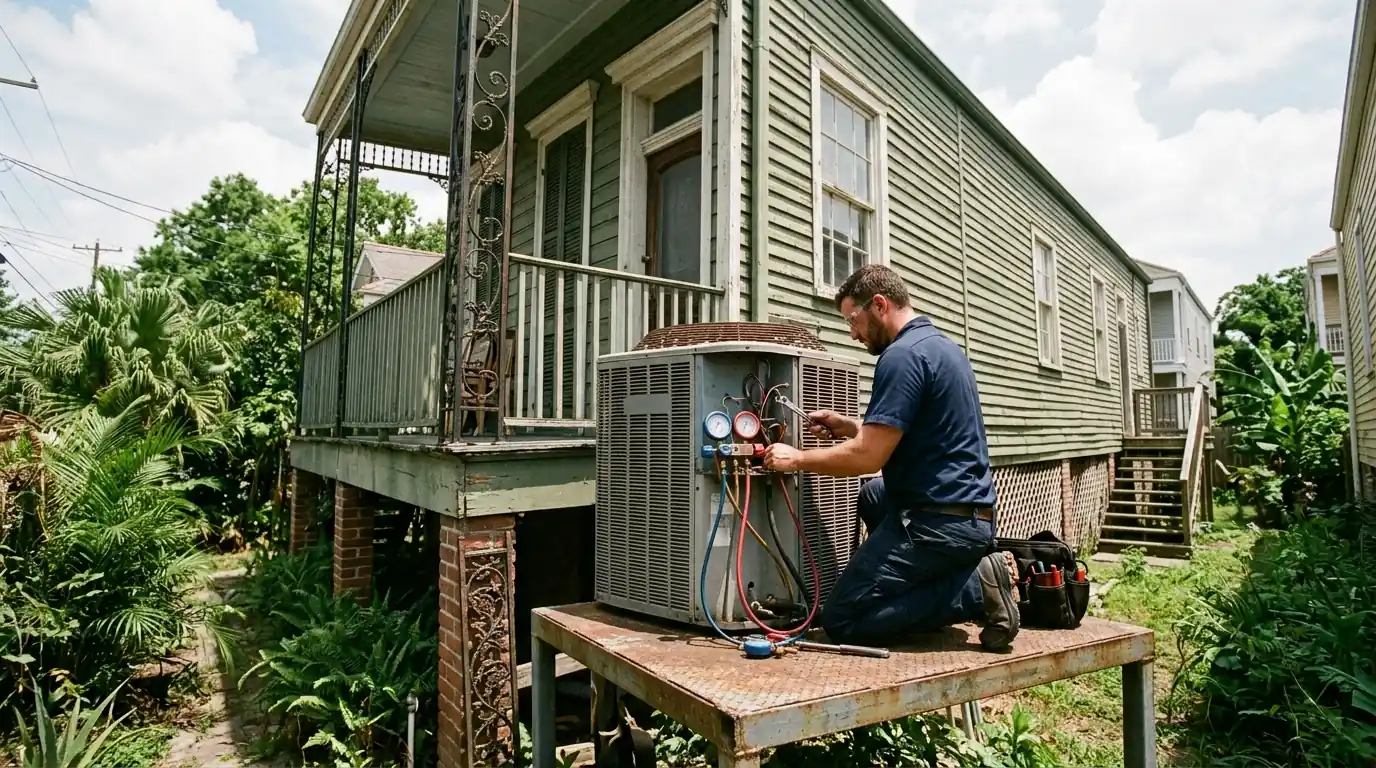
HVAC inspection and safe restart after a storm in New Orleans
After high water, a surge or a direct hit from debris, the worst thing to do is flip the breaker and hope. We inspect first, restart only what is safe, and document the damage for your insurer. We answer 24/7.
Answered 24/7Mid-City service officeSlidell head officeEvery major brand
After a hurricane or flood in New Orleans, leave the AC breaker off until the system is inspected. Water in the condenser or air handler can short the controls and seize the compressor when power returns. An inspection checks the electrical parts, the drain, refrigerant and the pad or stand, and records damage for an insurance claim.
Signs the storm reached your system
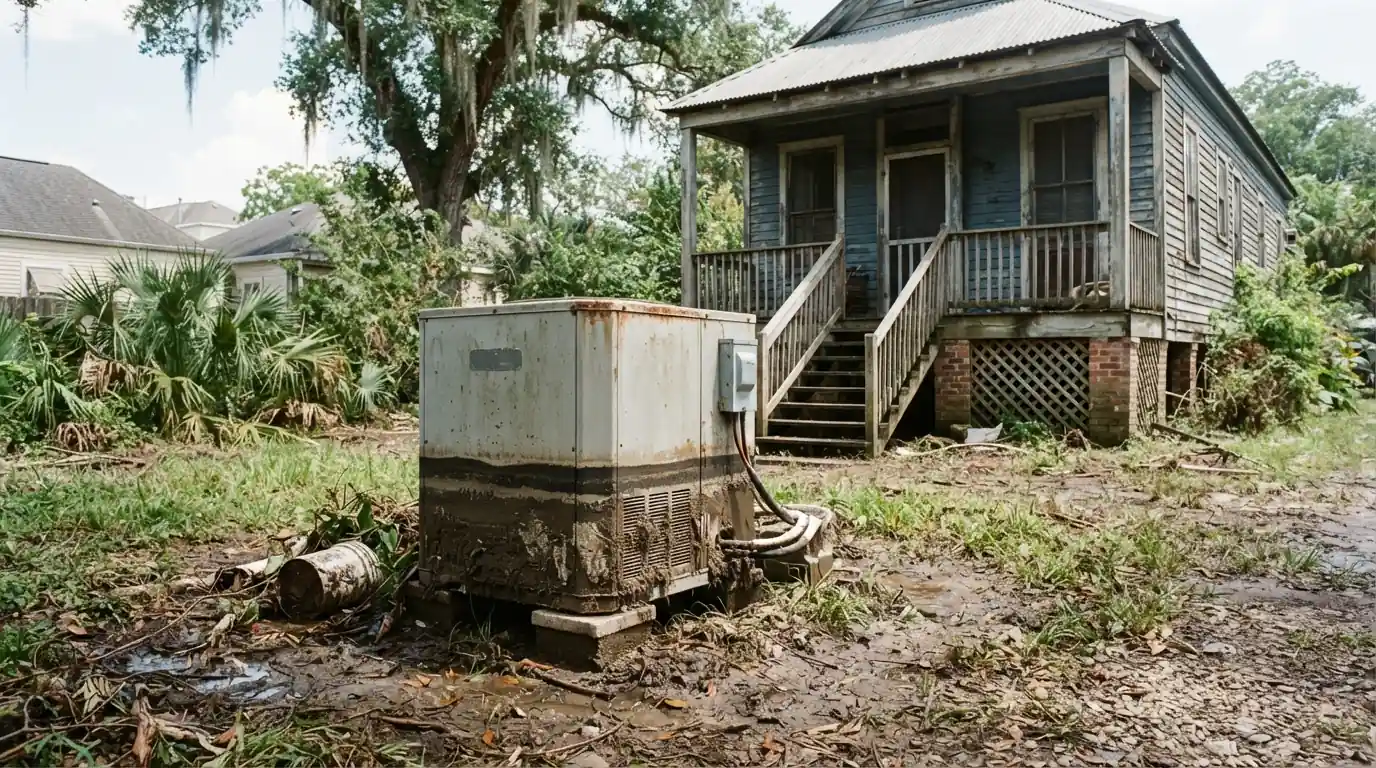
- Water line or silt on the outdoor unit cabinet
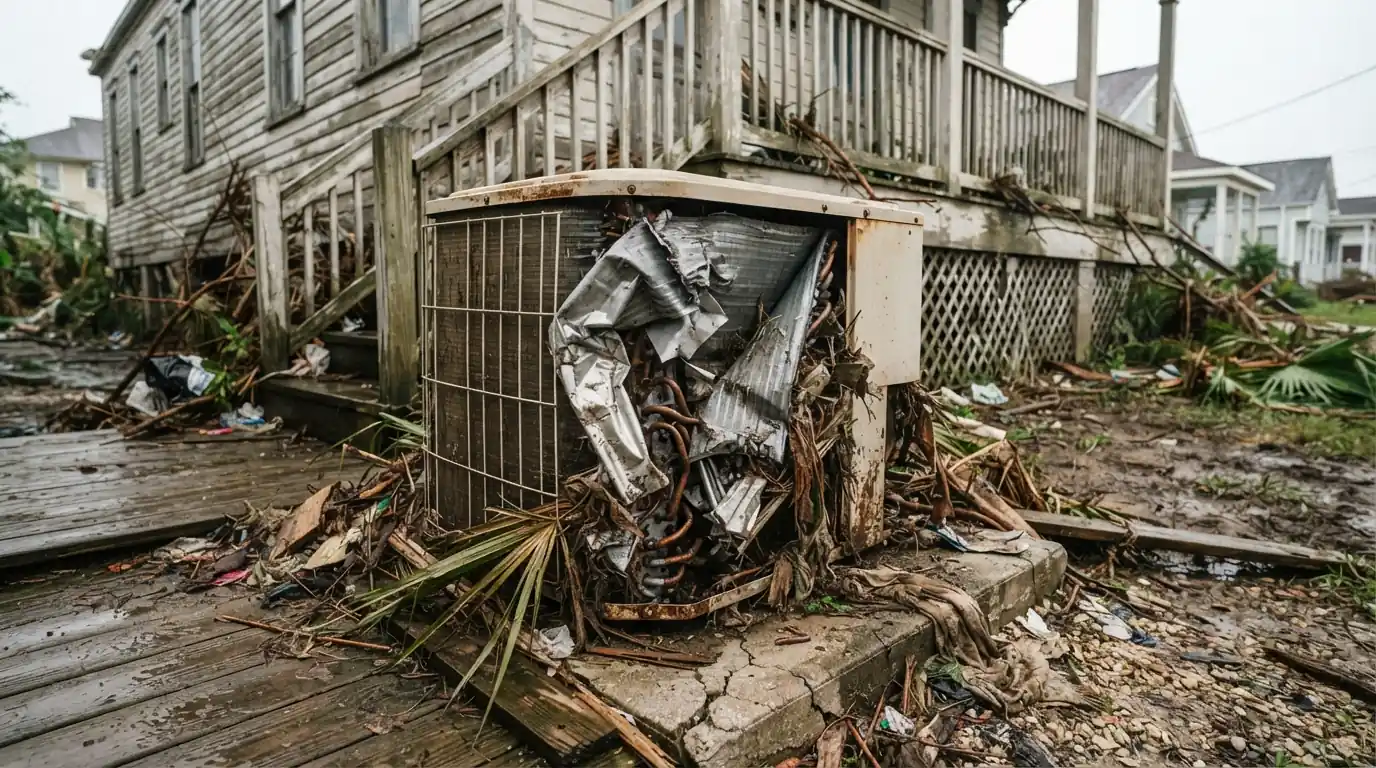
- Bent fan blades or crushed coil fins from debris
- Thermostat blank after power returned
- Breaker trips when the AC is switched on
- Burning or electrical smell at the air handler
- Outdoor unit tilted or off its pad or stand
- Water standing around a crawl-space or closet air handler
What storms do to a cooling system
Updated September 2026
Three things damage systems here in storm season: floodwater reaching the outdoor unit or a crawl-space air handler, power surges when the grid drops and comes back, and wind-driven debris that bends coils and fan blades.
Our inspection answers one question first: is it safe to turn on? Then come repairs and the adjuster's paperwork.
How a post-storm inspection runs
- 1
Breaker off, call us
We confirm the system is off and ask what the water or surge reached.
- 2
Visual and water line
We note how high water rose on the unit and the air handler.
- 3
Electrical tests
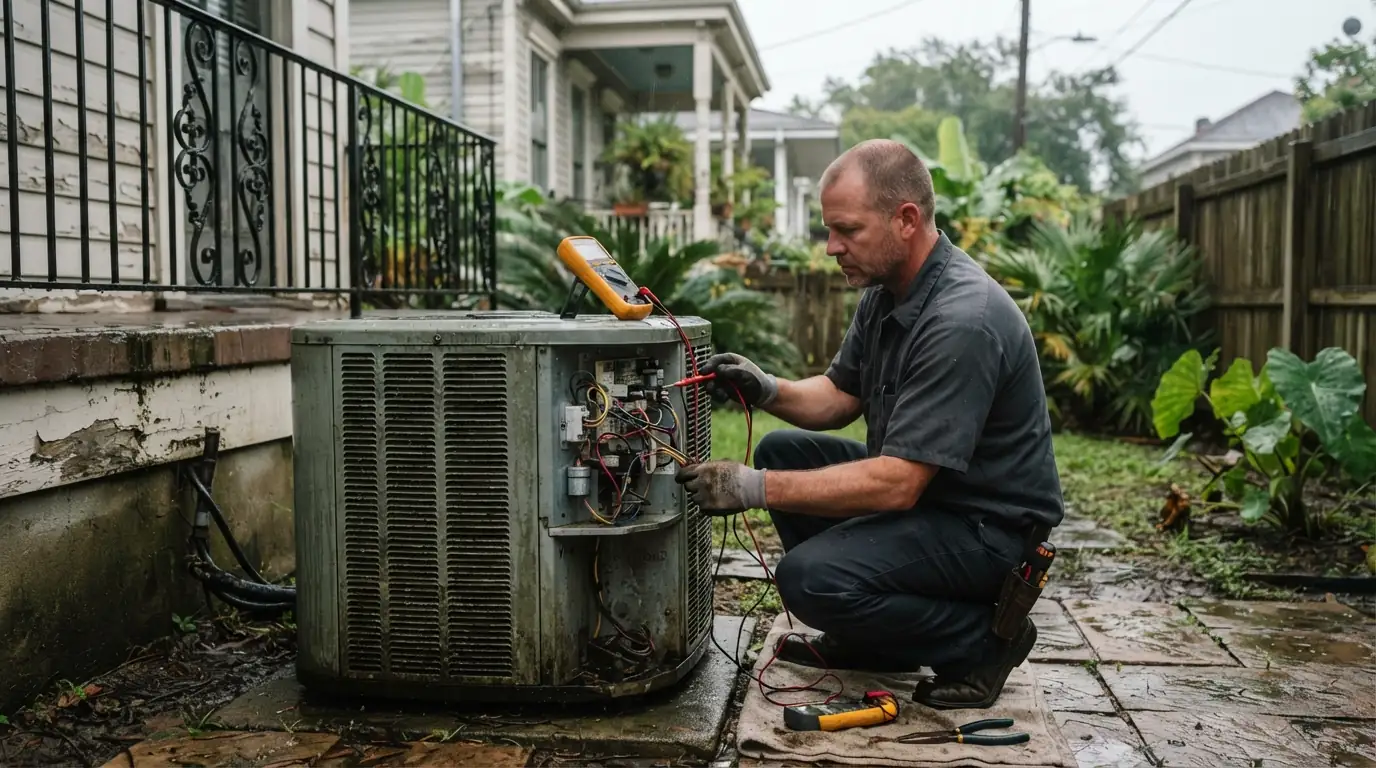
Controls, capacitor, contactor and compressor windings are tested before power.
- 4
Safe restart or not
Only systems that test clean are powered back up.
- 5
Photos and report
Nameplates, damage and cause, dated for your adjuster.
- 6
Repair or replace plan
A written estimate for what it will take.
Flooded Condenser Check
If water reached the outdoor unit, the control board, contactor, capacitor and fan motor may have been submerged, and the compressor terminals can hold moisture for days. We open the unit, dry and test the electrical components, meg the compressor windings to ground and inspect the coil for silt. Units that sat in brackish or sewage-contaminated water are usually replaced rather than restarted, because the corrosion keeps going after the water leaves. Fresh rainwater that only reached the base of the cabinet is a different story, and many of those units come back to life once they are dried and tested.
Power Surge Damage
A surge when power comes back can take out the control board, the capacitor, the thermostat or the blower motor while the rest of the system is fine. The symptoms vary: a blank thermostat, an outdoor unit that will not start, or a blower that hums without turning. We trace the fault part by part rather than guessing, and on many calls the repair is a single component replaced from the truck. We also check the rest of the system for a second weak part, since one surge rarely picks just one victim, and we can add surge protection on the outdoor disconnect.
Insurance Documentation
Adjusters want dated photos, the model and serial numbers, a description of the cause and a written estimate. We photograph the unit, the water line if there is one, the damaged parts and the nameplates, and give you a written report you can attach to the claim. We describe what we found and what it will take to fix, and we do not inflate either; a report that holds up is worth more to you than one that does not.
What you can safely do and what should wait for us
| Task | Homeowner | Technician |
|---|---|---|
| Switch off the breaker | Yes | Confirms it |
| Clear loose debris away from the unit | Yes, with power off | Checks for coil damage |
| Photograph the water line | Yes | Adds nameplates and damage |
| Open the electrical panel on the unit | No | Tests controls and wiring |
| Restart a flooded system | No | Only after tests pass |
After the water goes down
The neighborhoods rebuilt after 2005, including much of Lakeview and Gentilly, mostly sit above base flood elevation now, so their condensers are more often hit by surge and debris than by water. Older ground-level units elsewhere are the ones that flood. Replacing a ground-level unit after a storm can trigger elevation requirements, and on historic properties in the French Quarter any new equipment location goes past the preservation review first.
What a post-storm inspection and repair costs
The inspection is priced like a diagnostic visit; repairs depend on the damage.
Typical New Orleans-area planning range: $75-$150 standard hours; $200-$275 after hours. Market data, not our quote; your price depends on the factors below.
Type of damage
A surge-damaged capacitor is a small repair; a submerged compressor is not.
Water type
Brackish or contaminated floodwater usually means replacement.
Timing
After-hours and weekend calls in a storm week carry a premium at most shops.
Elevation
A replacement that must be raised onto a stand adds materials and labor.
Access
Crawl-space and attic units take longer to reach and dry.
Insurance scope
What your policy covers affects which repairs make sense first.
Questions about Post-Storm HVAC Inspection & Restart in New Orleans
If no water reached it and nothing looks damaged, usually yes. If water reached either unit, leave it off until inspected.
Anything reaching the base of the cabinet can wet the compressor terminals and controls. Mark the water line if you can.
Flood coverage is often separate from homeowners coverage. We document the damage; your agent decides coverage.
Often, when the old unit sat low in a flood zone. We check the requirement before quoting the install.
Often a blown board fuse, a tripped float switch or surge damage. We test before replacing anything.
Yes. Much of the electrical testing is done with the system off, which is how it should be done anyway.
We can check whether your system can start on a generator, and a soft-start kit often makes that possible.
The phone is answered around the clock, storm week included. Visits are scheduled by safety first.
More cooling repair we handle in New Orleans
Refrigerant Leak Repair
Low refrigerant recharge, line set leak repair and more.
Our refrigerant leak repair serviceAC Compressor Repair & Replacement
Compressor hard start, grounded compressor and more.
AC Compressor Repair & Replacement in New OrleansAC Condenser Coil Replacement
Corroded condenser coil, coil vs full condenser and more.
Corroded condenser coilStorm hit and the AC is off?
Keep the breaker off and call. We inspect before anything restarts.
Browse every service