Chiller service and repair for New Orleans commercial buildings
Larger offices, hotels, schools and medical buildings often cool with a chiller and air handlers instead of rooftop units. When the chiller struggles, the whole building feels it.
Answered 24/7Mid-City service officeSlidell head officeEvery major brand
Chiller service covers scheduled maintenance and repair of the chilled-water plant: refrigerant circuits, compressors, condenser coils, pumps, controls and water treatment checks. Regular service keeps capacity up through the long cooling season and catches the problems that otherwise show up as an alarm on the hottest afternoon of the year.
Keeping a chilled-water plant ahead of the heat
Updated September 2026
A chiller cools water that is pumped through the building to air handlers and fan coils. It runs for most of the year here, often near full load through the summer, and salt-laden, humid air is hard on the outdoor condenser coils of air-cooled machines.
Most chiller failures give warning: rising discharge pressure, falling capacity, short cycling, unusual noise. Maintenance with logged readings catches those trends while there is still time to schedule the repair.
What chiller maintenance includes
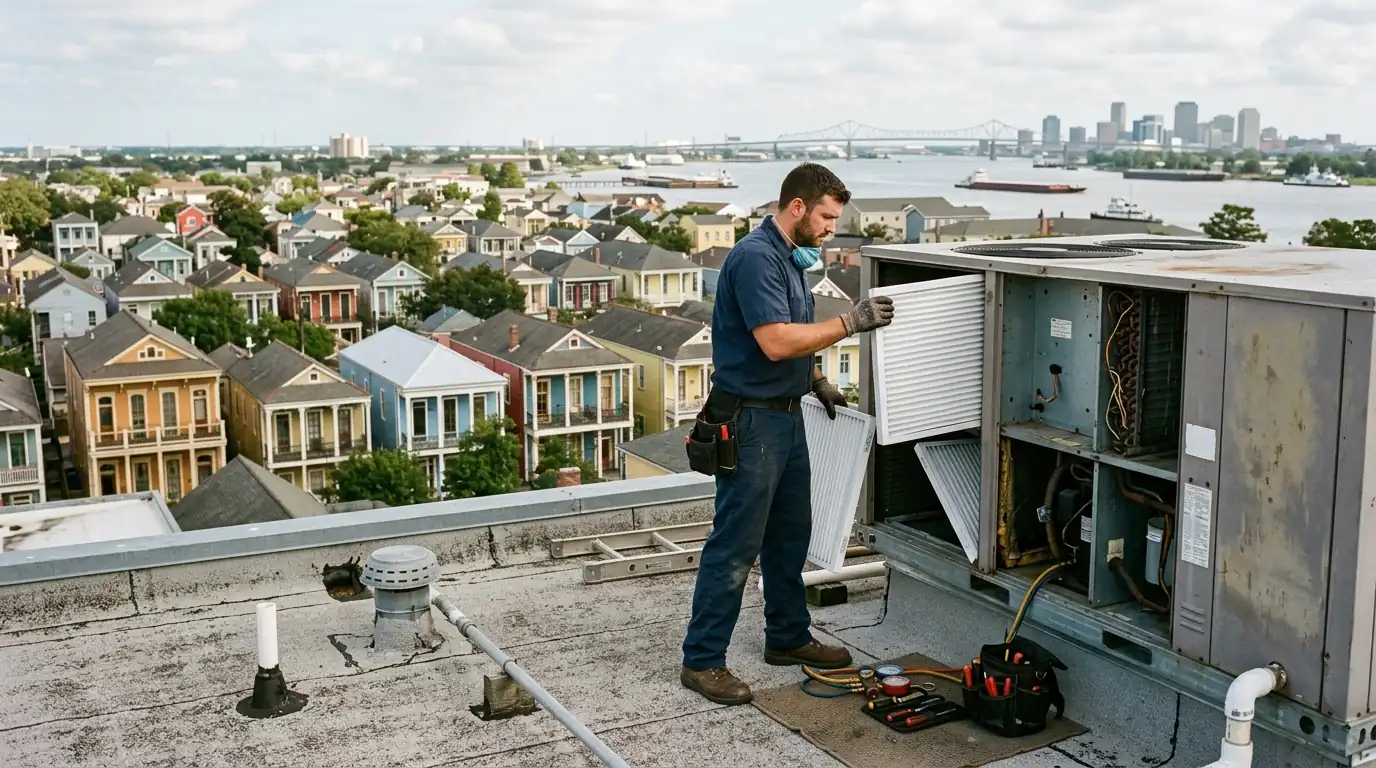
- Operating readings logged per circuit
- Condenser coils cleaned
- Refrigerant charge and oil checked
- Motors, contactors and wiring inspected
- Safeties and controls tested
- Pumps and strainers checked
- Written report with trends
Cooling load that rarely lets up
Commercial buildings here carry cooling load for most of the year, so a chiller gets little rest. Air-cooled machines on roofs and pads take a beating from heat, humidity and corrosive air, and coils that are not cleaned lose capacity just as demand peaks. Logged maintenance through the year is what keeps the plant from failing on the busiest week of the season.
Scheduled Chiller Maintenance
We log operating pressures, temperatures and amperage on every circuit and compare them with earlier visits, which is how slow problems get caught. Condenser coils on air-cooled chillers are cleaned, since dirty coils are the most common cause of lost capacity and high-pressure trips here. We check refrigerant charge, oil levels, compressor and fan motor condition, electrical connections, safeties and controls, and inspect pumps, strainers and the chilled-water loop. You get a written report after each visit with readings and recommendations.
Chiller Repair
When a chiller alarms or loses capacity, we start with the controller's fault history and the operating data, then test the refrigerant circuits, compressors, fans, sensors and safeties. Common repairs include failed condenser fan motors, contactors and sensors, refrigerant leaks, control board faults and compressor problems on one circuit. We aim to keep part of the plant running while repairs are made, and we tell building management plainly what failed and what it takes to fix it. Each repair is logged with the readings before and after, so the next technician starts with the full history.
Chilled-Water System Support
The chiller is only part of the system. Pumps, valves, strainers, air handler coils and the controls that tie them together all affect comfort and efficiency. We check flow, clean strainers, look at air handler coils and drain pans, and review setpoints and schedules on the building controls. Water treatment levels are checked and coordinated with your treatment provider. For aging plants, we help plan the replacement of tired equipment before it fails in July, with a condition report that ranks each component by risk so capital can be spent where it matters most.
Timing
A routine maintenance visit usually takes most of a day for a single air-cooled chiller, longer for larger plants or when coils need heavy cleaning. Repairs depend on the fault and parts: sensors, contactors and fan motors are often replaced the same day, while compressor work may need parts ordered. We schedule around building hours where possible and keep management informed on timing throughout.
Signs a chiller needs attention
- High-pressure alarms on hot days
- Building temperatures creeping up
- Short cycling compressors
- Unusual noise or vibration
- Ice or frost on refrigerant lines
- Chilled-water temperature drifting
- Rising energy use with no change in load
What affects the cost of chiller service
Chiller work is quoted per plant, by size and scope.
Chiller size
Tonnage and number of circuits.
Air or water cooled
Different maintenance scope.
Visit frequency
Quarterly, semiannual or annual.
Coil condition
Heavy cleaning or coil coatings.
Repairs found
Parts and labor quoted separately.
After-hours work
Scheduling around occupied buildings.
How chiller service runs
- 1
Survey the plant
Equipment, history and controls.
- 2
Log readings
Pressures, temperatures and amperage.
- 3
Clean and inspect
Coils, motors, electrical and safeties.
- 4
Check the loop
Pumps, strainers and flow.
- 5
Repair or plan
Fix what is failing, schedule the rest.
- 6
Report
Readings and recommendations in writing.
Questions about Commercial Chiller Service in New Orleans
Most buildings here need at least quarterly checks during the cooling season.
Yes, including coil cleaning and corrosion checks.
Dirty condenser coils, failed fans or overcharge are common causes.
Where the system allows it, yes.
Yes, to avoid disrupting occupied buildings.
We check levels and coordinate with your water treatment provider.
Yes, with a condition report and a timeline.
Yes, coils, drains, belts and filters as part of the system.
More maintenance & commercial we handle in New Orleans
Commercial HVAC Installation
Rooftop package units, split systems for light commercial and more.
Our commercial HVAC installation serviceCommercial HVAC Maintenance
Quarterly service, filter programs and more.
Commercial HVAC Maintenance in New OrleansCommercial HVAC Repair
Restaurant and retail cooling, office hvac and more.
Restaurant and retail coolingChiller alarming or losing capacity?
Call and we will get a technician on the plant and a report in your hands.
Browse every service