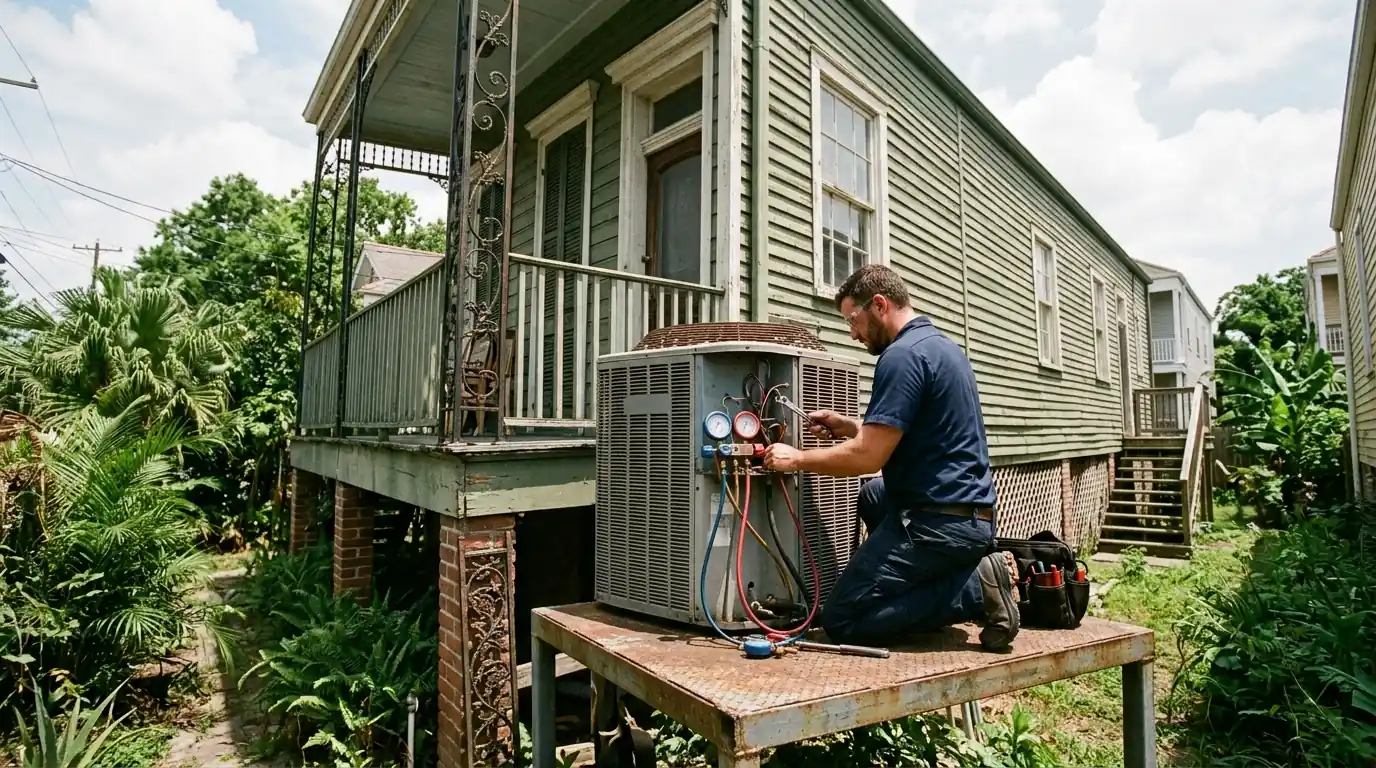
Attic insulation and air sealing for cooler New Orleans homes
In summer the attic is the hottest place in the house, and it sits right on top of your ceilings and often your ducts. Sealing and insulating it is one of the most effective ways to help the AC keep up.
Answered 24/7Mid-City service officeSlidell head officeEvery major brand
Attic insulation and air sealing in New Orleans reduces the heat that pours down from a hot attic into the rooms and ducts below. The work seals gaps around lights, plumbing and wiring penetrations first, then adds blown-in insulation to a consistent depth, and can include a radiant barrier. Sealing comes first, because insulation does little over open air leaks.
Why the attic matters so much here
Updated September 2026
Summer sun on the roof turns the attic into an oven, and that heat moves down through thin or uneven insulation into the rooms below. Gaps around ceiling lights, bath fans, wiring and plumbing let hot, humid attic air leak straight into the house.
In many homes the air handler and ducts sit in that same attic, so the system is fighting the heat twice. Air sealing and insulation reduce both problems at once.
What affects the cost of attic insulation and sealing
Attic work is priced on the size of the attic and what we find there.
Attic size
Square footage of the attic floor.
Existing insulation
Topping up versus removing damaged material.
Air sealing scope
Number and size of penetrations to seal.
Insulation depth
Target depth and material type.
Radiant barrier
Optional, depends on attic layout.
Access
Low roof pitch or tight access slows the work.
What an attic job includes
- Inspection of insulation, leaks and moisture
- Air sealing of penetrations and top plates
- Attic hatch sealed and insulated
- Baffles to keep eave vents open
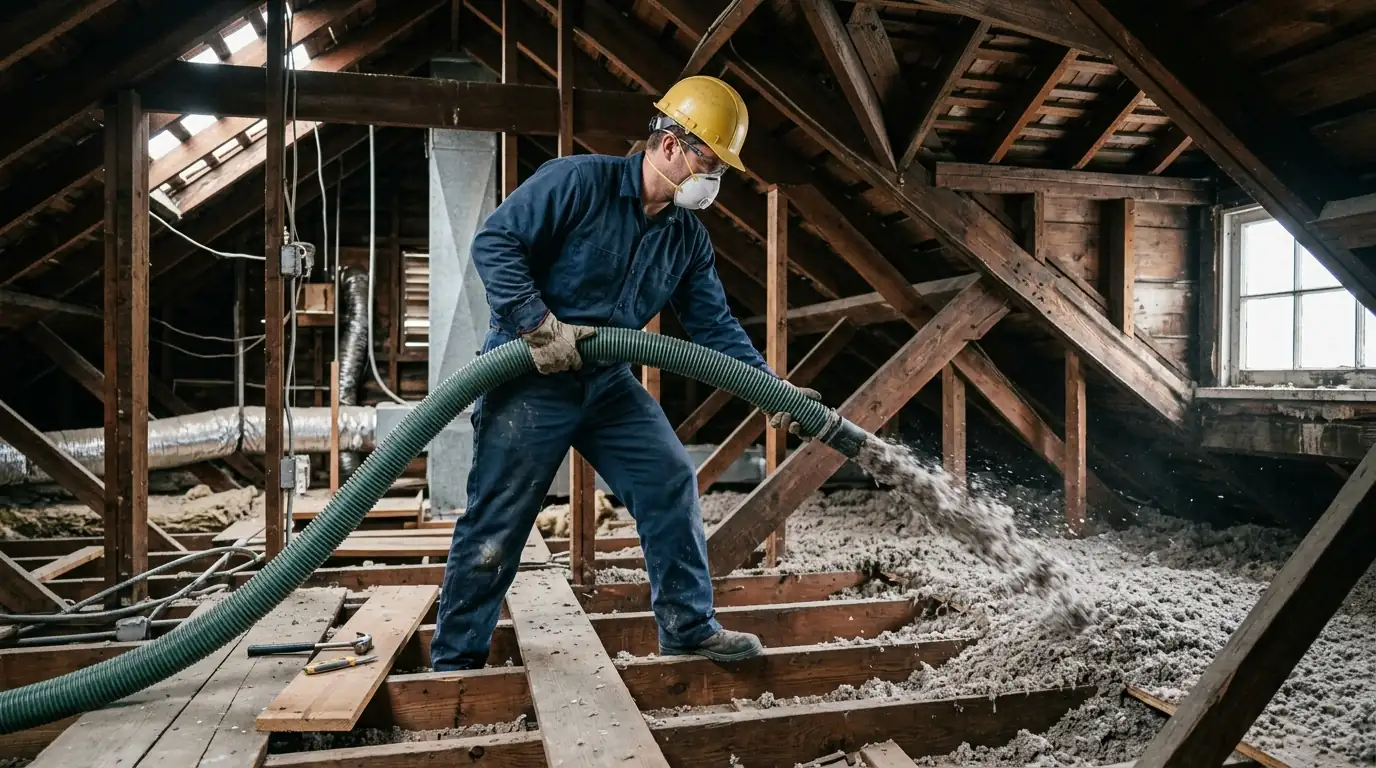
- Blown-in insulation to a consistent depth
- Depth markers installed
- Damaged insulation removed where found
Insulation and barrier options
| Blown-in insulation | Batts | Radiant barrier | |
|---|---|---|---|
| Coverage around obstacles | Even | Gaps where cut | Not applicable |
| Main job | Slows heat conduction | Slows heat conduction | Reflects radiant heat |
| Replaces the others | No | No | No |
| Best first step | With air sealing | Where blown-in is impractical | After sealing and insulation |
Blown-In Insulation
Blown-in cellulose or fiberglass fills around joists, wiring and irregular spaces far more evenly than batts, which leave gaps wherever they are cut and fitted. We measure the existing depth, install baffles at the eaves so the roof vents stay open, and blow insulation to a consistent depth across the attic floor. Depth markers let you see it was done evenly. Existing insulation that is wet, moldy or contaminated is removed first rather than covered over. The attic hatch gets its own insulated cover so it does not become the weak spot.
Attic Air Sealing
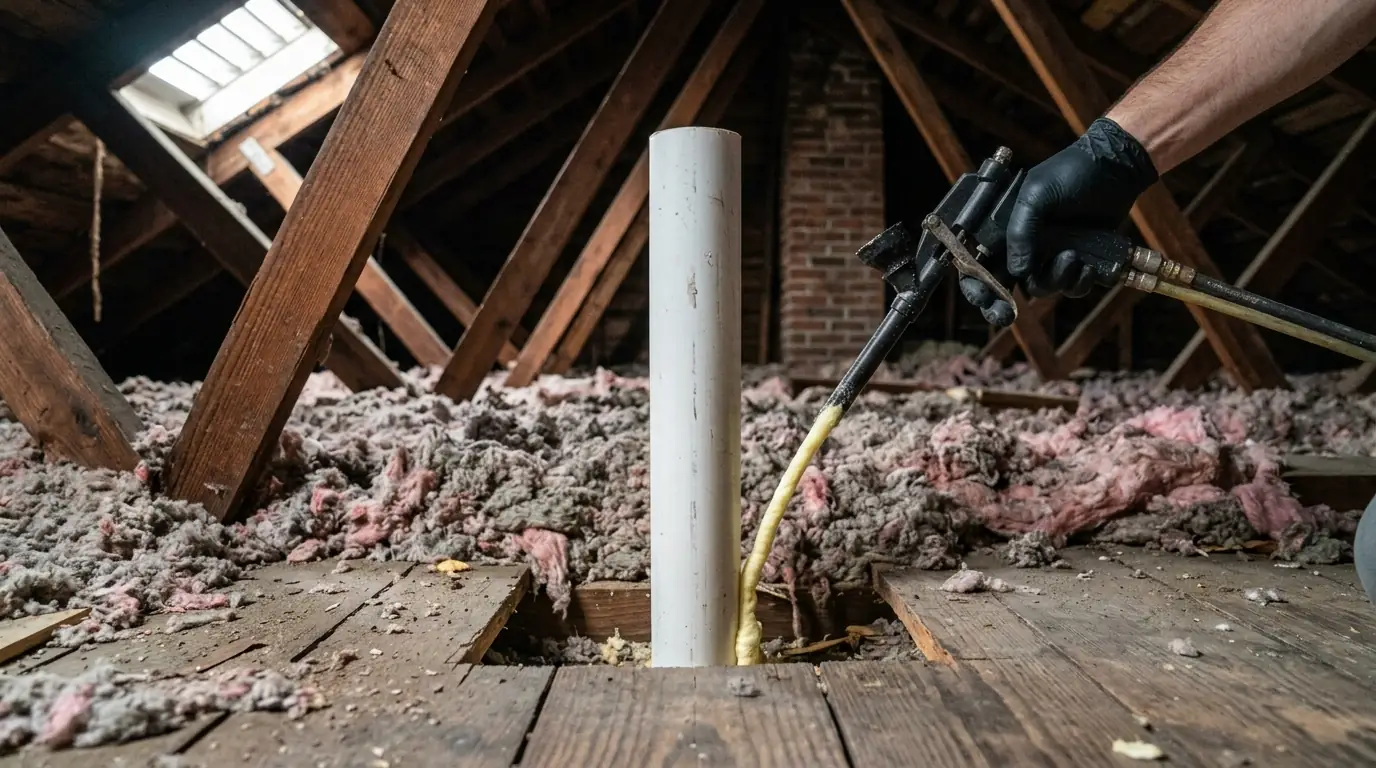
Air sealing closes the holes between the attic and the house: the top plates of walls, gaps around recessed lights and bath fans, plumbing and wiring penetrations, the attic hatch and chases. It is done before insulation, because once the insulation is blown in those gaps are buried. Sealing reduces the hot, humid air that leaks into the living space, which helps humidity control as much as cooling, and it is often the most valuable part of the job. We show you photos of the gaps before they are sealed.
Radiant Barrier
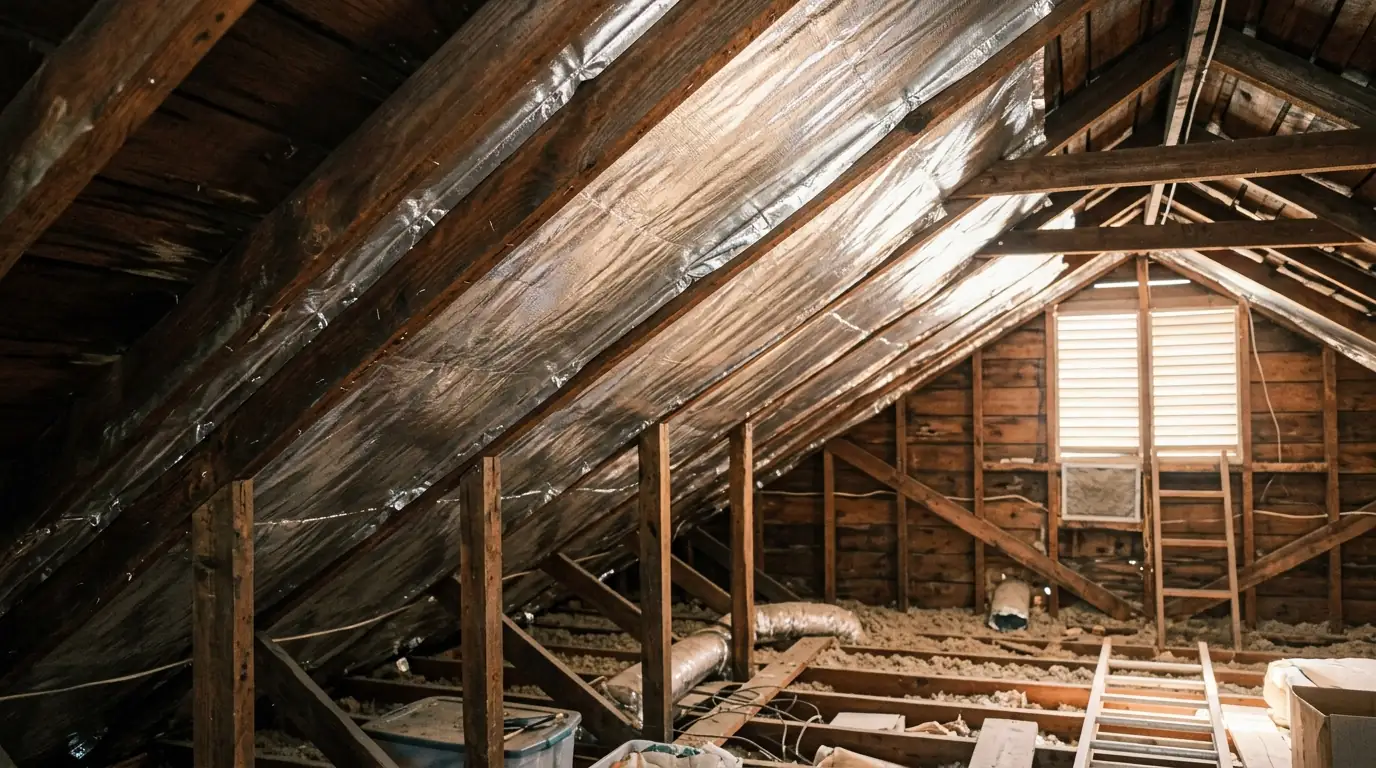
A radiant barrier is a reflective foil installed under the roof deck that reduces the heat radiating down into the attic. It does not replace insulation, but in a hot, sunny climate it can lower attic temperatures and help ducts and equipment located up there. We install it where the attic layout allows and tell you honestly when your money is better spent on sealing and insulation first, since those usually deliver more for the cost. Where ducts run close under the roof deck, the benefit is larger.
Hot attics in a humid climate
In this climate an attic spends months at temperatures far above the rooms below, and in most slab homes the ducts and air handler sit up there too. Every gap in the ceiling pulls that hot, humid air into the house, which the AC then has to cool and dry. Sealing those gaps before adding insulation is the order that works, and it often makes a noticeable difference to how long the system runs on a summer afternoon.
How an attic job runs
- 1
Inspect
Existing insulation depth, leaks and moisture checked.
- 2
Plan
Sealing, insulation depth and barrier options quoted.
- 3
Prepare
Baffles installed at the eaves, damaged insulation removed.
- 4
Air seal
Penetrations, top plates and hatch sealed.
- 5
Insulate
Blown-in insulation to a consistent depth with markers.
- 6
Check
Coverage and ventilation confirmed.
Questions about Attic Insulation & Air Sealing in New Orleans
Seal first. Insulation does little over open air leaks.
Blown-in usually covers more evenly around joists and wiring.
It can lower attic temperatures, but sealing and insulation usually come first.
Yes. Less heat entering the house means the system runs less.
Yes, if it is dry and clean. Damaged material is removed first.
Air sealing reduces humid attic air leaking into the house.
Usually a single day for a typical attic.
Yes, with baffles at the eaves.
More ductless & ductwork we handle in New Orleans
Duct Leakage Testing
Pressure testing the ducts, finding the leaks and more.
Duct Leakage Testing in New OrleansDuctless Mini-Split Installation
Single-zone mini-split, multi-zone mini-split and more.
Single-zone mini-splitUpstairs too hot?
Call and we will check the attic and seal and insulate it properly.
Browse every service