By Gail Barlow, HVAC Guides Editor · Updated September 2026
If your AC is running but not cooling in New Orleans, check that the thermostat is set to cool with the fan on auto, replace a dirty filter, confirm the outdoor unit is running, and look for ice on the copper line. If the outdoor fan is not spinning or the line is frozen, switch the system off and call rather than keep running it.
Check one: the thermostat
It sounds obvious, but thermostats get bumped, schedules change and batteries die. Make sure it is set to cool, the setpoint is below the room temperature, and the fan is on auto. If the screen is blank, replace the batteries; if it is still blank, the float switch on the drain may have tripped and cut power, which is a sign of a clogged drain.
Check two: the filter
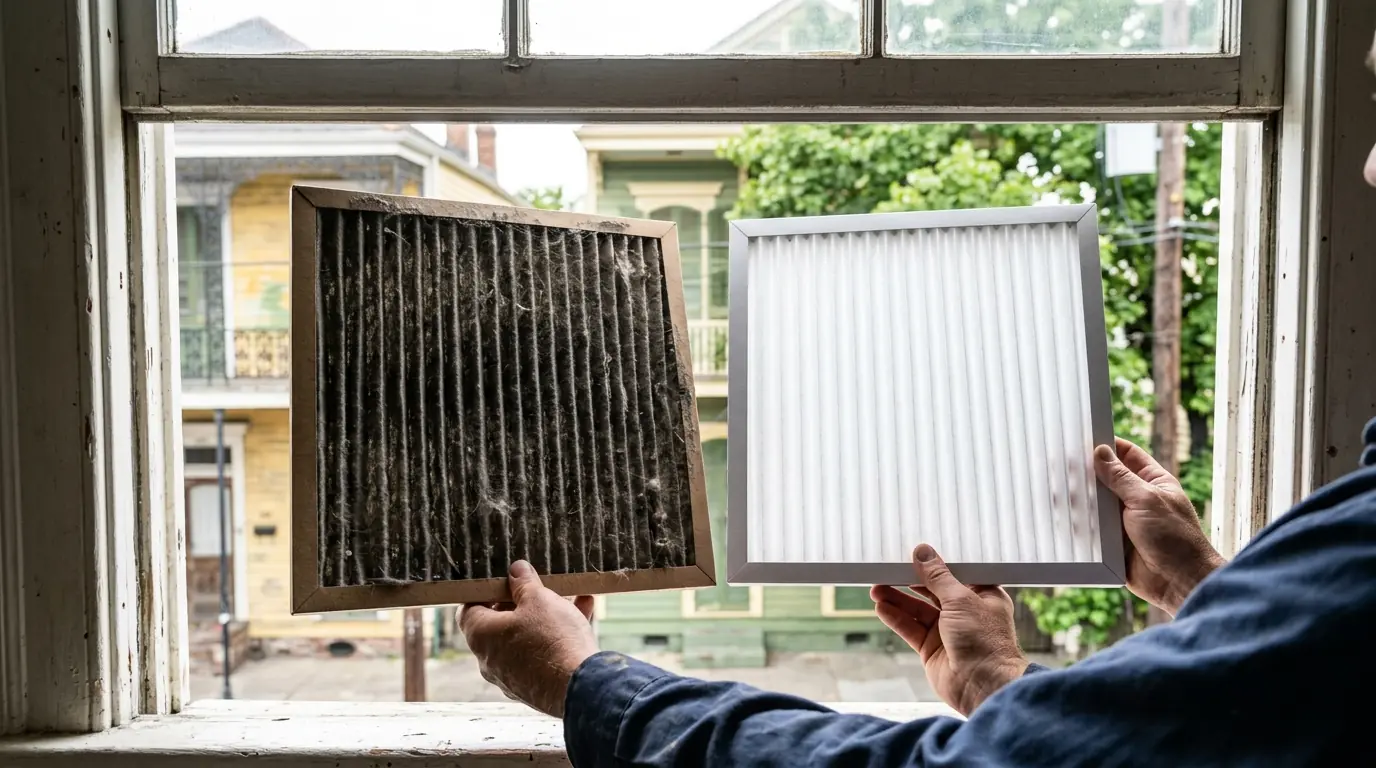
A filter packed with dust chokes airflow across the indoor coil. The result is weak airflow at first, and eventually a frozen coil. Pull the filter and hold it up to the light. If you cannot see through it, replace it. In this climate, with the system running most of the year, filters often need changing every one to three months.
Check three: the outdoor unit
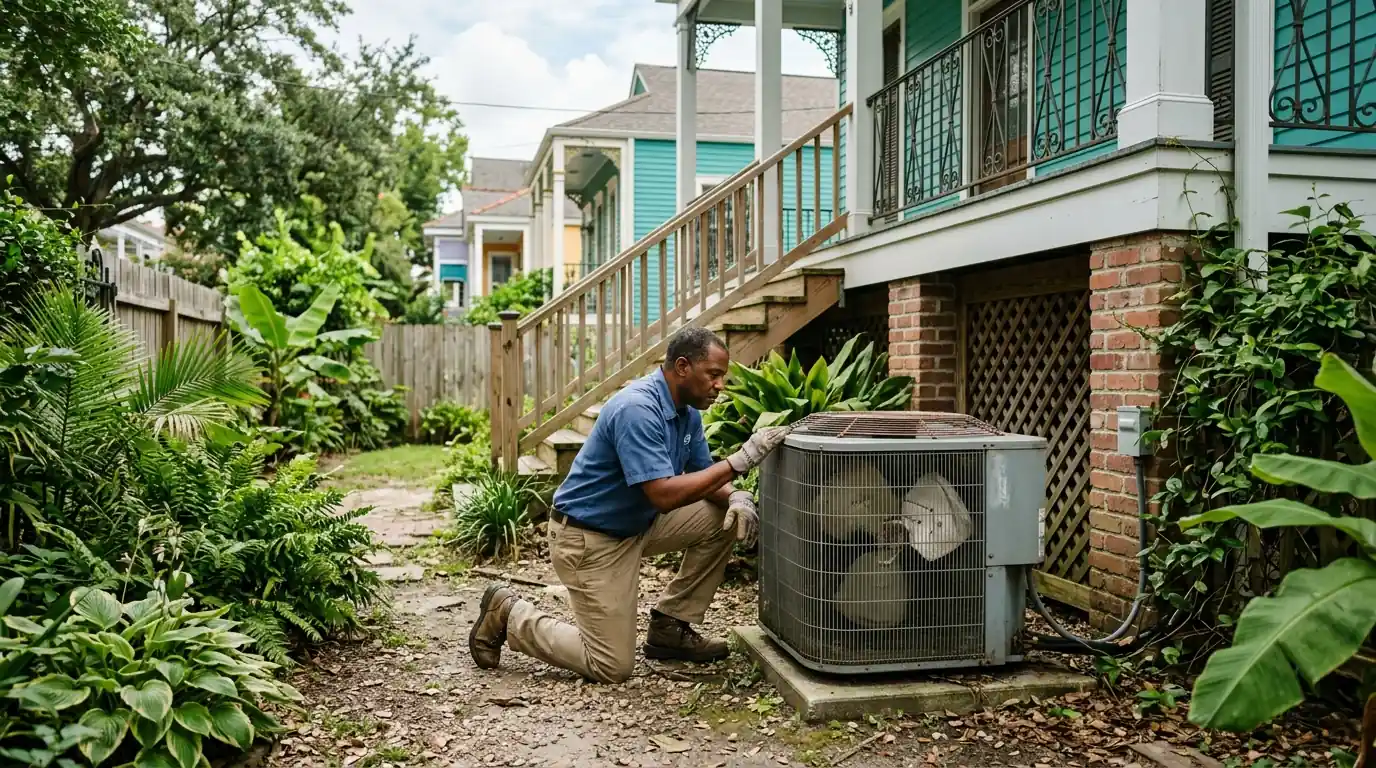
Go outside and look at the condenser. The large fan on top should be spinning and you should hear the compressor running. If the fan is still but the unit hums, turn the system off at the thermostat. That pattern usually means a failed capacitor, and running the compressor without the fan overheats it.
Also check the breaker for the outdoor unit and the disconnect box beside it. If the breaker has tripped, reset it once. If it trips again, leave it off and call; a repeat trip points to an electrical fault.
Check four: ice
Look at the larger insulated copper line where it enters the outdoor unit, and at the indoor unit if you can see the coil. Frost or ice means the coil is freezing, usually from low airflow or low refrigerant. Turn the cooling off and run the fan only to thaw it, and put towels around the air handler for the meltwater. Do not chip at the ice.
Check five: water
Water around the indoor unit, or a new stain on the ceiling below an attic system, points to a clogged condensate drain. High humidity here makes drains clog more often than in drier places. Turn the system off to stop more water from collecting and call to have the line cleared.
Checked everything and still no cold air? Call any hour.
(504) 520-4214Check six: the vents and the rest of the house
Walk the house and feel the supply vents. If air is cold at some vents and weak or warm at others, the problem may be in the ductwork rather than the equipment: a disconnected or crushed run in the attic sends cold air into the rafters instead of the room. If every vent is weak, the problem is more likely the filter, the blower or a freezing coil.
Also make sure vents and returns are not blocked by furniture or rugs, and that the doors to closed rooms have some gap at the bottom. A system with too little return air struggles in the same way as one with a dirty filter.
Finally, note the time of day. A system that keeps up in the morning and falls behind by mid afternoon may simply be undersized or losing efficiency, which is a different conversation from a system that has stopped cooling entirely.
What not to do
Do not keep running a system that is blowing warm air with the outdoor fan stopped. Do not open the electrical panel on the outdoor unit; capacitors hold a charge even with the power off. Do not add refrigerant yourself or pay someone to top it off without finding the leak. And do not keep resetting a breaker that trips.
What to tell the technician
When you call, describe what you saw: whether the outdoor fan was spinning, whether there was ice or water, whether the breaker tripped, and how long it has been happening. Those details point the technician toward the likely fault before they arrive, which saves time on the visit.
Questions readers ask about this
Most often a failed capacitor or contactor outdoors, a frozen coil, or low refrigerant.
Yes, if the outdoor fan is stopped or there is ice. Running it can damage the compressor.
Every one to three months here, depending on the filter and the household.
Once. If it trips again, leave it off and call.
No. It means low airflow or low refrigerant and needs a diagnosis.
A few hours on a hot day, because walls and furniture have absorbed heat.
Related guides and services
What AC repair costs in New Orleans
Published 2026 AC repair ranges for New Orleans, what pushes a bill up, and how to read a quote before you.
What AC repair costs in New OrleansWhat AC replacement costs
Published 2026 ranges for replacing an AC or full HVAC system in New Orleans, what moves the price, and how.
Read: What AC replacement costsHow to choose an HVAC company
Questions to ask on the first call, what to verify yourself, and the red flags worth walking away from when.
How to Choose an HVAC Company in New OrleansFrozen Evaporator Coil Repair
Ice on the refrigerant line, dirty coil cleaning and more.
See Frozen Evaporator Coil Repair detailsCondensate Drain Line Cleaning & Repair
Clogged drain line, overflow float switch and more.
More on Condensate Drain Line Cleaning & Repair