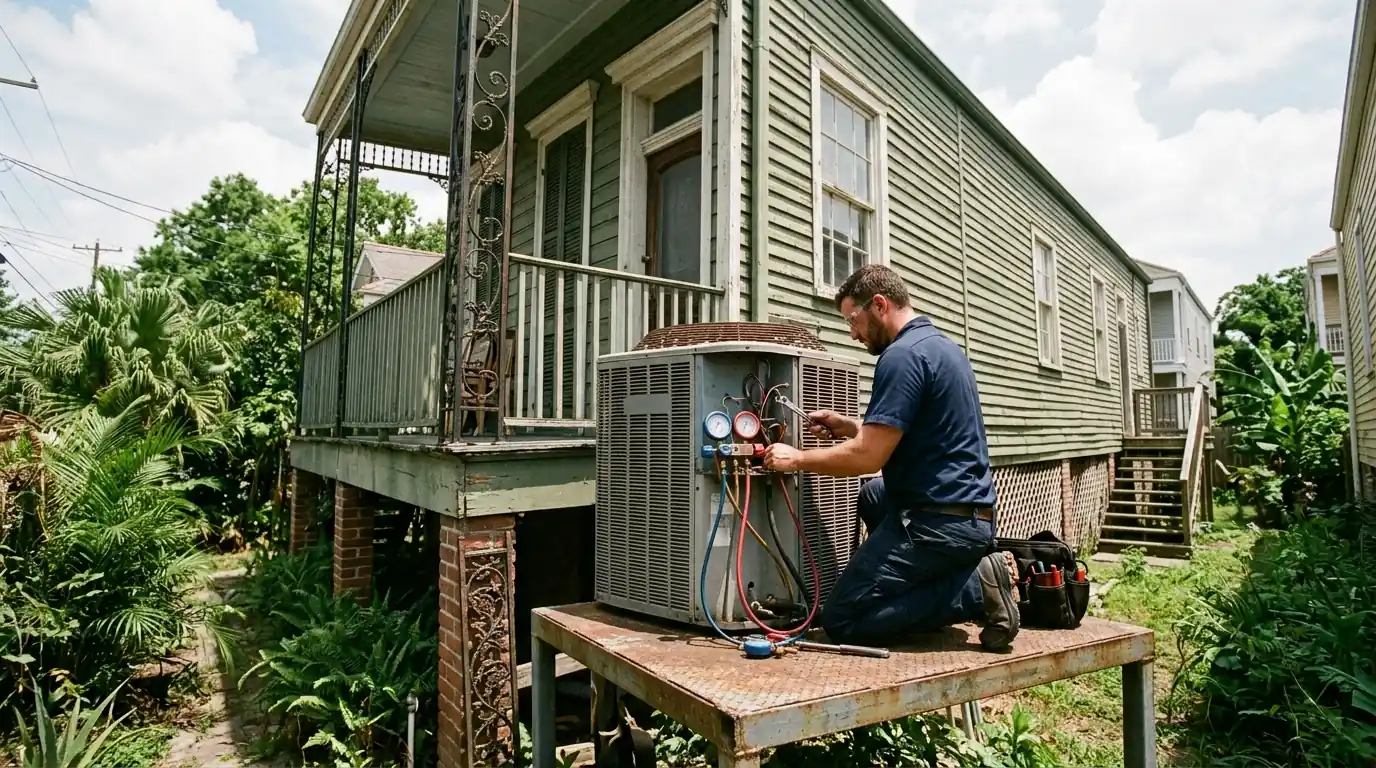
HVAC inspections for New Orleans home buyers
A general home inspection glances at the HVAC. Ours looks at it properly: the age and condition of each system, the ducts in the attic or crawl space, and signs of past flooding.
Answered 24/7Mid-City service officeSlidell head officeEvery major brand
A pre-purchase HVAC inspection in New Orleans checks the age, condition and operation of the heating and cooling equipment, the ductwork and attic conditions, the drain and safety components, and signs of past flood damage. You get a written report with photos, the expected remaining life of each system, and any repairs worth raising before closing.
Why a separate HVAC inspection pays off
Updated September 2026
A general home inspector tests whether the system turns on and cools. That leaves out most of what decides whether a system will last: refrigerant charge, coil condition, duct leaks, drain safety and whether the equipment was ever flooded.
Replacing a system is one of the largest repairs a new homeowner faces. Knowing before closing gives you the chance to negotiate, budget or walk away.
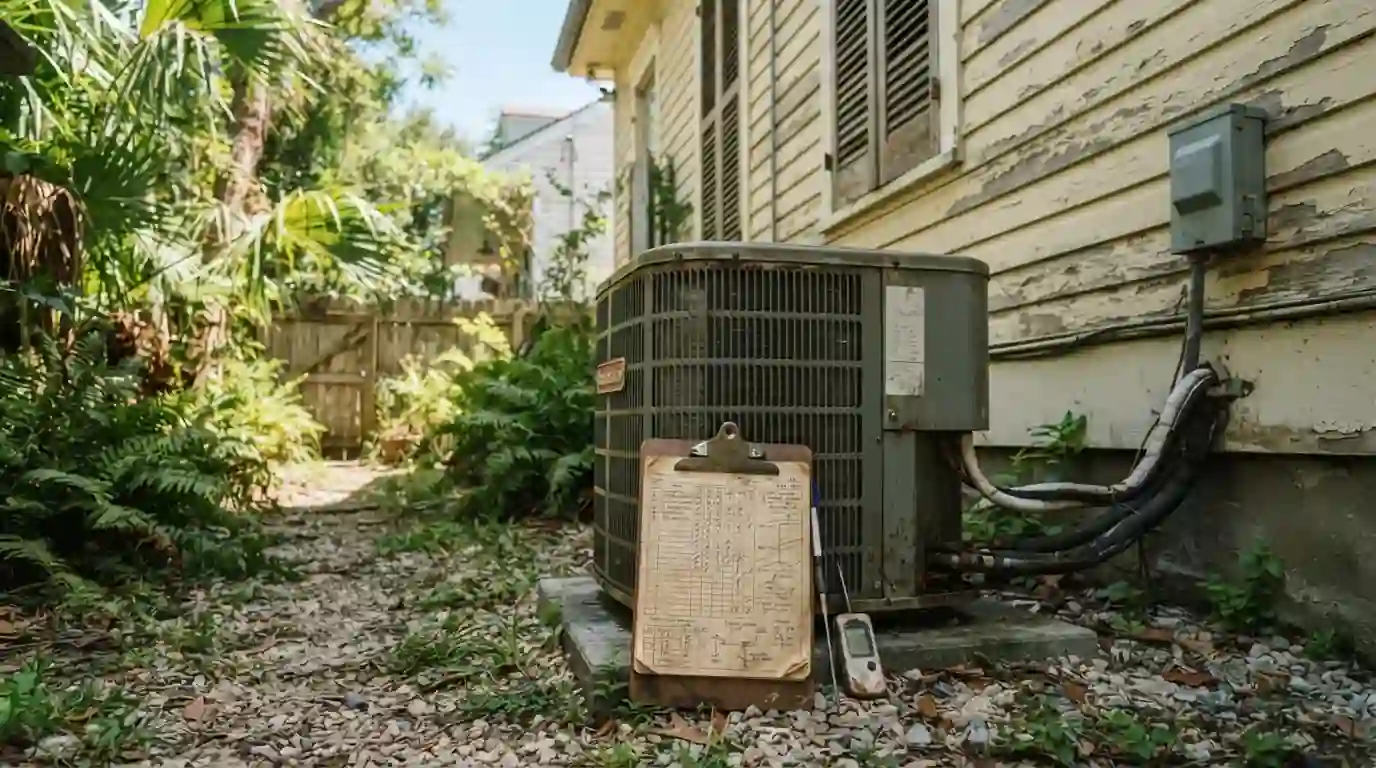
What the inspection covers
- Make, model, age and refrigerant of each unit
- Cooling and heating operation measured
- Coils, blower and electrical inspected
- Ductwork and insulation in attic or crawl space
- Drain pan, float switch and condensate line
- Signs of past flood damage documented
- Written report with photos and remaining-life estimates
What flood history means for buyers
Gentilly flooded heavily in 2005 and most of its homes were gutted and rebuilt, so equipment there is often newer than the house itself. The Lakefront neighborhoods, including Lake Vista, largely escaped that flooding, which means some homes still carry original or much-patched duct systems from after World War II. Knowing which pattern a house fits tells a buyer where to look hardest.
System Age and Condition
We record the make, model and manufacture date of every indoor and outdoor unit, run each system in cooling and, in season, heating, and measure temperature drop, refrigerant pressures and amperage. We inspect the coils, blower, electrical components and the refrigerant type, since an R-22 system is expensive to repair. The report gives an honest estimate of remaining life and flags anything likely to need replacement soon. We also check the electrical disconnect, breaker size and wiring condition, since those affect safety as well as the life of the equipment. The report states plainly what is in good shape, not only what is wrong.
Flood History Check
In a city with a flood history, past water damage to HVAC equipment is worth looking for. We check for water lines and silt on outdoor units, corrosion patterns, replaced components that suggest earlier flooding, and the condition of ducts and air handlers in crawl spaces. We report what the equipment shows, not guesses about the house's history, and suggest what to ask the seller based on what we find. If the air handler or ducts sit in a crawl space, we look at those closely too, since they are the parts most likely to have taken on water.
Ductwork and Attic Review
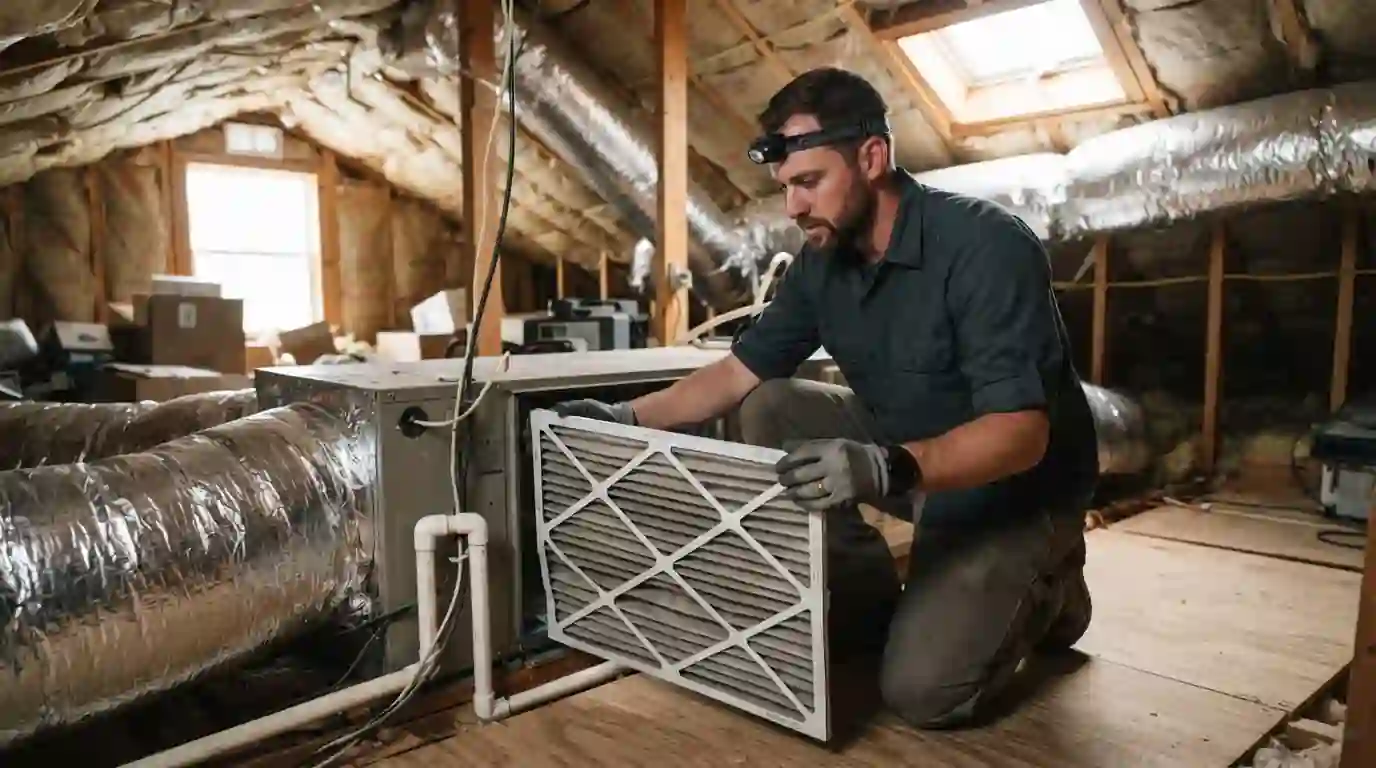
Ducts are the part of the system buyers rarely see. We inspect attic or crawl-space ductwork for disconnected runs, crushed flex, failed insulation and poor sealing, and check the attic conditions around the air handler, including the secondary drain pan and float switch. Duct problems are often cheaper to fix than equipment problems, but they are just as important to know about before you own them. We also note insulation levels and ventilation in the attic, since both affect how hard the system has to work. Where access is limited, the report says so rather than guessing.
General home inspection vs HVAC inspection
| General home inspection | Pre-purchase HVAC inspection | |
|---|---|---|
| Runs the system | Yes | Yes |
| Measures charge and airflow | Rarely | Yes |
| Inspects ductwork | Briefly | In detail |
| Remaining-life estimate | General | Per system |
What affects the cost of a pre-purchase inspection
Inspections are priced on the number of systems and access.
Number of systems
Each system adds inspection time.
Access
Attics and crawl spaces take longer.
Season
Heating can only be fully tested in cooler weather.
Ductwork extent
Larger duct systems take longer to inspect.
Report detail
Photos and written findings included.
Scheduling
Inspection windows before closing.
How a pre-purchase inspection runs
- 1
Schedule
Timed within your inspection period.
- 2
Record equipment
Make, model, age and refrigerant noted.
- 3
Test operation
Cooling and heating run and measured.
- 4
Inspect ducts and attic
Runs, insulation, drain and safety checked.
- 5
Look for flood signs
Water lines, silt and corrosion documented.
- 6
Report
Written findings with photos and remaining-life estimates.
Questions about Pre-Purchase HVAC Inspection in New Orleans
It checks whether the system runs. Ours checks whether it will last.
About one to two hours for a typical home.
We give an honest estimate based on age and condition.
We document signs the equipment shows, such as water lines and corrosion.
Yes, in the attic or crawl space where accessible.
Yes, with photos, findings and recommendations.
Yes, if you want estimates to use in negotiation.
Yes, for buyers and investors alike.
More maintenance & commercial we handle in New Orleans
Rooftop Package Unit Service
RTU not cooling, economizer repair and more.
Our rooftop package unit service serviceSoft Start Kit Installation
Generator-ready AC, hard-start vs soft-start and more.
Soft Start Kit Installation in New OrleansBuying a home?
Call to book an HVAC inspection inside your inspection period.
Browse every service