Fresh air ventilation and ERVs for tight New Orleans homes
A well-sealed house saves energy but can trap stale air, odors and moisture from cooking and showers. An energy recovery ventilator brings fresh air in while keeping most of the outdoor humidity out.
Answered 24/7Mid-City service officeSlidell head officeEvery major brand
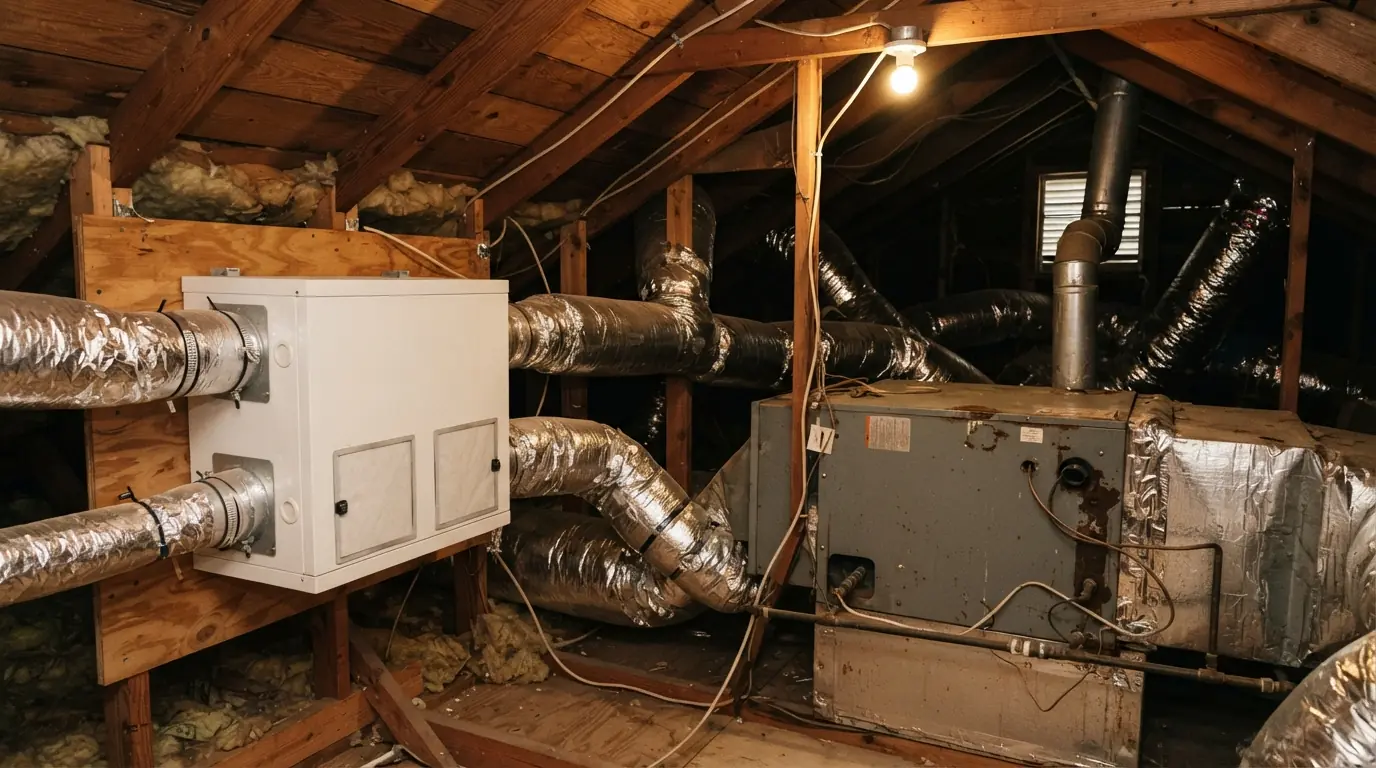
An ERV, or energy recovery ventilator, in New Orleans exchanges stale indoor air for fresh outdoor air while transferring heat and moisture between the two streams, so incoming humid air is partly dried before it enters. It suits newer, tightly built or heavily sealed homes that feel stuffy, and it is sized to the house and tied into the existing ductwork.
Why a tight house needs planned ventilation
Updated September 2026
Older houses breathe through every gap. Newer homes, and older ones that have been heavily sealed and insulated, do not, so odors, cooking moisture and indoor pollutants build up. Opening windows here brings in heat and humidity along with the fresh air.
An ERV solves that by bringing in a controlled amount of outdoor air and exhausting an equal amount of stale air, passing both through a core that moves heat and moisture from the incoming stream to the outgoing one.
What affects the cost of an ERV installation
ERVs are priced on the house size and how they connect to the system.
Unit size
Sized to the house and number of occupants.
Ducting
Tying into existing ducts or running dedicated ducts.
Exterior penetrations
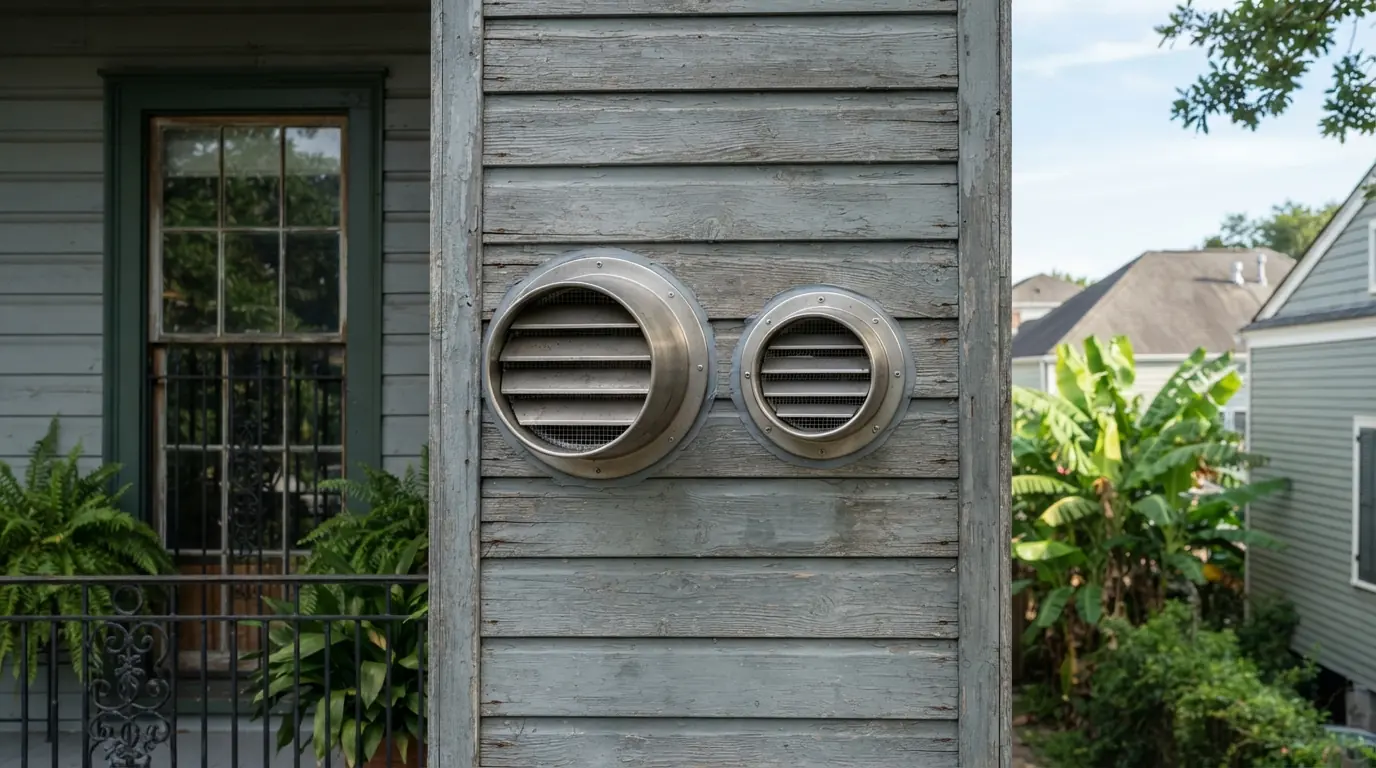
Intake and exhaust hoods through the wall or roof.
Controls
Timers, humidity sensors or thermostat integration.
Bathroom pickups
Direct exhaust ties add duct runs.
Access
Attic or closet installation space.
What an ERV installation includes
- Assessment of how tight the house is
- Unit sized to the house and occupants
- Intake and exhaust hoods to the outside
- Duct connections to supply and return
- Airflow balancing
- Controls set up
- Filter locations shown
ERV or HRV
| ERV | HRV | |
|---|---|---|
| Transfers heat | Yes | Yes |
| Transfers moisture | Yes | No |
| Best climate | Hot and humid | Cold and dry |
| Right for New Orleans | Usually | Rarely |
ERV vs HRV
Both are balanced ventilators with a heat exchange core. An HRV transfers only heat, which suits cold, dry climates. An ERV also transfers moisture, so in a humid summer it keeps much of the outdoor humidity from entering the house. In south Louisiana an ERV is almost always the right choice. Neither one is a dehumidifier, though: in a house that is already damp, an ERV should be paired with proper humidity control rather than expected to fix it on its own.
Tight Home Ventilation
Homes built to recent codes, and older homes after a serious air-sealing and insulation job, can end up with too little fresh air. The signs are lingering cooking smells, stuffiness in the morning, and condensation on windows. We size the ERV to the house and the number of occupants, connect it to the return and supply ducts or run it on its own ducts, and set a ventilation rate that freshens the air without overloading the AC with humid outdoor air.
Bathroom Exhaust Ties
Some ERVs can pull stale air directly from bathrooms and kitchens, replacing or supplementing exhaust fans and running continuously at a low rate. That removes moisture at its source and keeps the whole house fresher. We plan the pickup points and duct runs, and make sure every exhaust duct terminates outside rather than in the attic, which is a surprisingly common problem in older installations and a source of attic mold. A continuous low exhaust rate is usually quieter and more effective than a loud fan run for a few minutes.
Which houses actually need an ERV
Older houses in Uptown, the Garden District and Mid-City were built before air conditioning, with tall ceilings and big windows meant to let air move through. They leak so much outside air that they rarely need mechanical ventilation. The houses that do are the tightly sealed ones: newer construction and older homes that have been heavily insulated. We check which kind of house you have before recommending an ERV.
Brands we service and install
We repair and install Trane, Carrier, Lennox, Goodman, Rheem, Ruud and the other major lines, plus Mitsubishi Electric ductless.
How an ERV installation runs
- 1
Assess the house
How tight it is and where moisture and odors build up.
- 2
Size the unit
Ventilation rate for the house and occupants.
- 3
Plan the ducts
Intake, exhaust and connection points laid out.
- 4
Install
ERV mounted, ducted and exterior hoods fitted.
- 5
Controls and balance
Airflow balanced and controls set.
- 6
Explain
Filter changes and settings shown to you.
Questions about Fresh Air Ventilation & ERV Installation in New Orleans
A ventilator that swaps stale indoor air for fresh outdoor air while transferring heat and moisture between them.
An ERV, because it also limits the humidity coming in.
No. It limits added humidity but does not dry the house. Pair it with humidity control if needed.
Usually not. Older houses leak plenty of outside air. Tightly sealed homes are the ones that benefit.
Slightly, because it brings in outdoor air, but far less than opening windows.
Typically every few months, depending on the model and conditions.
Some can, with direct exhaust pickups.
Honeywell, Aprilaire and matched units from Trane, Carrier and Lennox, among others.
More air quality & humidity we handle in New Orleans
Indoor Air Quality Testing
Humidity and Temperature Logging, particle and co2 readings and more.
Our indoor air quality testing serviceMedia Filter & Air Filtration Upgrade
4-inch media filter cabinet, merv ratings and more.
Media Filter & Air Filtration Upgrade in New OrleansThermostat & Smart Thermostat Installation
Smart thermostat setup, thermostat not responding and more.
Smart thermostat setupHouse feeling stuffy?
Call and we will check whether an ERV or another fix is the right answer.
Browse every service