By Gail Barlow, HVAC Guides Editor · Updated September 2026
With regular maintenance, many central AC systems in New Orleans give somewhere around 10 to 15 years. Units near salt air, systems that were oversized or never serviced, and equipment that has sat in floodwater often fall short of that. The outdoor coil, the compressor and the indoor coil are usually the parts that decide when a system is finished.
Why systems age faster here
Run time is the main reason. A system in New Orleans cools for most of the year, often from spring into late fall, and runs long cycles on hot, humid afternoons. Every hour of running wears the compressor, fan motors and electrical parts.
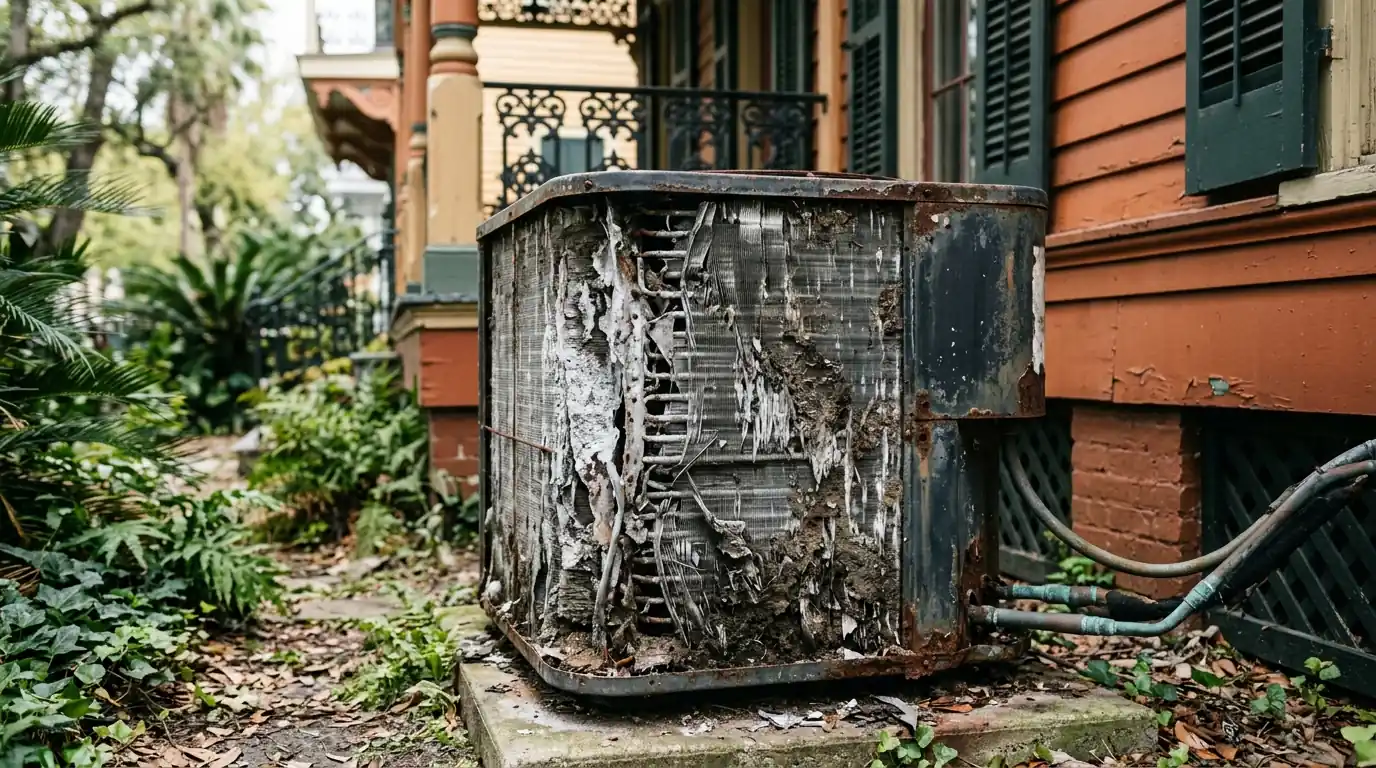
The air itself is the second reason. Humidity keeps the indoor coil and drain pan wet for months, which invites corrosion and growth. Near the lake, the river and the marsh, salt and industrial grime settle on outdoor coils and eat at the thin aluminum fins and copper tubing.
The parts that usually decide the end
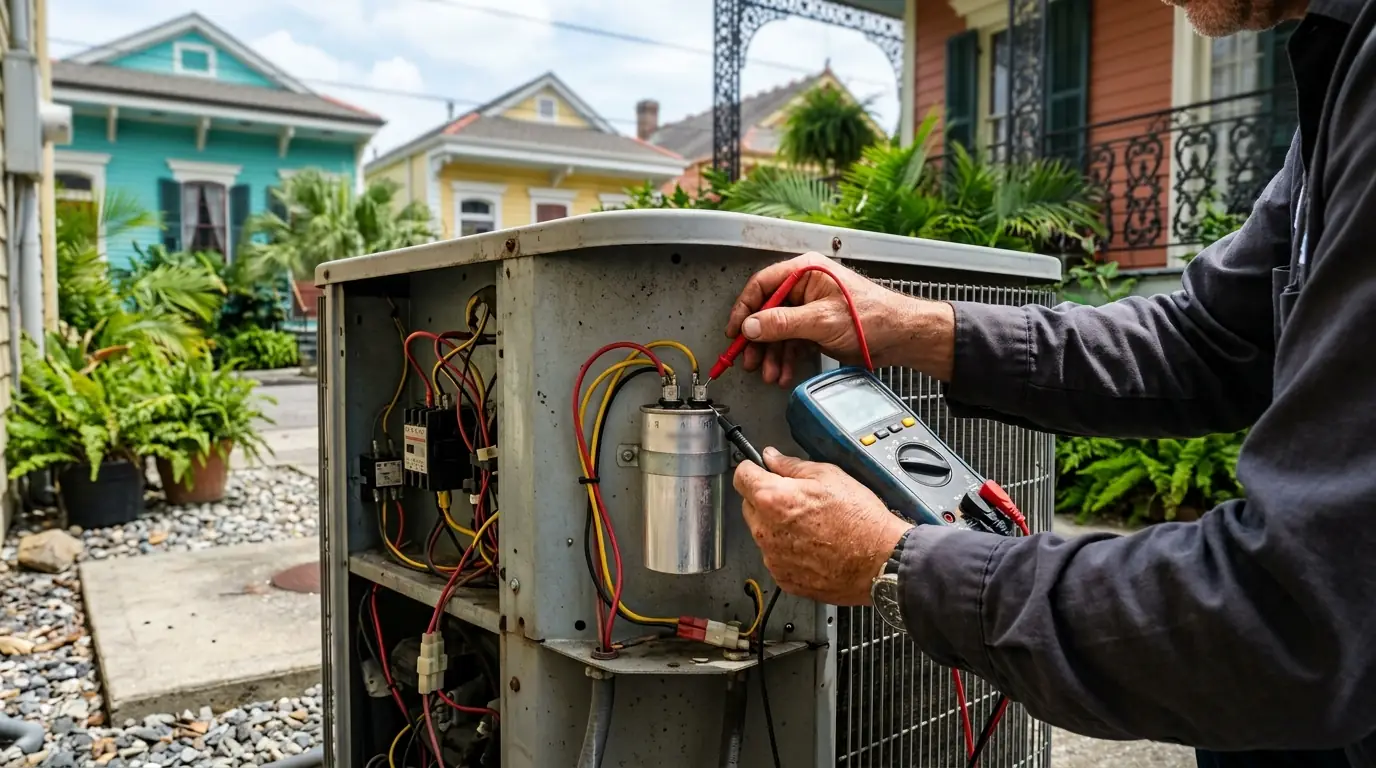
Capacitors, contactors and fan motors fail often, but they are inexpensive and are replaced without question. The decision point usually comes with one of three bigger failures: a compressor that has failed or is drawing too much current, an outdoor coil that leaks or has corroded away, or an indoor coil that leaks refrigerant.
When one of those fails on a system that is already well into its second decade, the repair can cost a large share of a new system while leaving every other old part in place. That is when replacement usually makes more sense.
Signs a system is near the end
Warning signs include rising electric bills with no change in use, longer run times to reach the same temperature, a house that feels clammy even when it is cool, repeated refrigerant top-ups, and more frequent repair calls. Visible corrosion on the outdoor coil, oily spots on refrigerant joints and a compressor that struggles to start are signs a technician will look for.
None of these alone means the system is finished. Together, on an older unit, they mean it is time to start planning rather than wait for the failure.
What stretches the life of a system
Maintenance matters more here than in most places. A spring tune-up that cleans the outdoor coil, flushes the drain and checks the electrical parts catches small problems before they damage the compressor. Clean filters keep the indoor coil from freezing and protect the blower.
Sizing and installation matter just as much. An oversized system short-cycles, wears out faster and leaves the house damp. A system installed with sealed ducts, a correct refrigerant charge and a raised, level condenser in flood-prone areas simply lasts longer.
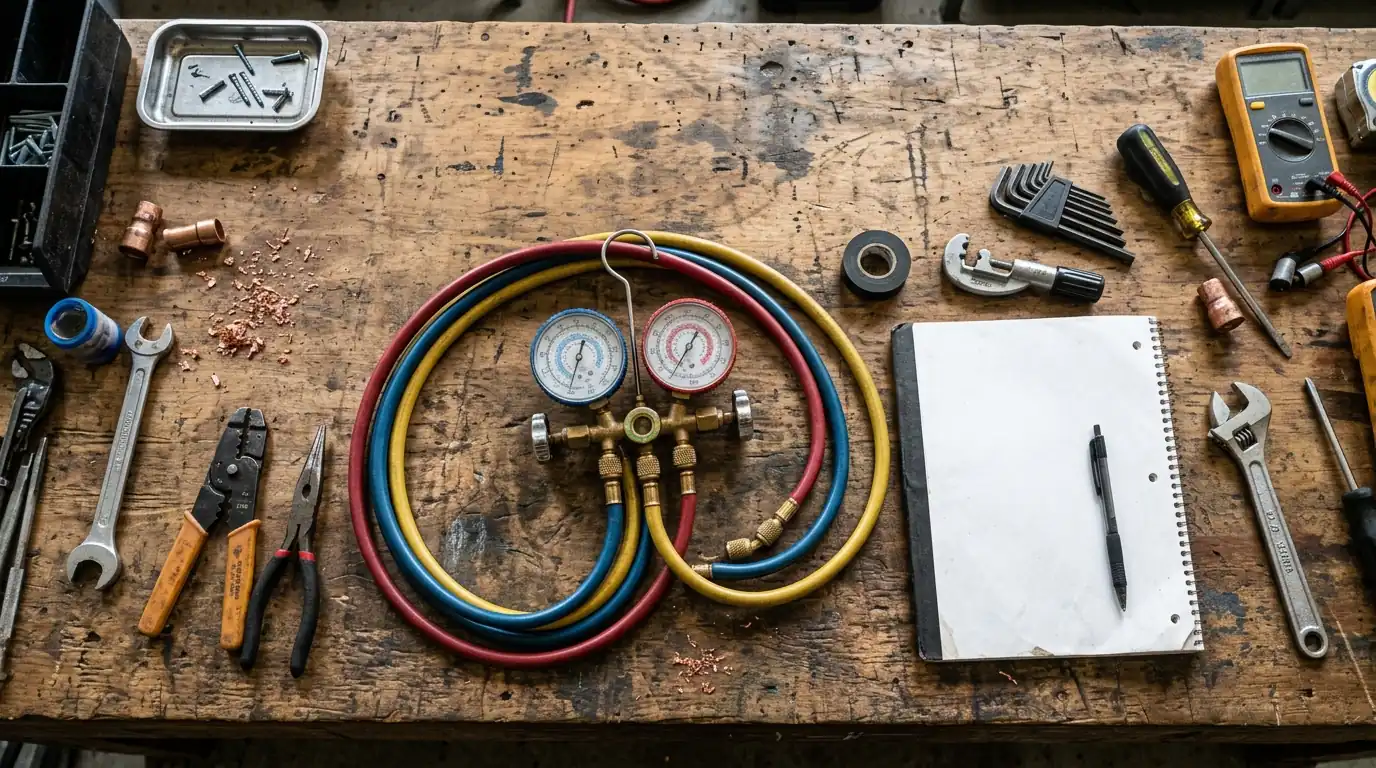
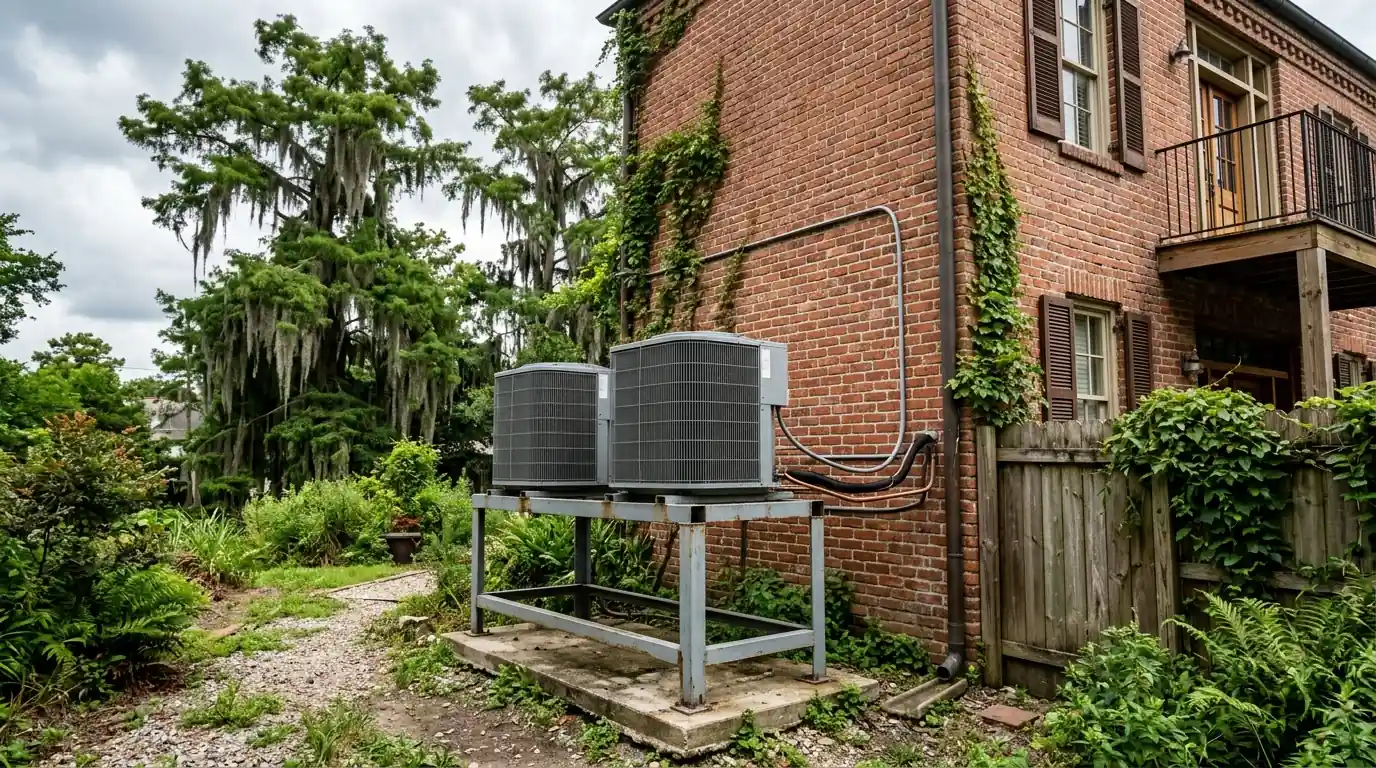
A spring tune-up costs far less than a compressor. Book one before the first hot week.
(504) 520-4214Salt air and coil protection
If your home is close to the lake, the river or the marsh, rinsing the outdoor coil gently with a garden hose a few times a year helps remove salt and grime. Coil coatings applied at installation can slow corrosion, and some manufacturers offer coils built for coastal conditions.
On replacements in exposed locations, ask about those options. They cost little compared with replacing a corroded coil years early.
Flood and storm history
A condenser or air handler that has sat in floodwater rarely lives a normal life, even if it starts again afterward. Water damages electrical parts, motors and insulation in ways that show up months later. If your system went through a flood and was restarted without a proper inspection, factor that into how long you expect it to last.
Power surges after storms also shorten the life of control boards and compressors. Surge protection at the unit is an inexpensive way to reduce that risk.
Planning the replacement
Once a system is past ten years and needing more frequent repairs, it is worth getting a replacement quote before anything fails. That gives you time to compare options, consider a heat pump, check the ductwork and plan the timing for spring or fall rather than the hottest week of the year.
A good contractor will tell you honestly when a repair still makes sense. If the quote for a repair is close to the value of the system, ask for both options side by side.
Questions readers ask about this
Often around 10 to 15 years with maintenance, sometimes less near salt air or without service.
Capacitors and fan motors, but those are cheap fixes. Compressors and coils decide replacement.
Yes. Clean coils, clear drains and good electrical connections reduce wear on the compressor.
Not necessarily, but plan for it and get a quote before it fails.
Coil coatings or coastal-rated coils can help in exposed locations.
It needs an inspection first; many flooded units do not last long even if they restart.
Related guides and services
Hurricane season HVAC prep
What to do to your AC before a storm, during an outage and after the water drops, so a restart does not.
Hurricane season HVAC prepR-22 systems: repair or replace
An older AC that runs on R-22 gets costly to fix once it leaks. How to tell if yours uses R-22 and when a.
Read: R-22 systems: repair or replaceHVAC checklist for rentals
Between tenants, through the season and when something breaks: an HVAC checklist for rental homes, apartments.
HVAC Checklist for New Orleans Rental PropertiesAC Installation & Replacement
Condenser-only replacement, matched system replacement and more.
Our AC Installation & Replacement serviceHVAC Maintenance Plan
Twice-yearly visits, priority scheduling and more.
HVAC Maintenance Plan from our teamAC Condenser Coil Replacement
Corroded condenser coil, coil vs full condenser and more.
See AC Condenser Coil Replacement details