By Gail Barlow, HVAC Guides Editor · Updated September 2026
Older New Orleans homes without ductwork are usually cooled with ductless mini-splits, small-duct high-velocity systems, or conventional ducts routed through a crawl space or attic where one exists. In historic districts, visible outdoor equipment and exterior conduit go through preservation review, so placing the condenser at the rear with interior line sets avoids delays.
Why these houses are different
Homes built before about 1940 were not designed for air conditioning. They relied on tall ceilings, large windows and cross breezes, and their materials were meant to handle heat and moisture moving through them. Adding central cooling to a house like that without also addressing air leakage cools it without drying it, and the system runs long and hard.
Many of these homes sit on piers a couple of feet above the ground, with crawl spaces rather than basements because of the high water table. That crawl space can be an asset for routing lines.
Option one: ductless mini-splits
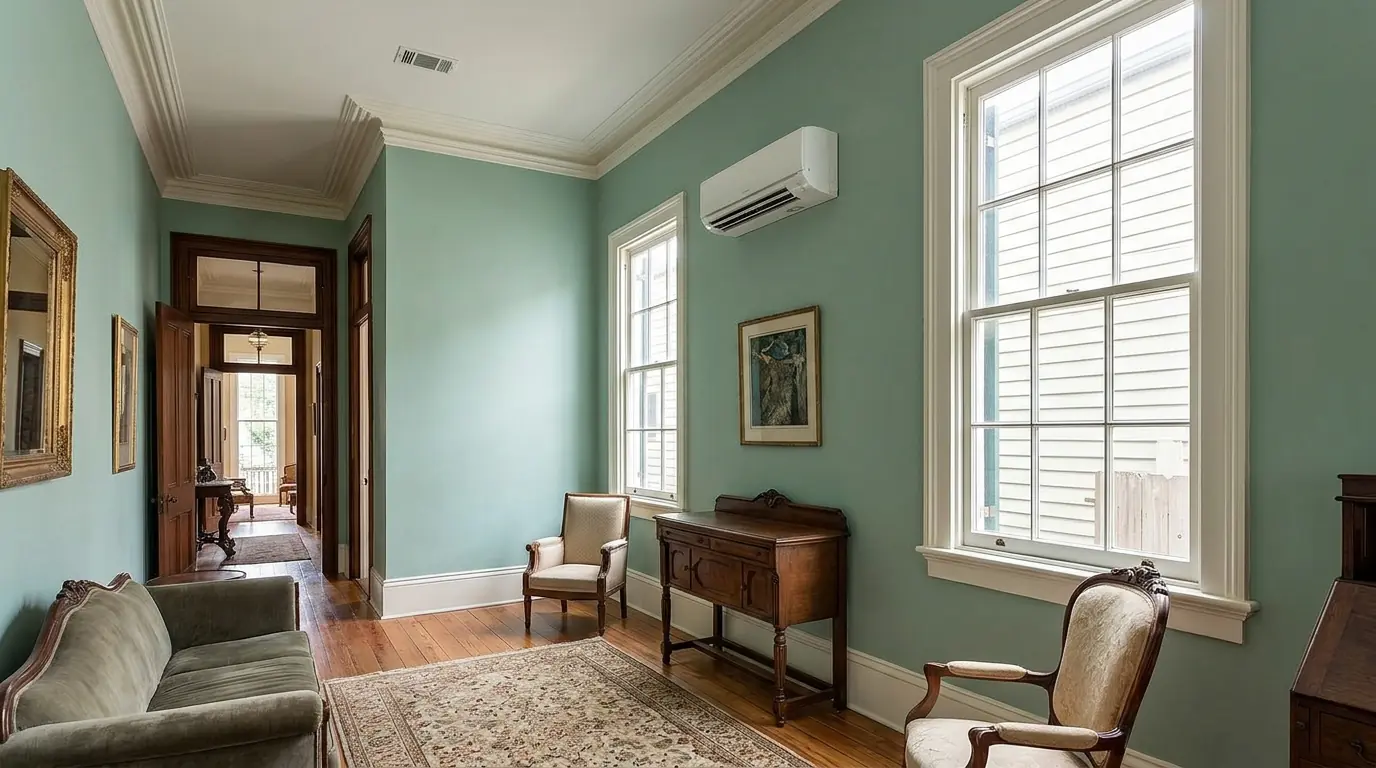
A mini-split mounts an indoor head high on a wall and connects to an outdoor unit through a small opening. One outdoor unit can serve several rooms, each with its own control. For a shotgun or a cottage with plaster walls and no attic space, it is often the least disruptive way to add cooling.
The tradeoff is appearance: the wall heads are visible, and every head needs a drain path. Ceiling cassette and slim ducted mini units reduce the visual impact where there is space above.
Option two: small-duct high-velocity systems
High-velocity systems move air through flexible tubes a couple of inches across, which can snake through wall cavities and between joists with far less demolition than conventional ducts. Outlets are small round vents rather than large registers. They cost more than a standard central system, but they preserve plaster and trim in a way ducts rarely can.
Option three: conventional ducts where they fit
Some older homes do have usable attic space or a crawl space tall enough to run ducts. Where that is true, a conventional central system can work well, provided the ducts are sealed, insulated and sized properly. Ducts in a crawl space need protection from moisture and pests, and returns need to be sized generously in a house with tall ceilings.
Historic district rules
In the locally designated historic districts, the preservation commission reviews exterior wall-mounted equipment, including mini-split condensers and the conduit that carries line sets. Commission staff have recommended central systems with rear-mounted condensers in some cases specifically because exposed conduit on a visible side wall is hard to approve. Planning the outdoor unit location and routing lines through the interior or the rear avoids most problems.
About 90 percent of the city's housing predates the 1978 lead paint ban, so cutting into older walls for any of these systems calls for lead-safe work practices.


Old house, no ducts? We will look at the options with you.
(504) 520-4214Do not skip the building itself
Whichever system you choose, sealing the worst air leaks and insulating where it is safe to do so makes the equipment smaller, cheaper to run and better at controlling humidity. In an old house, that work has to respect how the building handles moisture; blocking ventilation in the wrong place can trap water in the walls. Get advice from someone who understands historic construction before adding insulation.
Humidity in an old house
Cooling an older home is half the problem; drying it is the other half. Houses built to breathe let humid air in through gaps in floors, windows and walls, and a small cooling system that runs efficiently may still leave the air damp. Mini-splits with a dry mode help, and correctly sized systems that run longer at low speed remove more moisture than oversized ones.
Where the house stays damp, a dehumidifier sized to it, ducted where there are ducts or placed in the crawl space where there are none, often makes the biggest difference to comfort. It also protects the old wood and plaster that make the house worth preserving.
Measure before you decide. A hygrometer in a few rooms over a couple of weeks tells you whether the house needs more cooling, more drying, or simply better air sealing.
Choosing between them
For a single room or addition, a single-zone mini-split is usually the answer. For a whole small house, a multi-zone mini-split or a high-velocity system, depending on how much you want to see on the walls. For a larger house with real attic or crawl space, conventional ducts may be the best value. A site visit that looks at the walls, the crawl space and the outdoor unit location settles it quickly.
Questions readers ask about this
Often a ductless mini-split; a high-velocity system is the alternative when you want less visible equipment.
Visible exterior equipment and conduit are reviewed. Rear placement with interior routing avoids most issues.
Yes, where there is room, with proper insulation and moisture protection.
It needs small openings, far less than conventional ducts.
Sealing leaks helps, but insulation in historic walls needs care to avoid trapping moisture.
Related guides and services
Heat pump or gas furnace in Louisiana
Mild winters make a strong heat pump case in south Louisiana. How it compares with a gas furnace, and when to.
Heat pump or gas furnace in LouisianaWhy the house feels damp with the AC on
Thermostat says 72 and the house still feels sticky? Why AC here leaves moisture behind and what fixes it..
Read: Why the house feels damp with the AC onHow long AC units last here
Heat, humidity and salt air shorten AC life in New Orleans. What a system gives here, what wears it out first.
How Long Do AC Units Last in New Orleans, LA?Ductless Mini-Split Installation
Single-zone mini-split, multi-zone mini-split and more.
More on Ductless Mini-Split InstallationDuctwork Repair & Sealing
Leaky duct joints, crushed flex duct and more.
Our Ductwork Repair & Sealing serviceWhole-Home Dehumidifier Installation
Ducted dehumidifier, crawl space dehumidifier and more.
Whole-Home Dehumidifier Installation from our team